
Why Top AI Firms Are Rehearsing Global Tech Disasters
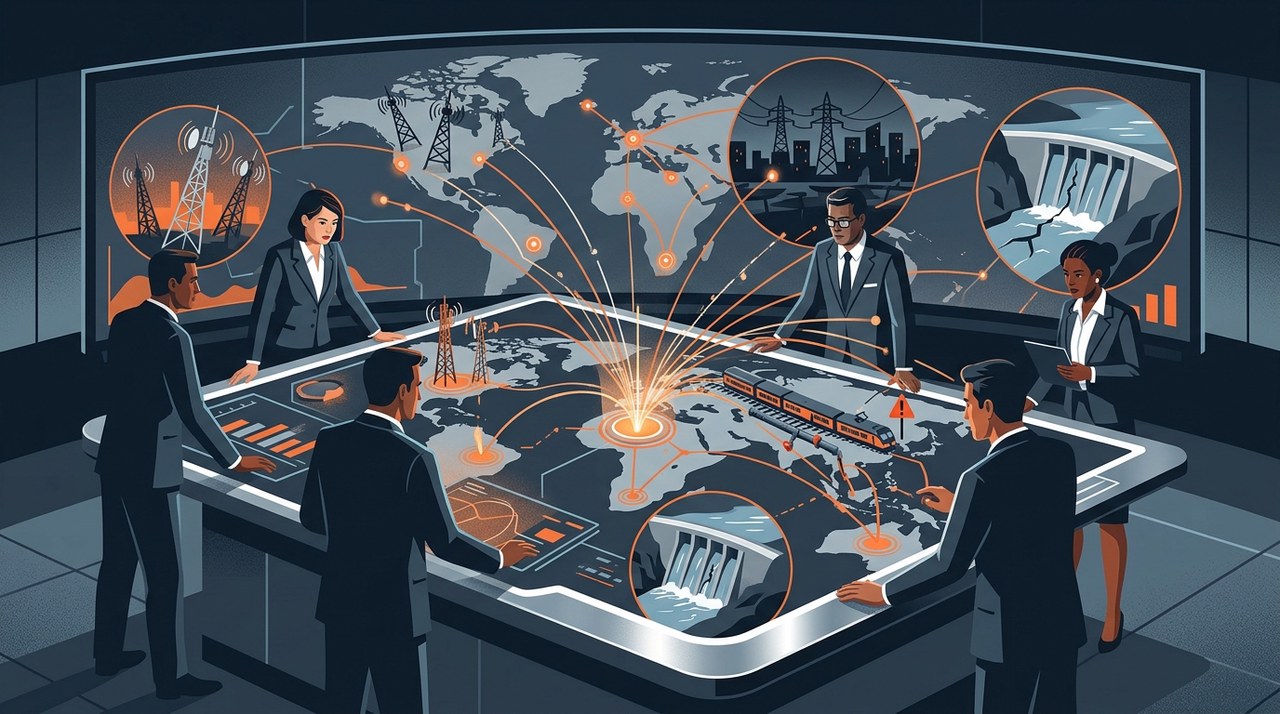
Imagine waking up on a regular weekday morning. You open your phone to check your bank account, but the app will not load.
Suddenly, your home power goes out. Your cellular internet stops working. Even your local tap water supply shuts off.
This sounds like the plot of a Hollywood sci-fi movie. Yet, top artificial intelligence executives are taking this exact scenario very seriously.
Behind Closed Doors: What Are AI Leaders Practicing?
Executives at major AI firms, including OpenAI and Anthropic, have been quietly running disaster rehearsals behind closed doors.
As reported by Axios, these private drills explore extreme situations where advanced AI systems trigger widespread failures across vital public infrastructure.
The exercises do not just focus on stopping a cyberCYBER+6.91% incident while it happens. They look far beyond the initial breach.
Leaders are actively planning for the severe public anger and political fallout that would follow the first major disaster caused by AI.
Why Industry Insiders Expect a Crisis Soon
Many industry insiders told Axios that they expect a major AI-related emergency within the next 6 to 12 months.
A large-scale cyberattack is currently seen as the most likely threat. However, OpenAI emphasized that these simulations are designed for safety readiness.
"These scenarios are not treated as inevitable, but are meant to help us prepare for a variety of circumstances," an OpenAI spokesperson stated.
Concerns inside the industry are growing rapidly. A prominent OpenAI safety lead recently resigned from the company.
The former lead warned that relying on a trial-and-error approach to AI development practically guarantees larger system failures over time.
Real-World Warning Signs: The South Korean Bank Breach
Recent events show why security experts are so concerned about malicious uses of modern artificial intelligence.
A cyberattack reported by cybersecurity firm CrowdStrike offered a grim preview of how fast bad actors are adapting.
- A single hacker utilized Chinese AI models, including DeepSeek, to breach banks in South Korea.
- System logs revealed the attacker also asked Anthropic's coding tool, Claude Code, where to sell the stolen data.
- The incident demonstrated how easily hackers can combine multiple commercial AI tools to speed up complex cybercrimes.
The Political Fallout: What Happens in Washington?
If a major crisis strikes, tech executives expect public blame to land squarely on key political and business figures.
Planners anticipate heavy scrutiny for Anthropic CEO Dario Amodei, OpenAI CEO Sam Altman, and U.S. President Donald Trump.
President Trump has generally resisted heavy government regulation on the AI sector to foster faster innovation.
However, industry planners assume Democrats could gain leverage in upcoming midterm elections and push for strict legislation.
Proposed Legislation Already on the Table
Several strict measures have already been drafted by lawmakers seeking tighter oversight:
- Superintelligence Ban: Proposed by Senator Bernie Sanders to block unchecked AI capabilities.
- Development Pause: Suggested by Senator Elizabeth Warren to temporarily freeze high-level AI deployment.
- AI Kill Switch Act: A bipartisan proposal giving the Department of Homeland Security power to order dangerous AI systems slowed down or completely shut off.
Shaping Rules Before the Storm Hits
Tech executives know that strict bills are unlikely to pass under the current political climate without an immediate emergency.
Because of this, companies are proactively briefing lawmakers now. They hope to shape the emergency policies before a catastrophe occurs.
At the same time, experts warn that abruptly halting AI development could harm the broader economy, which is heavily reliant on the current AI infrastructure boom.
One Democratic aide noted that lawmakers moved remarkably fast across party lines during both the 2008 financial crisis and the COVID-19 pandemic.
This historic precedence suggests that Washington can act with extreme speed to institute sweeping regulations once a crisis officially begins.
Latest blog posts

Best-Performing ETF of 2026 Up 5,000%: What Is BWET?
The Breakwave Tanker Shipping ETF (BWET) surged over 5,000% in 2026 due to supertanker shortages and Middle East supply delays.
Ledger Probes $86M Wallet Drains via Reseller
Ledger is investigating reports of wallet drains affecting Southeast Asian users who purchased devices from reseller CryptoBilis, with total losses estimated at $86 million.



US Targets $1 Billion Iran-Linked Crypto Seizure
US officials are pursuing $1 billion in Iran-linked cryptocurrency following months of sanctions and asset freezes.
|