Why Crypto Depositors Risk Losing Everything in Bankruptcy
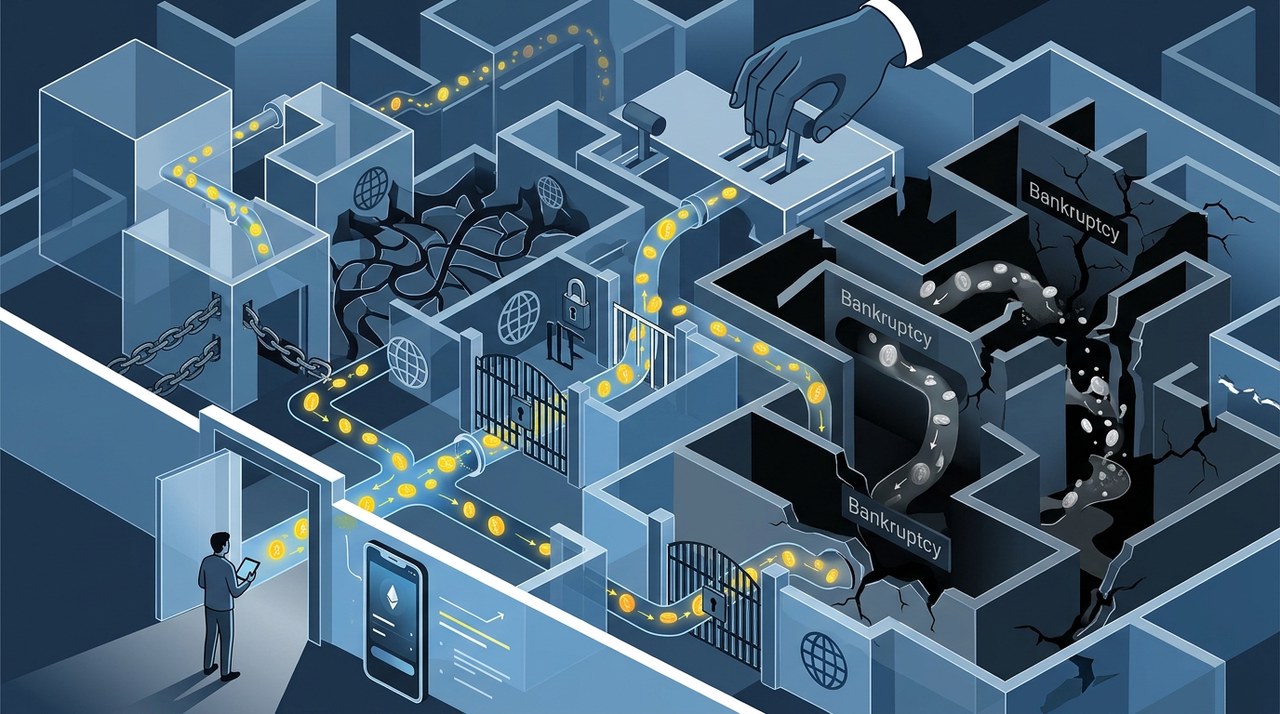
The Hidden Reality Behind Centralized Crypto Exchanges
Have you ever deposited funds into a centralized cryptocurrency exchange? You probably assumed your coins were sitting safely in your personal account.
The trading screen looked clean, and transactions happened in seconds. But behind that smooth user interface, something far more complicated was going on.
When a centralized platform freezes withdrawals, millions of everyday users face a harsh truth. A slick mobile app does not guarantee safety.
Behind the branding lies a maze of offshore entities, shared wallets, and fine-print agreements. These setups protect company executives while pushing insolvency risks directly onto customers.
To understand how these structural traps work, we looked at insights from Roshan Dharia. He is the founder and CEO of Echo Base, a firm specializing in digital asset restructuring, distress financing, and recovery.
Echo Base recently stepped into the spotlight by forming a claimholder committee for affected Bitmart users. This happened after the exchange wound down operations and left a $10 million rescue proposal unanswered.
How Offshore Corporate Structures Separate You From Your Assets
Most retail depositors assume a basic idea: their tokens belong to them. However, centralized crypto platforms usually separate customer operations from asset storage.
According to Dharia, customer onboarding and user terms are typically handled by an operating company in one offshore jurisdiction.
Meanwhile, the actual private keys and digital tokens sit with an entirely separate affiliate or custodian elsewhere.
This split creates a dangerous legal gap. In bankruptcy court, ownership depends on contract language rather than who holds the tokens on the blockchain.
If the fine print creates a trust or custody arrangement, customers keep legal title. In that case, the platform acts merely as a temporary holder.
However, if the terms transfer ownership title to the platform, customers lose direct ownership of their coins. They end up as unsecured creditors owed money by a shell company with almost no assets.
Lessons From Celsius: Fine Print Changes Everything
Dharia points to the high-profile collapse of Celsius to show how much depends on legal paperwork.
Celsius showed how much turns on the paperwork. Custody accounts were largely returned, while Earn balances under the same brand became estate property. The drafting is often vague enough that nobody can say for certain until a court rules. Until then, control decides the first months of any failure, because whoever can sign transactions sets the timetable while everyone else argues about title.
This legal setup causes what experts call structural subordination. Because the asset-holding company has no direct contract with users, depositors rank behind that entity's own direct creditors.
The only route to get tokens back might be an intercompany claim against an operating shell entity. That claim is essentially an IOU that the asset holder can challenge or reject.
Legal Tactics to Recover Frozen Digital Tokens
When an exchange blocks account access, recovery teams face an immediate challenge. They must balance contractual claims against empty operating shells with direct property claims over crypto wallets.
To solve this problem, recovery legal teams press both paths at the same time.
- Proprietary Claims: These take top priority because they establish direct ownership over specific digital tokens.
- Contractual Claims: These serve as a backup to demand payment for internal company debts.
However, legal arguments mean nothing if the crypto assets vanish off the blockchain.
To prevent funds from moving or mixing together, claimants must act quickly before company managers start bankruptcy on their own terms.
The primary levers are the same in most platform freezes, and they all aim to take control away from management before the assets move. The strongest is a creditor petition to wind up the company with a request for a provisional liquidator, which common law offshore courts will grant on short notice where assets are at risk of dissipation. That puts the keys with an independent officeholder before a full hearing.
Besides provisional liquidation, recovery specialists ask courts for emergency freezing orders on wallets and exchanges.
They also use legal disclosure orders to trace funds and file U.S. Chapter 15 bankruptcy actions to stop assets from disappearing across borders.
Piercing the Corporate Veil of Offshore Companies
To overcome the legal barrier between company branches, lawyers must prove the entities functioned as a single business.
In offshore courts, this requires presenting concrete proof that corporate separation was just a sham.
- Shared Bank Signatories: The same executives controlled all bank accounts.
- Unified Treasury: Funds moved freely without proper legal contracts.
- Undocumented Transfers: Assets jumped between entities without record-keeping.
- Misleading Marketing: Ads never mentioned that a separate offshore entity held the funds.
Why Unsecured Claims Lose Big During Crypto Bull Markets
The difference between owning property and holding an unsecured claim creates a massive valuation gap.
Under the U.S. Bankruptcy Code, unsecured claims are usually locked into U.S. dollars based on token prices on the filing date.
If cryptocurrency prices rise dramatically during long court cases, unsecured claimants do not profit from those gains.
In contrast, successful property claims prove direct ownership of tokens. This allows depositors to receive their actual crypto assets back and keep any market upside.
Past performance of digital assets or operating platforms is not a guarantee of future performance.
The Danger of Omnibus Wallets and Pooled Funds
This situation gets worse due to omnibus wallets. These addresses mix deposits from thousands of customers into shared blockchain locations.
When platform software sweeps funds into giant pooled wallets, the direct link between a user and their specific coins breaks.
If internal accounting books fail to match public blockchain balances, proving individual ownership becomes nearly impossible.
When that happens, direct property claims fail. Depositors are forced into the unsecured creditor pool to divide whatever small funds remain.
Why Proof of Reserves Is Not Enough Protection
Following major platform collapses, Dharia warns that popular industry transparency tools like Proof of Reserves can offer false comfort.
Showing assets on the blockchain without an audited report of total debt liabilities tells users very little about true financial stability.
It also says nothing about whether customers legally own those assets under offshore contract law.
A structure that protected customer property would be easy to recognize. The tokens would sit with a regulated custodian in segregated accounts, the ledger would reconcile to the chain daily and the terms would say plainly that the customer owns them. Few offshore platforms offer that today. Until they do, most of their customers are not account holders at all. They are unsecured lenders who were never told.
Taking Action: The Case of Bitmart Claimholders
Real-world examples show why organized community action matters when platforms freeze operations.
When Bitmart wound down operations, affected users were left seeking clarity regarding their trapped balances.
Echo Base organized an ad hoc claimholder committee to represent these users, hiring legal counsel and launching asset-tracing efforts.
This collective response began after a $10 million restructuring proposal received no official answer, proving that retail users must coordinate quickly to protect their rights.
Latest blog posts



 +2
Bitcoin Nears $81,000 Ahead of Fed Decision as ZEC Rises
Bitcoin recovered to nearly $81,000 before the Federal Reserve rate decision, while Zcash led altcoin gains with an 8% rally.
|
Bonds May Offer Cushion During AI Stock Selloff
Long-term U.S. Treasuries are moving opposite to falling AI stocks, creating a potential hedge for tech investors.

Datavault AI Stock Drops 50% Over Locked Bitcoin Deal
Datavault AI shares fell 50% after the firm announced it cannot withdraw Bitcoin tied to a $150 million deal with Scilex.
|