
What is Lido DAO (LDO)?

- Lido DAOLDO-2.54% is a decentralized protocol providing liquid staking solutions primarily for Ethereum.
- Users deposit ETH to receive stETH at a 1:1 ratio, unlocking staking rewards while keeping capital usable across DeFi.
- LDO is the native governance token used to vote on protocol upgrades, fee allocations, and node operator selections.
- Lido mitigates traditional staking barriers like the 32 ETH minimum threshold and hardware requirements.
- Key risks include smart contract vulnerabilities, slashing penalties, temporary secondary market de-pegging, and regulatory changes.
Introduction: What is Lido DAO (LDO)?
Lido DAO is a leading decentralized autonomous organization that provides liquid staking infrastructure for Proof-of-Stake (PoS) blockchain networks, primarily Ethereum. Launched to solve the inherent capital inefficiency associated with traditional staking, Lido allows users to stake their cryptocurrency assets without locking up capital or maintaining complex hardware infrastructure.
In a standard Proof-of-Stake consensus model, users lock up native tokens to help secure the network and earn consensus rewards in return. However, this traditional approach presents two major drawbacks: high entry barriers and asset illiquidity. For instance, participating directly in Ethereum staking requires a minimum deposit of 32 ETH alongside continuous technical maintenance to run a validator node. Furthermore, once ETH is locked into a standard validator contract, it cannot be used elsewhere in the decentralized finance (DeFi) ecosystem.
Lido protocol resolves these friction points by lowering the barrier to entry to any arbitrary amount of ETH while issuing a liquid staking token known as stETH (Staked ETH) at a 1:1 ratio. Users receive stETH representing their underlying staked deposit plus ongoing staking rewards. Concurrently, LDO functions as the native governance token of the Lido DAO ecosystem, enabling token holders to vote on key protocol parameters, manage treasury allocations, and oversee the selection of node operators.
History and Background of Lido DAO
The conceptualization of Lido DAO began in late 2020, aligned with the launch of Ethereum's Beacon Chain—the foundational milestone in Ethereum's transition from Proof-of-Work to Proof-of-Stake. Recognizing that Ethereum staking would initially lock up assets for an extended period without a designated withdrawal date, a group of developers, node operators, and crypto pioneers established Lido to provide immediate liquidity to stakers.
The protocol officially launched its testnet and mainnet deployments in December 2020, backed by prominent venture firms and industry participants, including P2P Economy, Stakefish, Paradigm, and Andreessen Horowitz (a16z). Lido's smart contract infrastructure gained rapid adoption due to its convenient design and seamless integration across top DeFi protocols.
Key historical milestones for Lido DAO include:
- December 2020: Lido mainnet deployment on Ethereum Beacon Chain, introducing stETH.
- January 2021: Launch and distribution of the LDO governance token to decentralize protocol ownership.
- September 2022: Ethereum's official transition to PoS ("The Merge"), cementing Lido's essential role in Ethereum security.
- April 2023: Ethereum's Shapella (Shanghai/Capella) upgrade, enabling native withdrawals for staked ETH and validating Lido's unstaking architecture.
- 2023–2024: Evolution toward Lido V2, introducing modular architecture, withdrawal requests, and Staking Router capabilities to further decentralize validator operator pools.
How Lido DAO and LDO Work: Technical Overview
Understanding Lido requires distinguishing between the liquid staking protocol mechanics (stETH) and the governance layer (LDO). Together, these mechanisms create an operational framework designed to balance capital security, network decentralization, and user accessibility.
1. The Liquid Staking Mechanism
When a user deposits Ethereum into the Lido liquid staking smart contract, the protocol aggregates these funds into 32 ETH chunks—the standard threshold required to launch an Ethereum validator node. The pooled funds are allocated among professional, enterprise-grade Node Operators approved by Lido DAO governance.
In return for the deposit, the smart contract mints stETH (or wrapped stETH known as wstETH) directly into the user's wallet. As validator nodes earn staking rewards from the Ethereum network via block proposals and attestation rewards, the total pool of staked ETH grows. Lido updates user stETH balances daily through a mechanism called rebasing, where the stETH balance in user wallets increases automatically to reflect accumulated rewards minus protocol fees.
2. Node Operators and Distributed Validator Technology (DVT)
Rather than running validator nodes itself, Lido DAO delegates validator operations to curated node operator companies with verified track records of high uptime and security. To reduce centralization risks, Lido DAO has actively integrated Distributed Validator Technology (DVT) networks like Obol and SSV Network.
DVT allows single Ethereum validator keys to be split across multiple independent node operators. If one node experiences downtime or hardware failure, the remaining operators maintain validator uptime, substantially reducing the risk of slashing penalties (penalties levied by the network for node misbehavior).
3. The Role of the LDO Governance Token
The LDO token is an ERC-20 utility and governance token with a fixed total supply of 1,000,000,000 units. LDO powers the Lido DAO governance system, enabling token holders to submit proposals, participate in off-chain discussions, and execute binding on-chain votes. Key governance responsibilities include:
- Selecting Node Operators: Voting to onboard, evaluate, or offboard node operators running protocol validators.
- Fee Allocation: Setting protocol fee rates (currently standardized at a 10% fee on staking rewards, split evenly between node operators and the Lido DAO treasury).
- Treasury Management: Overseeing treasury assets used for protocol development, liquidity incentives, security audits, and ecosystem grants.
- Smart Contract Upgrades: Voting on core technical upgrades, security parameters, and oracle settings.
- Dual Governance Framework: Implementing safety mechanics that allow stETH holders to veto certain LDO governance decisions if those decisions threaten stETH stability or user rights.
Key Features and Ecosystem Use Cases
Lido has established itself as a foundational building block across decentralized finance due to several distinguishing features:
High Liquidity and DeFi Composability
Because stETH retains liquid access to locked ETH values, users are not forced to compromise between earning network staking yields and participating in broader DeFi applications. stETH is widely integrated across decentralized money markets, decentralized exchanges, and derivative platforms:
- Collateralized Lending: Platforms such as Aave and MakerDAO allow users to deposit stETH/wstETH as collateral to borrow stablecoins or other crypto assets.
- Liquidity Provisioning: Liquidity pools on exchanges like Curve and Uniswap permit users to earn trading fees by supplying liquidity for stETH/ETH trading pairs.
- Yield Strategies: Decentralized aggregators utilize wstETH inside structured yield strategies to optimize return efficiency across lending protocols.
Accessibility and Fractional Staking
Unlike standalone Ethereum validators that mandate a strict 32 ETH threshold, Lido allows users to stake fractionated quantities of ETH starting from virtually any decimal amount. This democratizes participation for retail users while maintaining enterprise-level node infrastructure.
Transparent Fee Distribution
Lido applies a transparent 10% fee on total generated staking rewards. 5% goes to compensating professional node operators for server maintenance and security, while 5% is allocated directly to the Lido DAO Treasury for protocol maintenance, development, and insurance reserves.
LDO in the Market and Risk Considerations
As the issuing organization behind the largest liquid staking derivative by Total Value Locked (TVL), Lido DAO maintains significant weight within the broader digital asset ecosystem. However, both prospective LDO holders and liquid stakers must carefully evaluate the unique risks and structural dynamics governing the protocol.
Market Dynamics
Lido accounts for a substantial percentage of all staked Ethereum, placing its governing token LDO among the notable governance tokens by market capitalization within the DeFi category. The market valuation of LDO is often tied to market adoption of liquid staking, total protocol TVL, generated protocol fees, and general governance activity.
Past performance of digital assets is not an guarantee of future results.
Risk Considerations
While liquid staking provides flexibility, interacting with protocols like Lido DAO involves distinct risk factors:
- Smart Contract Risk: Lido relies on complex smart contracts to lock ETH, mint tokens, and route rewards. Despite extensive security audits, bugs or unexpected technical exploits remain an inherent possibility.
- Slashing Risk: If a Lido node operator experiences hardware failure or malicious behavior, Ethereum network rules may slash the validator's balance. Although Lido maintains insurance pools and operator diversification, severe slashing events could impact staking yields.
- Secondary Market De-pegging Risk: In periods of extreme market volatility, the exchange rate of stETH against ETH on open secondary markets (such as Curve or Uniswap) may deviate below 1:1, temporarily restricting immediate exit liquidity before native withdrawals process.
- Governance & Concentration Risk: Large holdings of LDO concentrated among early investors or institutional entities could lead to voting imbalance during key governance proposals. Lido's Dual Governance initiative actively seeks to mitigate this issue.
- Regulatory Scrutiny: Regulatory authorities worldwide continue to evaluate guidelines around digital asset staking, liquid staking tokens, and decentralized governance frameworks.
How to Buy LDO on Bitkub Exchange
For users interested in acquiring LDO tokens for governance participation or portfolio diversification, Bitkub Exchange provides a regulated, secure, and straightforward platform to trade LDO using Thai Baht (THB).
- Create and Verify Account: Download the Bitkub application or visit the website, register for an account, and complete the Know Your Customer (KYC) identity verification process.
- Deposit Funds: Deposit Thai Baht (THB) into your Bitkub account using supported payment methods, such as instant QR code payment or online bank transfer.
- Navigate to LDO Market: Go to the market section and select the LDO/THB trading pair.
- Place Trading Order: Choose your preferred order type—either a Limit Order (setting your target purchase price) or a Market Order (executing instantly at current market prices). Enter the desired amount of THB or LDO and confirm your trade.
- Secure Storage: Once your purchase is executed, your LDO tokens will be safely stored in your Bitkub account wallet. For added security, enable Two-Factor Authentication (2FA).
Conclusion
Lido DAO has established itself as an essential cornerstone of the decentralized economy by addressing fundamental challenges associated with Proof-of-Stake consensus. By offering liquid staking via stETH, Lido bridges the gap between securing underlying blockchain infrastructure and maximizing capital efficiency inside DeFi ecosystem applications.
Meanwhile, the LDO token provides users with direct governance influence over key protocol decisions, node operator curation, fee structures, and future technical upgrades. As decentralized staking markets mature, Lido DAO's focus on security audits, Distributed Validator Technology, and dual governance frameworks aims to reinforce its commitment to maintaining a robust and decentralized staking environment.
Latest blog posts


What is GNO (GNO)?
GNO is the utility and governance token powering Gnosis Chain, a decentralized EVM-compatible blockchain network. From pioneering smart contract multisig wallets with Safe to bridging Web3 payments through Gnosis Pay, Gnosis provides vital infrastructure for Ethereum ecosystem scaling. Discover how GNO works, its technical mechanics, market tokenomics, and how to trade GNO on Bitkub.
|

What is Flux (FLUX)?
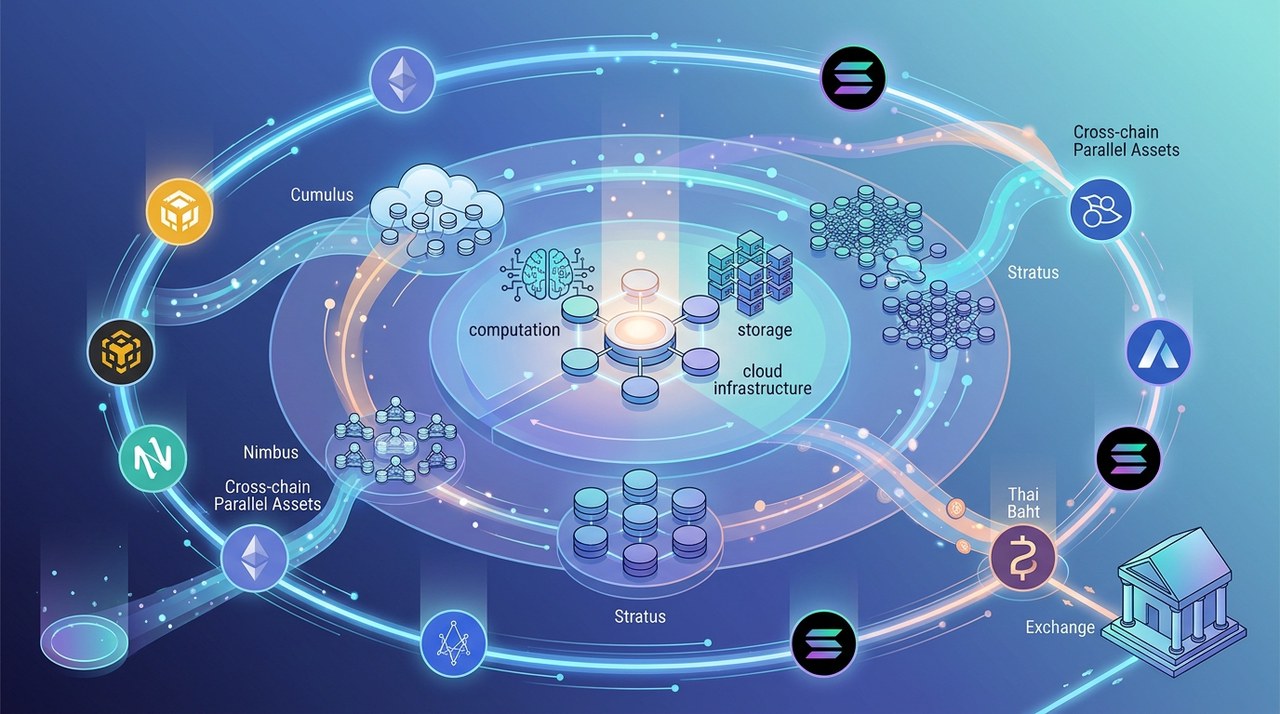
Flux (FLUX) is a decentralized Web3 cloud computing platform designed to host dApps and server infrastructure without reliance on centralized providers. By combining a multi-tiered node architecture, Proof-of-Useful-Work, and cross-chain parallel assets, Flux offers a resilient alternative for Web3 infrastructure. Discover how Flux operates and how to acquire FLUX tokens on Bitkub.
|

What is SPACE ID (ID)?
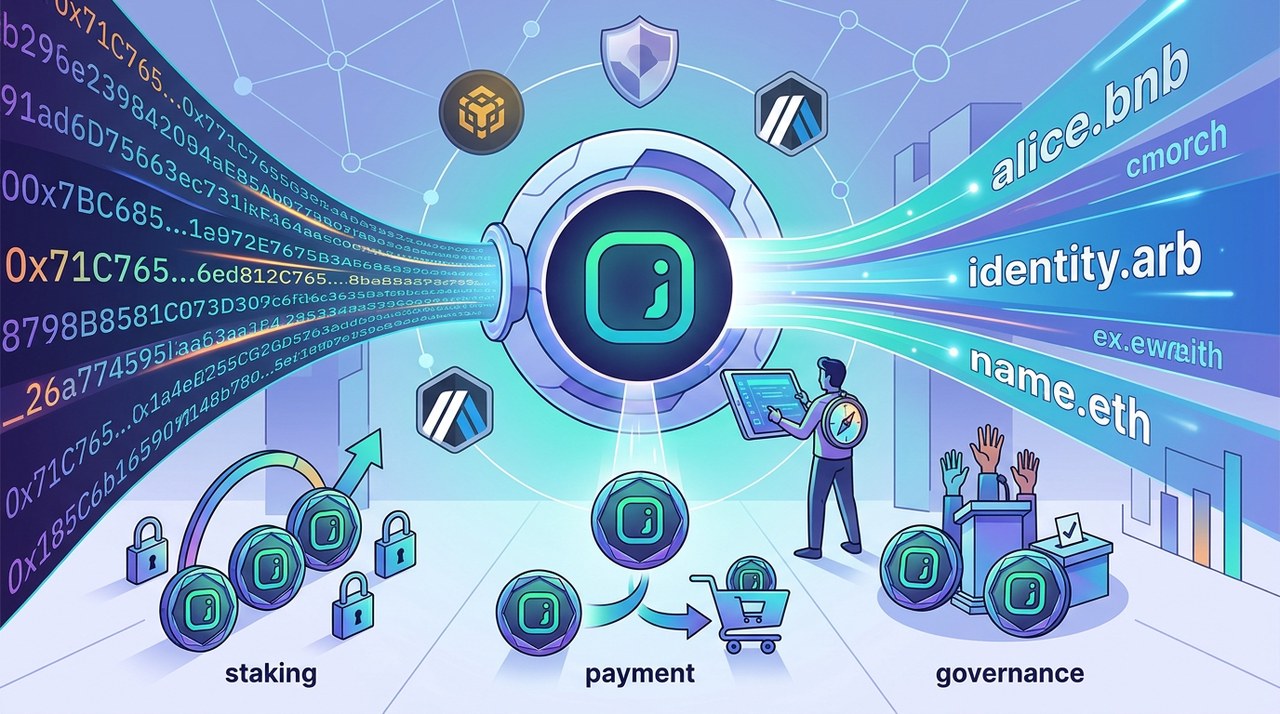
SPACE ID is a universal decentralized identity platform designed to simplify Web3 interactions by turning complex wallet addresses into human-readable domain names. Operating across multiple blockchains like BNB Chain and Arbitrum, SPACE ID provides a comprehensive hub for registering, trading, and managing digital identities. Powered by the native ID token, the protocol enables staking rewards, governance voting, and seamless dApp integrations.
|