


What Is a Hardware Wallet? Crypto Cold Storage Explained
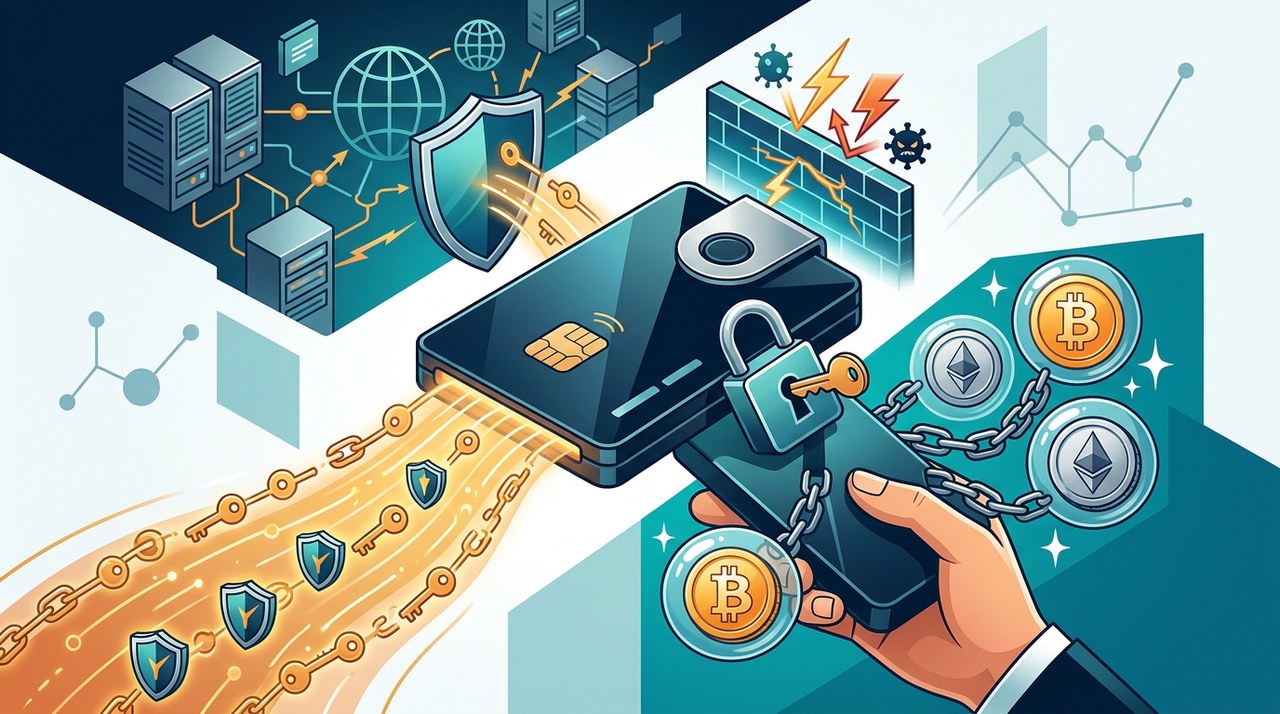
What Is a Hardware Wallet and Why Do You Need One?
If you have spent more than five minutes in the cryptocurrency world, you have likely heard the famous saying: 'not your keys, not your coins.' It sounds like a simple catchphrase, but it carries a crucial warning. When you store BitcoinBTC+0.63%, EthereumETH+2.97%, or any other digital asset on a centralized exchange, you do not directly control those funds. The exchange holds the private keys that lock and unlock your wallet.
If that exchange suffers a security breach, faces bankruptcy, or suddenly pauses user withdrawals, you could be locked out of your funds completely. The standard solution is self-custody, which means keeping your own private keys. However, taking control of your keys brings new responsibility.
If you keep private keys in a software app on an internet-connected phone or laptop, online attackers can potentially steal them using malware, spyware, or phishing tricks. Hardware wallets were created specifically to solve this problem by keeping those secret keys completely offline.
What Is Cold Storage?
A hardware wallet is a dedicated physical device—usually similar in size to a USB flash drive, a small key fob, or a credit card—that generates and stores your private keys offline. Because these devices remain disconnected from the internet, they are referred to as cold storage.
In contrast, a hot wallet is any application connected to the internet, such as a smartphone app or a web browser extension. While hot wallets are convenient for everyday trading, they carry higher exposure to online threats.
A common point of confusion for beginners is where the coins actually live. Your cryptocurrency never sits inside the physical device itself. Instead, your assets reside on the public blockchain network. The hardware wallet simply stores the private keys that prove your ownership and grant permission to move those assets.
The hardware wallet concept has been around for over a decade. SatoshiLabs, based in the Czech Republic, pioneered the space by launching Trezor in 2013. France-based Ledger entered the market in 2014 and has since distributed more than eight million units globally.
Important Security Rule: Setting up a new hardware device generates a seed phrase of 12 to 24 random words. Anyone who obtains these words can restore your wallet and steal your funds. Never take a photo of your recovery phrase, type it into a phone or computer, or save it to cloud storage.
How Does a Hardware Wallet Work?
When you set up a hardware device for the first time, an internal random number generator creates your master private keys. You write down the backup seed phrase on paper or metal, set a personal PIN code on the device, and start using it.
When you want to send crypto, you construct the transaction using companion software on your computer or smartphone, such as Ledger Wallet (formerly Ledger Live), Trezor Suite, or Sparrow Wallet. The step-by-step process keeps your key safe:
- The software creates an unsigned transaction request.
- The unsigned transaction is sent directly to your physical hardware wallet.
- You double-check the recipient address and amount on the device's physical screen.
- You physically push a button or tap the screen to confirm approval.
- The hardware wallet signs the transaction internally and sends back only the cryptographic signature.
- The signed transaction is broadcast to the blockchain network.
Because the private key stays locked inside the physical chip and never travels to your computer, remote hackers cannot grab it.
How Hardware Devices Connect
Hardware wallets use different methods to interact with computers and smartphones, offering choices between convenience and isolation:
- USB Cables: The standard wired connection using a physical cable.
- Bluetooth & NFC: Wireless options designed for quick mobile connectivity.
- Air-Gapped (QR Codes & MicroSD): Highly isolated setups that never physically plug into or wirelessly pair with a computer. They transfer data using camera scans of QR codes or files on MicroSD cards.
Secure Elements and Clear Signing
To protect against physical theft, many hardware wallets feature a Secure Element. This specialized, tamper-resistant chip is similar to the security chips used in modern credit cards and passports, designed to withstand physical disassembly or chip probing.
Another protective feature is clear signing. In earlier wallet designs, smart contract interactions appeared on screen as unreadable raw code, allowing scammers to hide malicious approvals. Clear signing translates complex contract code into clear language so you know exactly what you are confirming.
Why Users Choose Hardware Wallets
The primary benefit of a hardware wallet is isolation. Even if your personal computer is infected with viruses, an attacker cannot retrieve your private keys or complete a transaction without physical confirmation on the device.
Over time, hardware wallets have evolved beyond basic storage. They now feature high-resolution touchscreens, built-in cameras, and direct integrations with decentralized finance applications.
For example, Ledger integrated stablecoin yields through Kiln in April 2025, Tangem integrated with AaveAAVE+6.35% later that year, and Trezor added native yield via MorphoMORPHO+9.48% vaults in May 2026. Note: Participating in decentralized yield applications carries smart contract and market risks. Past performance of digital assets or financial tools does not guarantee future results.
Who Makes Hardware Wallets?
Several major companies produce hardware wallets, each focusing on different features and security philosophies:
- Ledger: Uses Secure Element chips paired with slick hardware designs and maintains an in-house security research team called Donjon.
- Trezor: An open-source manufacturer offering models like the Safe 3, Safe 5, and Safe 7, allowing public developers to review its code.
- Keystone: Focuses on air-gapped security, relying on camera-based QR code scanning to avoid direct data connections.
- Tangem: A card-shaped physical wallet using NFC taps, offering setups that can bypass traditional seed phrases.
- Bitkey: Developed by Jack Dorsey's Block, featuring a multi-signature system to split recovery keys across multiple locations.
Are Hardware Wallets 100% Hack-Proof?
No hardware device is completely immune to security issues or physical tampering. Industry incidents in 2026 highlighted key risks that users must keep in mind.
1. Firmware Bugs and Weak Randomness
Latest blog posts

ChangeNOW Fixes Web Issue and Launches NOW AI Security Lab
ChangeNOW resolved a website integration issue detected on October 15 and introduced NOW AI to boost platform defense.


 +2
+2Will XRP Finalize a Death Cross? Key Levels Explained
XRP is trading near $1.34 as its 50-day and 200-day moving averages converge, raising questions about a potential death cross chart pattern.
|

Zoomex Monthly Transparency Report: September 2026
Despite market challenges and regulatory hurdles, Bitcoin crossed $87,000 in September while Zoomex expanded its TradFi and competition offerings.
|