Was Crypto Self-Custody Ever Built for Beginners?

If you have been exploring crypto for a while, you have almost certainly heard the famous saying: Not your keys, not your coins. It sounds simple enough. Holding your own secret keys means you truly own your money without depending on a bank or an exchange.
However, keeping those keys safe is often much harder than it sounds. Recent security incidents with hardware wallets have sparked a fresh debate across the crypto community. Many people are now asking a tough question: Was self-custody ever actually designed for beginners?
What Exactly Is Self-Custody?
To understand the debate, let us start with the basics. When you store money in a traditional bank, the bank guards your cash. If you lose your debit card or forget your password, the bank can help you reset it.
Self-custody works very differently. Instead of relying on a company, you act as your own personal bank. You hold the private keys—a master password usually represented as a list of 12 or 24 random words called a seed phrase.
If you lose this seed phrase, no customer support team can help you recover it. Your funds are locked away forever. On the flip side, as long as you guard your keys properly, no central entity can freeze or mismanage your funds.
Why Hardware Wallet Security Incidents Raised Alarm
For years, hardware wallets—physical devices that keep your keys offline—were considered the gold standard for personal security. Experts recommended them to almost everyone, including complete beginners.
However, recent security scares have exposed subtle vulnerabilities. These incidents range from supply chain tampering to firmware bugs and complex phishing attacks that trick users into approving malicious transactions.
These events served as a big wakeup call. They showed that physical hardware devices are not completely immune to human error or clever attacks. If experienced crypto users can fall victim to sophisticated tricks, where does that leave someone who just bought their very first token?
Are Advanced Solutions Like Multisig and Seedless Designs Ready?
To solve the problems of standard seed phrases, developers built newer, more complex wallet architectures. While these options offer great advantages, they also bring unique challenges.
1. Multisig (Multi-Signature) Wallets
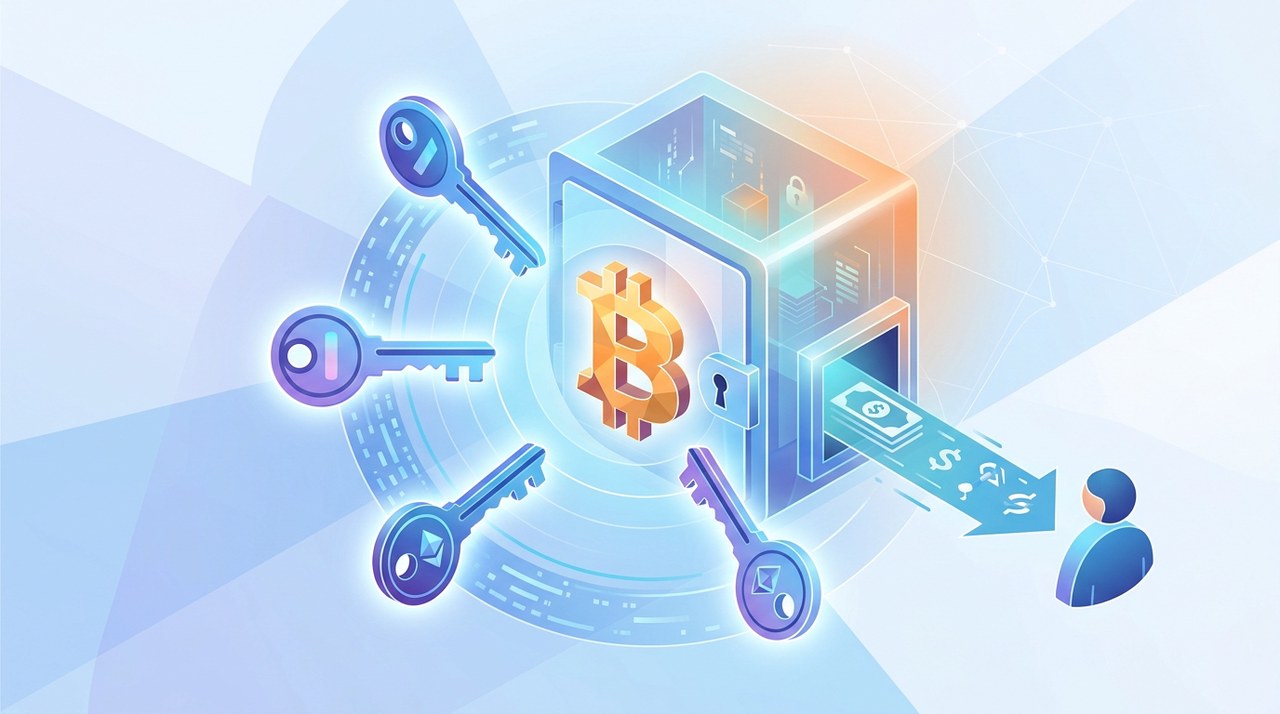
Think of a multisig wallet like a bank vault that requires two out of three separate keys to open. For example, you might keep one key on your hardware wallet, one on your phone, and one with a trusted backup provider.
- The Benefit: If an attacker steals one key, they still cannot access your funds.
- The Catch: Setting up a multisig structure requires technical knowledge. If you accidentally misplace two of the keys, you lock yourself out completely.
2. Seedless and MPC Wallets
Multi-Party Computation (MPC) and account abstraction wallets eliminate the traditional seed phrase entirely. Instead, your key is split into digital mathematical fragments stored across different locations, like your smartphone and a cloud backup service.
- The Benefit: Beginners do not have to write down or hide a piece of paper with 12 words.
- The Catch: These systems rely on complex software code and underlying smart contracts. If the underlying code has a bug or if a third-party server goes offline, user access could be affected.
Comparing Your Wallet Options
Choosing how to store crypto involves balancing convenience against security and personal responsibility. Here is a quick breakdown of how common approaches stack up:
- Centralized Exchanges: Easiest for beginners to use, but you depend entirely on the platform's solvency and security.
- Standard Hardware Wallets: Strong protection against online hacks, but vulnerable to physical theft, loss of seed phrases, or user error.
- Multisig Setups: Highly secure against single points of failure, but complex to set up and manage.
- MPC & Seedless Wallets: User-friendly experience with social recovery options, but dependent on smart contract code integrity.
So, Was Self-Custody Ever Intended for Beginners?
The short answer is no. Early self-custody tools were created by technical specialists for technical users. The initial goal of blockchain technology was absolute financial sovereignty, not user interface convenience.
Over time, the industry tried to push self-custody onto mainstream users before the safety mechanisms were fully mature. Expecting an everyday user to act as an expert system administrator for their own savings was a heavy demand.
"True control over digital assets comes with total personal responsibility. Until safety systems become seamless, self-custody will always involve a steep learning curve."
How Newcomers Can Approach Crypto Storage Safely
If you are new to the digital asset space, you do not need to rush into complicated wallet setups on day one. Here are a few sensible tips to stay secure:
- Start Small: Only practice self-custody with small amounts while learning how wallets work.
- Take Time to Learn: Test basic actions like sending, receiving, and restoring backups before transferring larger values.
- Beware of Scams: Never enter your seed phrase on any website or share it with anyone online. Support teams will never ask for your private keys.
- Understand the Risks: Keep in mind that digital asset markets are volatile, and storage choices involve trade-offs between ease of use and total control.
Self-custody technology continues to evolve rapidly. As smart contract wallets and recovery systems improve, managing your own crypto will gradually become safer and far more beginner-friendly.
Latest blog posts


Ethereum Delays Hoodi Upgrade Due to Gas Security Bug
Ethereum developers postponed the Glamsterdam testnet upgrade on Hoodi after security auditors discovered a flaw in gas fee mechanics.
|

Bitcoin ETFs Swing Back to Net Outflows With $636M Loss
US spot Bitcoin ETFs experienced $636 million in net outflows on Thursday, wiping out recent gains as BlackRock's IBIT led the decline.
|
Sygnum and Debifi Launch Multisig Bitcoin Loans
Sygnum Bank and Debifi have launched Multi SYG, a Bitcoin loan product secured by multi-signature wallets to boost borrower security.
|