Wall Street Hit by Extreme Fear as AI Stock Bets Liquidate
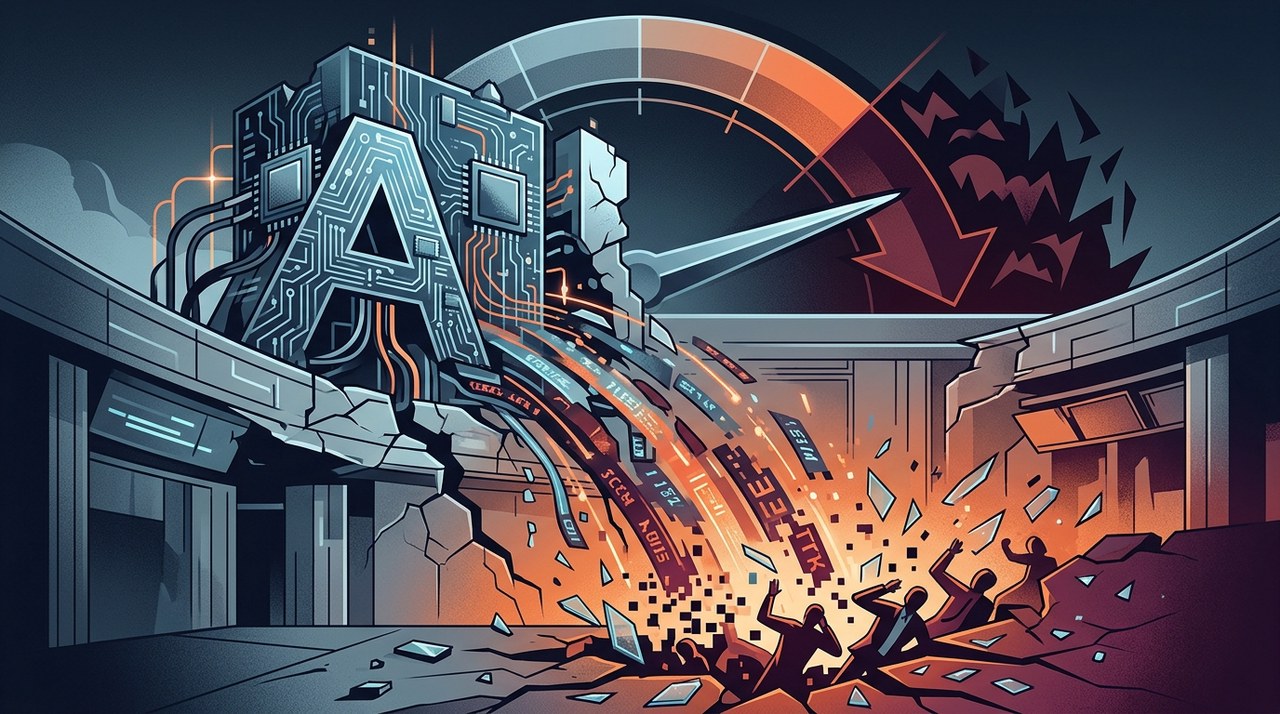
Wall Street Enters Extreme Fear Territory
Wall Street experienced a dramatic shift in investor sentiment this week. The popular Fear & Greed Index from CNN plunged down to a reading of 18 on Friday.
This score places market sentiment firmly in the Extreme Fear zone. The slide followed a tough week for tech investors after the tech-heavy Nasdaq index dropped 4.5%.
To add to the tension, this sudden drop arrived just one day before the 39th anniversary of the historic 1987 Black Monday crash. As a result, discussions about a potential broader market downturn spread rapidly across online trading communities.
$52 Million Wiped Out in 10 Minutes
Even though traditional stock exchanges were closed over the weekend, trading in modern high-risk derivative markets continued.
Traders holding leveraged positions on artificial intelligence and semiconductor stocks suffered heavy losses. In a brief 10-minute window on Saturday, nearly $52 million in leveraged bets were wiped out.
Roughly $38 million of those liquidations hit traders who were betting on prices to move higher.
Past performance of digital assets or financial markets is not a guarantee of future results. Highly leveraged positions carry significant risks of rapid forced liquidation during periods of high volatility.
Understanding the 7 Signals of Market Sentiment
The Fear & Greed Index gauges overall investor mood on a scale from 0 to 100. It combines seven distinct market indicators, weighing each one equally against its own historical average:
- Market Momentum: Tracks whether the S&P 500 index is trading above or below its 125-day moving average.
- Stock Price Strength: Measures how many New York Stock Exchange (NYSE) stocks hit 52-week highs versus those reaching 52-week lows.
- Stock Price Breadth: Uses the McClellan Volume Summation Index to compare trading volume in rising stocks against falling stocks.
- Put and Call Options: Compares the five-day average volume of bets on falling prices (puts) against bets on rising prices (calls).
- Market Volatility: Compares the VIX index, known as Wall Street's fear index, against its 50-day moving average.
- Safe-Haven Demand: Analyzes how stock returns compare to U.S. Treasury bond returns over the last 20 trading days.
- Junk Bond Demand: Measures the extra yield yield premium investors demand to hold riskier corporate bonds over safer investment-grade bonds.
Tech Sell-off and Rising Rate Concerns
Semiconductor and hardware stocks took the brunt of the recent pressure. The Philadelphia Semiconductor Index tumbled 11.4% over the week, marking its sharpest weekly fall since April 2025.
In comparison, the blue-chip Dow Jones Industrial Average managed to gain 0.7% over the same period.
AI infrastructure provider CoreWeave saw its shares tumble around 25%. Its corporate bonds also touched new lows as investors expressed concern over rising debt burdens across the AI sector.
At the same time, recent inflation statistics came in higher than anticipated. Hot inflation figures fueled expectations that the Federal Reserve might keep interest rates higher for longer or consider further hikes, which raises overall borrowing costs.
Hot inflation data suggests interest rates will remain higher for longer.
This tech pressure heavily impacts passive investors. According to CME data, information technology companies now make up approximately 39% of the S&P 500, meaning standard index fund holders have high exposure to tech price swings.
Could a Black Monday Style Event Happen Today?
On October 19, 1987, the Dow plummeted 22.6% in a single day. Back then, financial markets did not have automatic safeguards to pause runaway panic selling.
Today, traditional exchanges enforce strict circuit breakers to protect market stability:
- A 7% drop in the S&P 500 triggers a mandatory 15-minute trading pause.
- A 13% decline triggers another 15-minute trading pause.
- A 20% drop stops trading completely for the rest of the day.
The Weekend Perpetual Futures Factor
While regular stock markets close over the weekend, perpetual futures contracts on crypto exchanges operate 24/7 without these built-in trading breaks.
When prices start falling rapidly on these platforms, automated systems force-close under-collateralized positions. Each forced sell order creates additional downward pressure, which can lead to rapid price cascades.
Data from trading analytics service Liquid showed that weekend selling extended across memory, storage, and hardware infrastructure stocks.
Western Digital ($WDC) and Seagate ($STX) experienced notable declines, while Micron ($MU) and SanDisk ($SNDK) fell over 3% compared to Friday's official close.
Crash Warning or Market Pullback?
Despite the sharp sentiment shift, some industry analysts view the move as a normal pullback following a long tech rally.
According to data from S3 Partners reported by Bloomberg, short sellers earned roughly $32 billion betting against semiconductor stocks over a seven-day window.
The run up in chips was very aggressive so invariably there was going to be some consolidation or pull back.
Mark Newton from Fundstrat noted that long-term investors might evaluate tech pullbacks as potential entry opportunities, provided they maintain a well-diversified portfolio.
Investors should keep in mind that asset prices are sensitive to macro conditions like interest rate changes, and market volatility can persist under changing economic assumptions.
The opening bell on Monday will clarify whether the weekend liquidations were driven by low liquidity or if broader debt concerns in the AI sector will continue to impact asset prices.
Latest blog posts



A $98M Bitcoin Bet on Hyperliquid Near Liquidation
A high-leverage Bitcoin trader on Hyperliquid is sitting on a $98 million position that could get liquidated if prices drop just 1.59%.
|
MapQuest App Now Exposes License Plate Readers
MapQuest added a new map layer showing driver surveillance cameras across the US. Here is what you need to know about the feature and the debate around it.
|

Priceless Pink Diamond Returns as Diamond Prices Crash
The famous Grand Condé pink diamond is back on display after a 100-year theft story, while ordinary natural diamond prices hit record lows.
|