
VanEck Moves to Withdraw Lido Staked Ether ETF Filing
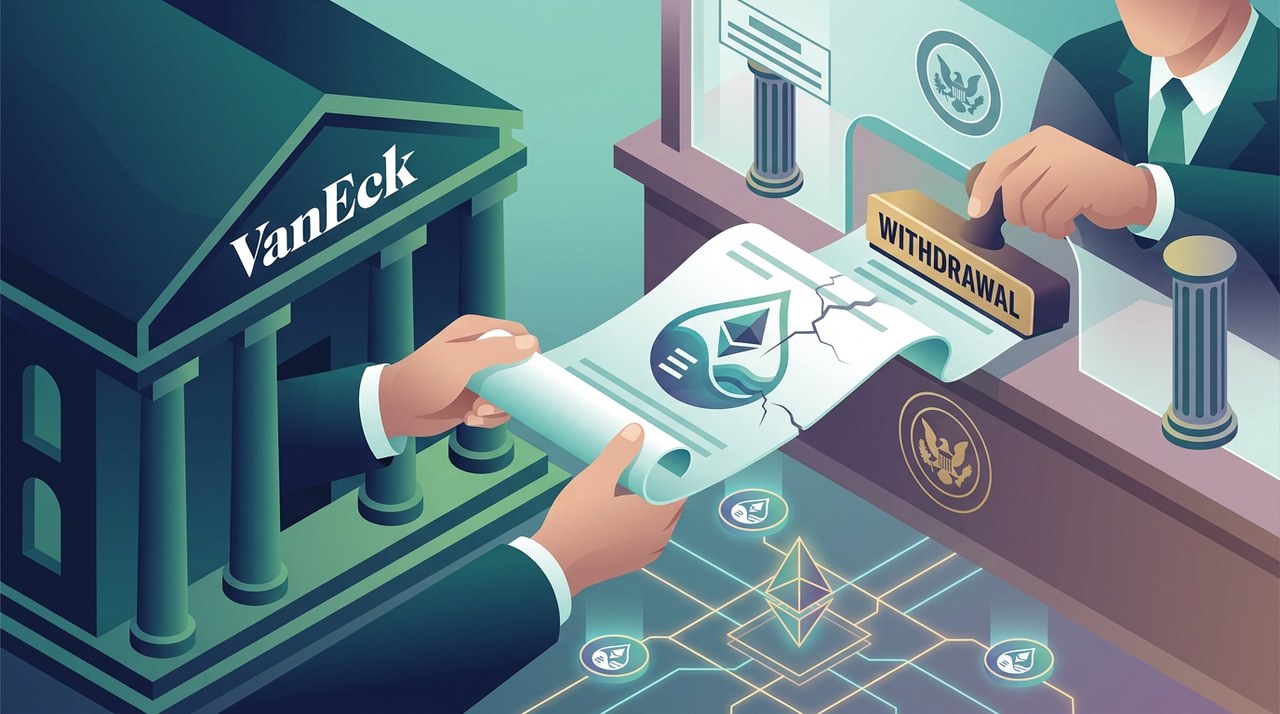
VanEck Formally Requests Withdrawal of ETF Filing
Global asset manager VanEck is stepping back from its plans to launch a specialized crypto product. The investment firm has submitted an official request to withdraw its application for a Lido staked Ether exchange-traded fund.
This decision marks a notable shift in the firm's strategy regarding EthereumETH-5.90%-based yield products in the traditional financial market.
Looking Back at the October Registration
VanEck initially filed an S-1 registration statement for the exchange-traded fund in October last year.
An S-1 statement is a primary SEC registration document that financial companies must submit before offering a new investment security to the public.
What Is Lido Staked Ether?
To understand why this fund was unique, it helps to look at how Ethereum staking functions in daily crypto activities.
Investors lock up Ethereum to help validate transactions and secure the blockchain network. In return, they earn staking rewards. Lido is a liquid staking protocol that gives users stETH tokens representing their staked ETH.
- Ethereum Staking: Securing the network by locking up native ETH tokens.
- Liquid Staking: Receiving tradeable receipt tokens like Lido's stETH while continuing to earn yields.
- Proposed Staked ETF: Designed to offer conventional investors exposure to both ETH and underlying network rewards.
Regulatory Landscape for Crypto Funds
Regulatory approval for digital asset funds involves thorough evaluation by financial regulators like the US SEC.
While standard spot Ethereum ETFs successfully launched in public markets, regulators maintain stricter boundaries around yield-bearing staking components.
Liquid staking products involve additional layer complexities that require precise regulatory clarity. Asset managers frequently re-evaluate their offerings based on structural realities and institutional demand.
Navigating the Changing Crypto Market
VanEck's withdrawal highlights how major fund managers actively refine their product pipelines as regulatory standards evolve over time.
Digital asset products carry distinct structural characteristics and market risks. Investors should thoroughly review underlying fund mechanics and market volatility before participating in digital asset markets.
Latest blog posts



Ripple & DriveWealth Team Up for Faster Global Trading
DriveWealth partners with Ripple to enable near real-time stablecoin funding for over 100 global fintech platforms using RLUSD.
|

S&P 500 Enters Its Strongest Seasonal Window of the Year
Historical data shows the S&P 500 gains in 80% of years from mid-October to year-end, but rising inflation and 5% bond yields present new challenges.
|
South Korea KOSPI Drops 7% Amid US CPI and AI Doubts
South Korea's KOSPI benchmark dropped over 7% following higher US inflation figures and growing market skepticism around AI investments.