US Regulator Proposes 26 Stablecoin Rules for Credit Unions
What Is the New NCUA Stablecoin Proposal?
Imagine your local credit union deciding to enter the world of digital dollars. To make sure everything runs safely, federal regulators want a much clearer view of what goes on behind the scenes.
On Oct. 9, 2026, the National Credit Union Administration (NCUA) published a new reporting proposal. The NCUA is the federal agency that supervises credit unions and manages their insurance fund.
Under the new plan, credit unions involved with stablecoins will have to fill out 26 extra reporting fields. These questions will form part of their regular paperwork, known as the Form 5300 Call Report.
Breaking Down Schedule J and the 26 Reporting Fields
To collect this detailed information, the NCUA plans to add a brand-new section called Schedule J. This section focuses specifically on payment stablecoin operations.
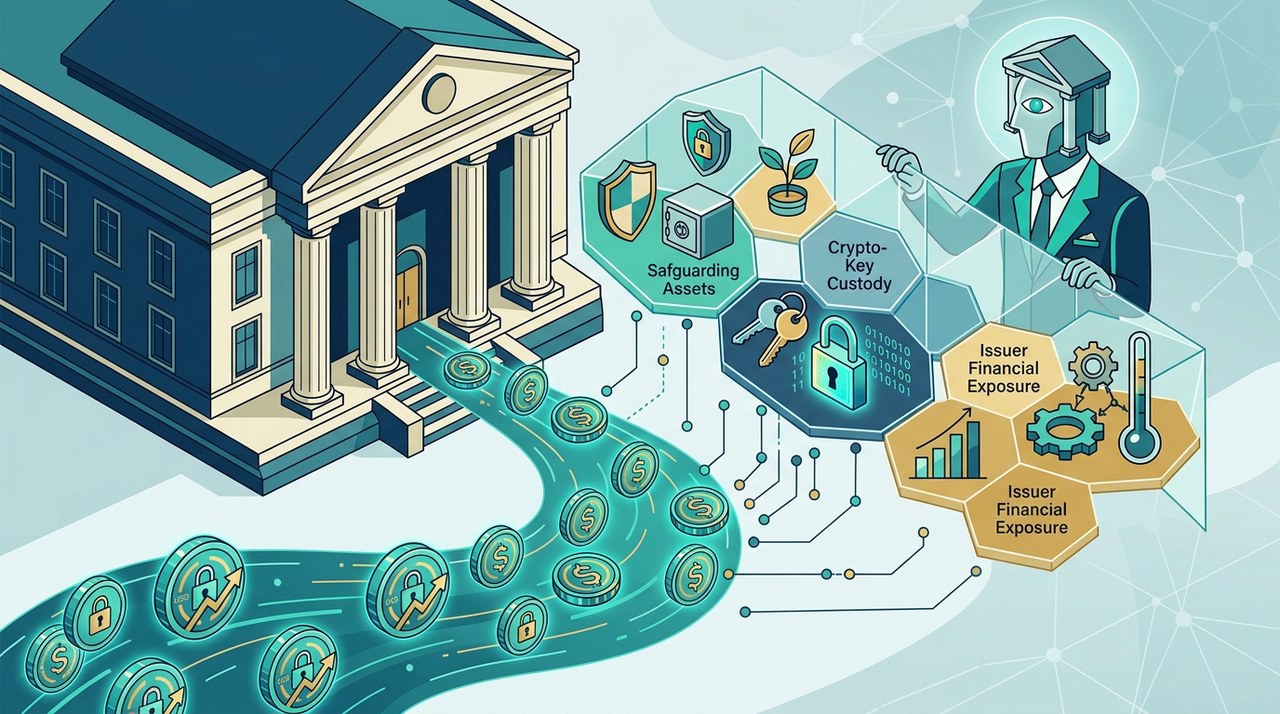
The 26 new fields cover four distinct areas of stablecoin management:
- Safeguarding Reserve Assets (8 fields): Tracks reserve assets kept safe for authorized third-party token issuers.
- Cryptographic Key Custody (9 fields): Monitors how institutions store and secure private keys used to access digital assets.
- Issuer Financial Exposure (5 fields): Measures the financial risk a credit union faces from token issuers.
- Own Balance Sheet Holdings (4 fields): Tracks payment stablecoins that the credit union owns directly.
Why separate these details? Regulators want to keep customer assets clearly separated from an institution's own money and risks.
In the stablecoin market, underlying reserves back tokens in circulation. Reliable reserves and quick redemption options help stablecoins maintain their peg to the U.S. dollar.
How the GENIUS Act Is Shaping New Oversight
This reporting update builds directly on earlier work under the federal GENIUS Act (Guiding and Establishing National Innovation for U.S. Stablecoins Act).
Back on May 15, 2026, the NCUA proposed operational standards and risk controls for licensed stablecoin issuers.
NCUA Chairman Kyle Hauptman emphasized that these rules should align closely with standards proposed for bank subsidiaries.
Setting clear rules helps smaller, community-focused institutions enter the digital finance space with proper safeguards in place.
Crypto Partnerships Target Local Financial Institutions
Commercial interest in stablecoins continues to grow among community lenders alongside these regulatory moves.
For example, on Sept. 10, 2026, crypto exchange Coinbase (Nasdaq: COIN) partnered with payments infrastructure provider Moov.
Moov provides payment technology to more than 1,000 community banks and credit unions. This integration lets those institutions access Coinbase's stablecoin system for payments, custody, funding, and settlement.
What Other Federal Regulators Are Doing
The NCUA is not the only government body standardizing rules for stablecoin issuers.
On April 7, 2026, the Federal Deposit Insurance Corporation (FDIC) approved reserve and redemption requirements for bank-affiliated issuers. The rules mandate 1-to-1 backing with approved assets and require token redemptions within two business days.
Later on May 22, 2026, the FDIC introduced proposed anti-money laundering (AML) and sanctions requirements. These rules establish compliance and monitoring standards for covered issuers under FDIC supervision.
Timeline, Hours, and Next Steps for Credit Unions
How much work will these new questions create? The NCUA estimates that 4,224 federally insured credit unions submit quarterly financial reports.
Altogether, credit unions spend roughly 794,112 hours every year completing their Call Reports. Each quarterly submission takes an average of 47 hours to finish.
According to the NCUA, adding the 26 stablecoin fields will not significantly change this total time estimate. Public feedback helped refine these figures.
The agency aims to start using the revised Form 5300 on March 31, 2027. Before taking effect, the Office of Management and Budget (OMB) must review and approve the paperwork.
The NCUA invites public input until Dec. 8, 2026. Regulators want to know if the extra data is useful, if the time estimates are accurate, and if automation can lower the reporting workload.
Latest blog posts



Nearly Half of APAC Consumers Open to Stablecoins by 2031
A major Visa survey reveals strong consumer interest in stablecoin payments across Asia-Pacific, even as knowledge gaps and security concerns remain.
|

1.34 Billion SHIB Moved in 24 Hours: What Is Happening?
Over 1.34 billion SHIB flooded exchange balances following a broader market crash. Here is a clear breakdown of what the trading volume means for price trends.
|
Franklin Templeton Explores SEC Relief for Tokenized Funds
Franklin Templeton met with SEC staff to explore regulatory exemptions that could allow tokenized money market funds and ETFs to trade on blockchain venues.