


Ukrainian Drone Strikes Paralyze Russian A7A5 Stablecoin
When Physical Attacks Knock Out Digital Assets
We often think of crypto disruptions as software bugs or cyberattacks. However, physical real-world events can impact digital networks just as drastically. That exact situation played out during the night of October 7 to October 8, 2026.
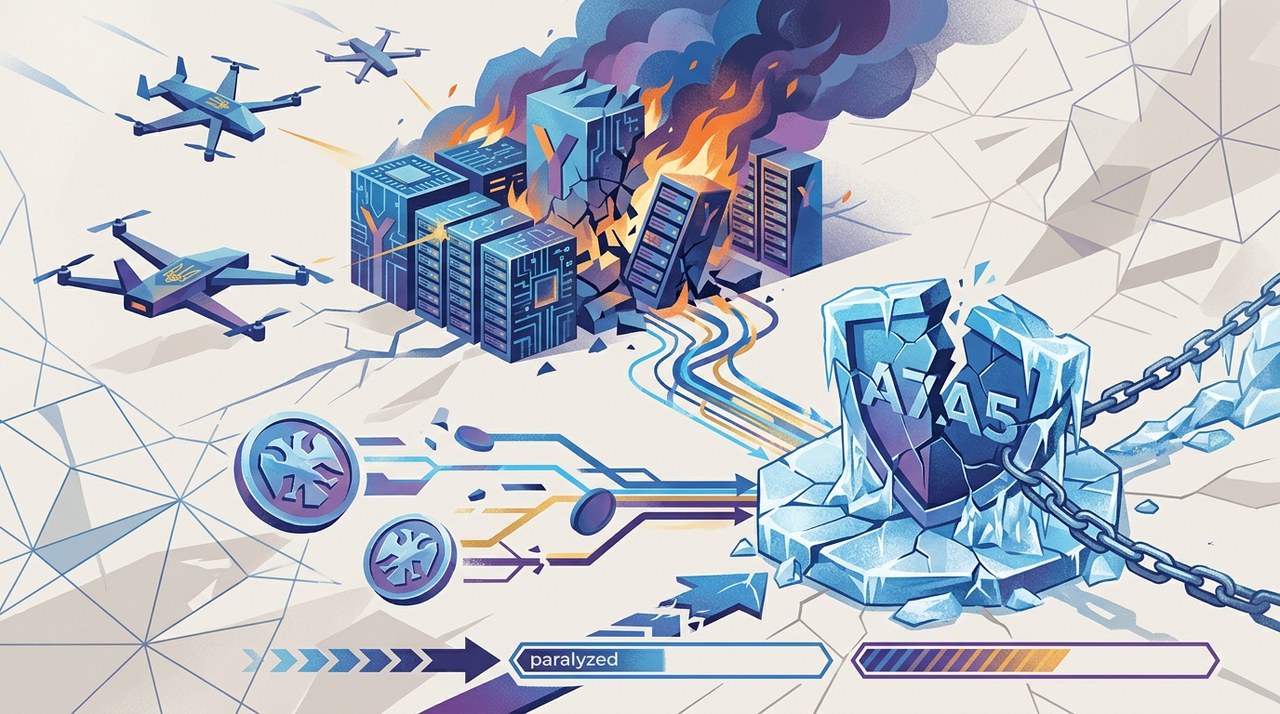
Ukrainian military drones launched a targeted strike deep inside Russian territory. The target was a key data center in Sasovo owned by Yandex, which is widely referred to as Russia's version of Google. During the exact same week, another Yandex data center was also hit.
While the strike was intended to target Russian infrastructure, it triggered an unexpected side effect in the crypto world. Activity surrounding A7A5—a Russian ruble-pegged stablecoin designed specifically to bypass Western sanctions—instantly ground to a halt. Industry observers have dubbed these physical attacks kinetic sanctions due to their devastating effect on digital operations.
What Exactly Is the A7A5 Stablecoin?
To understand why this strike mattered so much, it helps to know what A7A5 is designed to do. A7A5 is a digital token created by a company called A7 LLC. While the token is issued in Kyrgyzstan, the creators claim it is backed by actual fiat deposits held at Promsvyazbank, a state-owned Russian bank that is under international sanctions.
The stablecoin operates across both the EthereumETH-3.40% and TronTRX+1.91% blockchains. Its primary goal is to provide a bridge for Russian businesses and users to swap local rubles into TetherUSDT+0.21%'s USDT. This allows users to move value across borders outside the traditional international banking system.
Because Western authorities clamped down on sanctions, A7 moved its hosting infrastructure from Europe to Yandex servers back in September 2025. That move was supposed to keep the service safe from foreign regulators. Instead, relying on Russian physical servers created a single point of failure.
By the Numbers: A Collapse in Trading Activity
Tom Robinson, the chief scientist and co-founder of blockchain analytics company Elliptic, tracked the immediate fallout. Data showed that transaction activity plummeted right after the drone strikes hit the Yandex servers.
The drop in volume across all metrics was immediate and dramatic:
- Daily Transfers: Prior to the drone strikes, A7A5 recorded roughly 600 transfers per day across networks.
- Ethereum Network: Following the strike, Etherscan recorded only 18 transfers in a 24-hour period among its 17,600 token holders.
- Tron Network: Tron showed just 14 transfers over the same 24-hour window, despite having more than 30,700 registered token holders.
- Trading Volume: Daily trading volume dropped from millions of dollars to between $0 and $1,500 per day.
- Market Capitalization: Surprisingly, the token's total market cap remains high at roughly $455 million to $482 million, despite almost no actual trading taking place.
According to Robinson, the few remaining transfers occurring on-chain mostly consist of users attempting decentralized swaps on platforms like UniswapUNI-4.61%. Interestingly, Uniswap actually removed the A7A5 interface from its website back in November 2025. However, because decentralized smart contracts run autonomously on the blockchain, the underlying code continues to process transactions whenever servers are reachable.
Excuses, Outages, and Unpaid Interest
How did the project operators respond as their systems went offline? On October 8, official A7A5 Telegram channels announced to users that services were temporarily unavailable due to scheduled maintenance and standard technical upkeep.
By the next day, October 9, the story changed. The official messaging dropped the phrase scheduled work and acknowledged that the platform was facing severe technical problems. On October 14, management posted another update claiming they expected to resume full operations soon.
In the meantime, frustration among holders has grown rapidly. Users flooded community chats asking how to redeem paid orders for promissory notes. A7 representatives replied that these notes could only be redeemed for actual rubles by physically visiting the company's head office in person.
Furthermore, holders reported that daily interest payments on their balances stopped completely starting October 9. While A7 has promised to reimburse all missed interest payments once systems recover, customer support remains almost non-existent because the automated support bot crashed during the server outage. The company left users with only a direct phone line.
"Well, the guys in the West earn their keep, since they knew where to strike…" written by an frustrated A7A5 user in an official Telegram chat room.
A History of Declining Activity Under Global Sanctions
This physical network disruption represents the latest blow to a project that was already struggling under heavy regulatory pressure. Back in July 2025, coordinated sanctions were levied against A7A5 by authorities in the United States, the United Kingdom, and the European Union.
According to research from Elliptic published earlier in July, average daily transaction volumes for A7A5 had already dropped to $24.3 million in June 2026. That represented a 96% drop compared to its peak volume recorded in July 2025.
Despite these challenges, Russian executives remained publicly optimistic about alternative payment rails. Back in June 2026, Stanislav Lazarev, the first deputy general director for sales at A7, stated publicly that Western compliance pressure would ultimately force Russia to establish independent digital payment pathways.
Pivoting to New Methods to Regain Liquidity
In an attempt to bypass ongoing difficulties, A7 rolled out a brand-new service in October 2026. This service allows commercial businesses to deposit USDT directly with A7. In return, A7 promises to forward those funds to international suppliers using traditional SWIFT bank transfers.
Elliptic's Tom Robinson pointed out that this initiative is a strategic attempt to collect desperately needed Tether liquidity. By bringing in external USDT, the firm hopes to backstop and support its troubled ruble stablecoin.
Meanwhile, global regulatory enforcement continues to tighten. The UK government recently expanded sanctions against crypto entities, targeting three additional cryptocurrency exchanges and two payment platforms suspected of aiding Russian evasion efforts.
Disclaimer: Past performance or historical activity metrics for digital assets do not guarantee future results or operational stability. Always maintain awareness of market risks.
Latest blog posts

AI Agents Make 138M Crypto Payments as US Leads Spending
AI agents have executed over 138 million crypto transactions, with US wallets driving 88% of AI model payments while China leads in security services.


Standard Chartered Pushes $2T Stablecoin Forecast to 2030
Standard Chartered Bank has revised its $2 trillion stablecoin market cap forecast from 2028 to 2030 due to stalling supply growth.
|


Strive Buys $235M in Bitcoin to Take 4th Place from MARA
Strive added 2,822 BTC for $235 million, expanding its holdings to 35,595 BTC and moving ahead of MARA on the corporate leaderboards.
|