

Two Solo Bitcoin Miners Hit Rare Jackpot Against Mining Giants
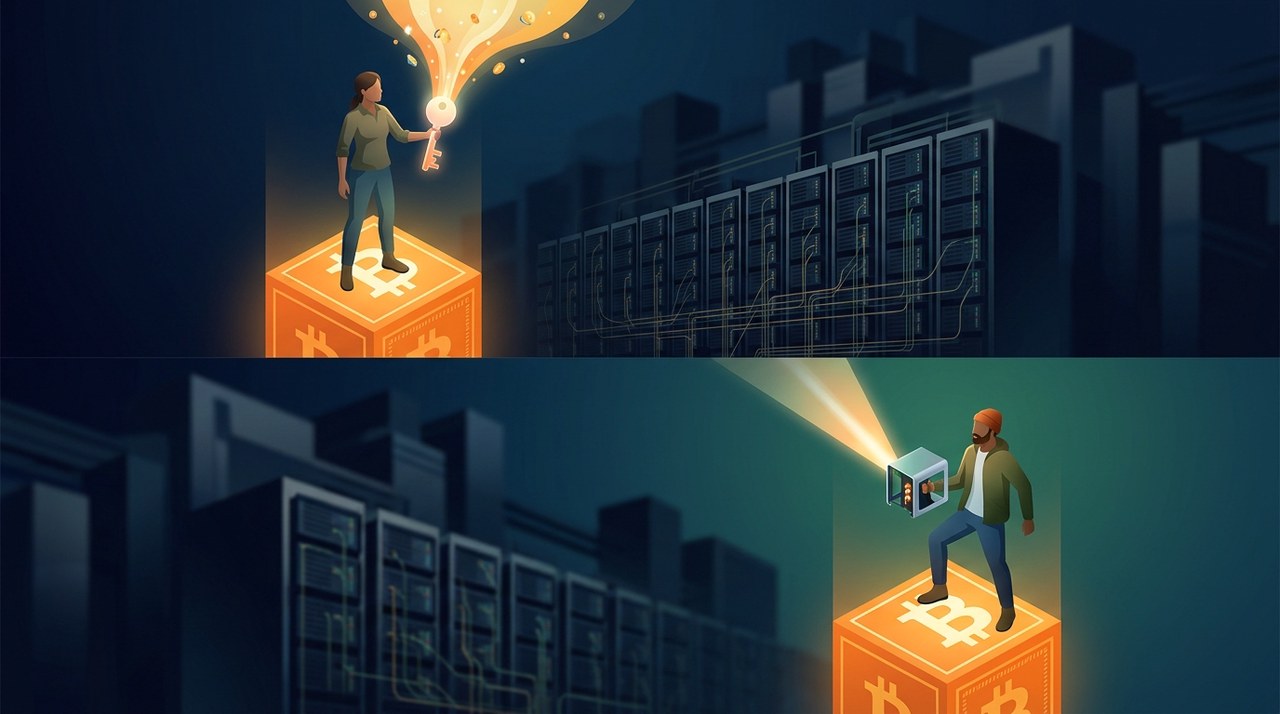
Imagine winning a lottery where the odds stacked against you are 67 million to one. That is pretty much what happened earlier this week when two solo Bitcoin miners managed to independently discover blocks back-to-back on Monday and Tuesday.
In a crypto industry dominated by massive corporate mining warehouses and collective pools, solo wins are extremely rare. Yet, against extraordinary odds, two individual operators managed to secure full block rewards all by themselves.
Two Fortunate Solo Block Discoveries
The first win occurred at block height 973262. Blockchain data showed that an independent miner using a Futurebit Apollo device successfully found the block. Mining logs indicate this was only the fourth block ever credited to an Apollo solo miner, and the first recorded win for the hardware since March 2025.
"Gradually, then suddenly. We (the people) hit a Bitcoin block today. Bitcoin belongs in the hands of sovereign individuals. And we’re building to keep it there."
Shortly after, a second solo victory arrived at block height 973413. This time, an individual working through Solo CKPool discovered a block while operating with just 16.2 terahash per second (TH/s) of computing power.
Beating Odds of 1 in 67 Million
To put 16.2 TH/s into perspective, Futurebit's flagship miner, the Apollo III, reaches up to 18 TH/s in Turbo mode. Meanwhile, the overall Bitcoin network hash rate recently climbed back to around 1,070 exahash per second (EH/s), with the 7-day hash rate returning to 1 zettahash per second (ZH/s) after nearly eight months.
Operating at 16.2 TH/s means contributing just one 67-millionth of the network's total computing power. Statistically, a miner at that scale has a daily success chance of approximately 0.0002%. That translates to an expected average wait time of nearly 1,200 years between block discoveries!
Solo Mining vs. Industrial Pools
The vast majority of Bitcoin blocks are discovered by large industrial pools like Foundry, Antpool, and F2pool. These companies pool together massive computing power from thousands of participants to find blocks consistently, sharing proportional rewards among contributors.
Solo mining works differently. Instead of sharing rewards, independent miners use services like Solo CKPool to pursue blocks on their own. If they get lucky and solve a block, they keep the entire payout.
Market Context and Operational Considerations
Around the time of these block discoveries, Bitcoin (BTCBTC+1.03%) was trading near $80,545 (+0.86%), while EthereumETH+1.35% was around $2,339 (+1.16%).
While these stories show that individual participation remains technically open on decentralized networks, solo mining involves significant operational risks and unpredictable income. Past performance of digital assets or historic block finds does not guarantee future results. Track live market updates at Bitkub Market.
Latest blog posts

AI Agents Are Driving a Massive New Surge in Cybersecurity
Tech giants are rushing to launch security tools as autonomous AI agents take over digital systems.
|
CFTC Sues Utah to Block Action Against Kalshi Markets
The US CFTC has filed a lawsuit against Utah to stop state legal action seeking $60 million from prediction market Kalshi.



Ripple CEO Meets US Treasury Secretary at Swell 2026
Ripple CEO Brad Garlinghouse shared the stage with U.S. Treasury Secretary Scott Bessent at Swell 2026 in New York City amidst major banking and partnership announcements.
|