


Tron Outearns Ethereum and Solana in Monthly Revenue
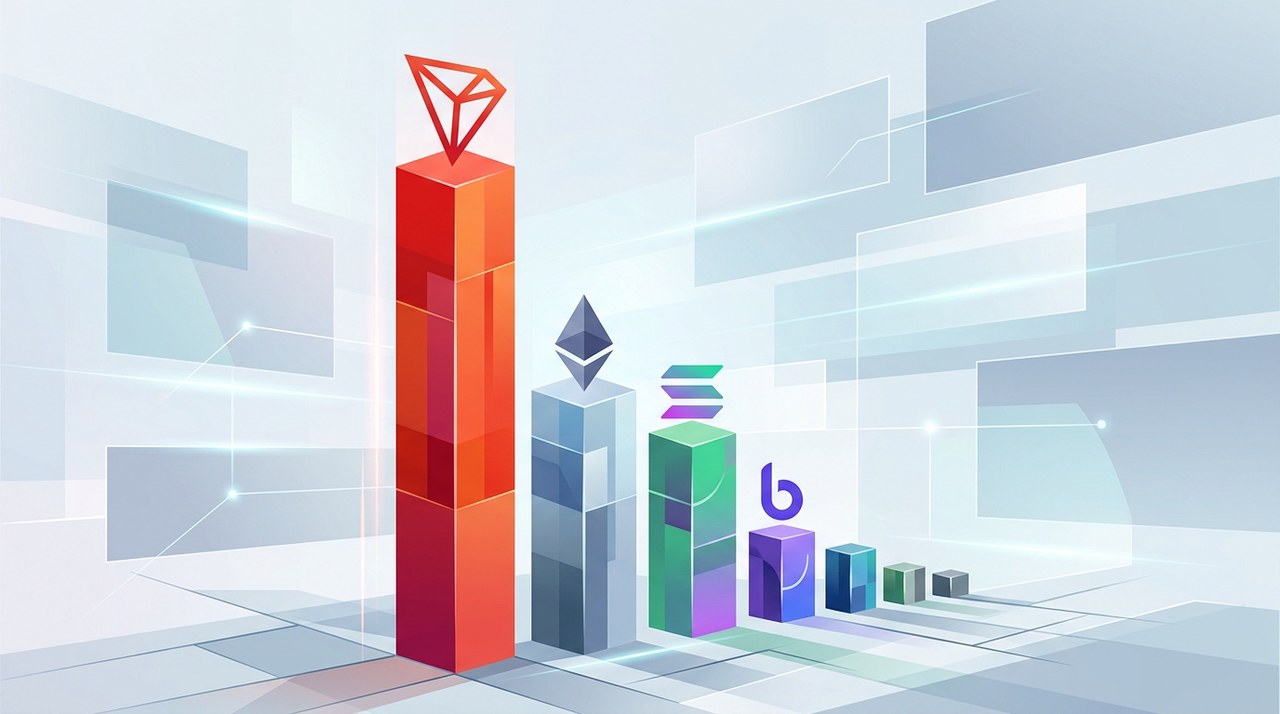
TronTRX-0.36% Takes Top Spot in Blockchain Revenue
Have you checked the crypto earnings tables lately? You might be surprised by who is taking home the top spot in network fees.
Over the past 30 days, the Tron network pulled in $23.41 million in total revenue. That is more than EthereumETH+1.32%, SolanaSOL+2.83%, and Base earned over the same period combined.
Data highlighted by Lookonchain and DefiLlama shows Tron holding the number one rank across 24-hour, 7-day, and 30-day revenue metrics as of October 2026.
Breaking Down the Revenue Scoreboard
To see how wide this gap really is, let us look at the network earnings breakdown reported over recent timeframes.
Tron generated $554,976 in a single 24-hour window, $5.8 million across seven days, and $23.41 million over 30 days. On an annualized basis, DefiLlama estimates Tron's annual revenue at around $340 million.
Here is how other major networks performed over the same 30-day period:
- Ethereum (ETH): $6.34 million
- Solana (SOL): $3.40 million
- Robinhood Chain: $2.88 million
- Base: $2.78 million
- Polygon: $2.27 million
When you add BNBBNB+1.19% Smart Chain (BSC), Arbitrum, Hyperliquid L1, and Avalanche to those five networks, all nine competitors totaled roughly $21 million over 30 days.
Tron beat all nine of those top blockchain networks combined by about $2.4 million.
Where Does Tron's Revenue Come From?
The core driver behind these fees is digital dollars, specifically tokenized stablecoins like TetherUSDT+0.33%.
DefiLlama data shows the global stablecoin market at roughly $302 billion. Tron holds about $94.5 billion of that total supply.
Only Ethereum carries more stablecoin value, holding approximately $144 billion.
However, how users interact with stablecoins differs across chains. Tron's Q2 report showed over $89 billion in USDT on its network by late June. That marked an all-time high and represented over 47% of all circulating USDT.
During that second quarter, Tron recorded an average of 3.5 million daily active users.
While much of Ethereum's stablecoin supply rests in Decentralized Finance (DeFi) protocols, Tron's stablecoins move frequently for exchange withdrawals, global remittances, and everyday merchant transactions. The network collects transaction fees for this activity in TRX.
This reflects a broader trend in global payments. For example, Visa recently launched its stablecoin payments pilot into production, demonstrating how blockchain payment infrastructure is expanding into mainstream finance.
Revenue Leadership vs. Revenue Growth
While Tron holds the top revenue spot, its growth rate shows signs of cooling.
Tron's 30-day revenue dipped 4.2% compared to the previous 30-day period, and its 24-hour figure fell 12.4% day-over-day.
In contrast, Ethereum's 30-day revenue rose 117% from its prior period, even though its 7-day total experienced a recent decline after an earlier activity spike.
Quarterly comparisons reveal similar nuances. Tron logged $89 million in Q2 protocol fees, placing second behind Hyperliquid's $199 million.
Because Hyperliquid's revenue comes from exchange trading fees rather than base layer-1 chain fees, DefiLlama ranks it ninth on its chain revenue leaderboard despite high trading volume.
Base Layer Chain Fees vs. App Layer Earnings
It is also useful to separate base layer network revenue from overall ecosystem activity.
For instance, while Solana's base network brought in $3.4 million in 30-day revenue, applications built on Solana generated $193 million over the same period.
A chain revenue ranking measures what the network protocol retains directly, rather than total user expenditure across decentralized applications.
$30 Trillion Settled, But TRX Price Remains Flat
Tron has crossed a major operational milestone, settling over $30 trillion in total lifetime transfer volume.
Despite this transaction volume, the price of TRX has stayed relatively unchanged over the past year, trading around $0.34 compared to $0.3383 in earlier periods.
Past performance of digital assets or past operational performance is not an indicator of future results. Digital asset markets are subject to high volatility and risks. Investors should carefully evaluate market conditions at bitkub.com/th/market/TRX before trading.
Latest blog posts


Saylor Blames Macro Pressures for Bitcoin Weakness
Michael Saylor attributes Bitcoin's recent price struggles to rising bond yields, trade policy tensions, and massive AI spending.
|
Big Tech Earnings Week: Tesla, Meta, SpaceX, and Netflix
Big Tech companies enter a critical earnings week as investors evaluate whether heavy investments in AI, satellite tech, and streaming ads are paying off.


Could Bitcoin Hit $1 Million? The Dot-Com Comparison
Crypto analyst Michaël van de Poppe suggests Bitcoin could experience a dot-com style rally toward $1 million, though severe market risks remain.
|