


THORChain Halts 10 Blockchains After Ethereum Reorg Payout
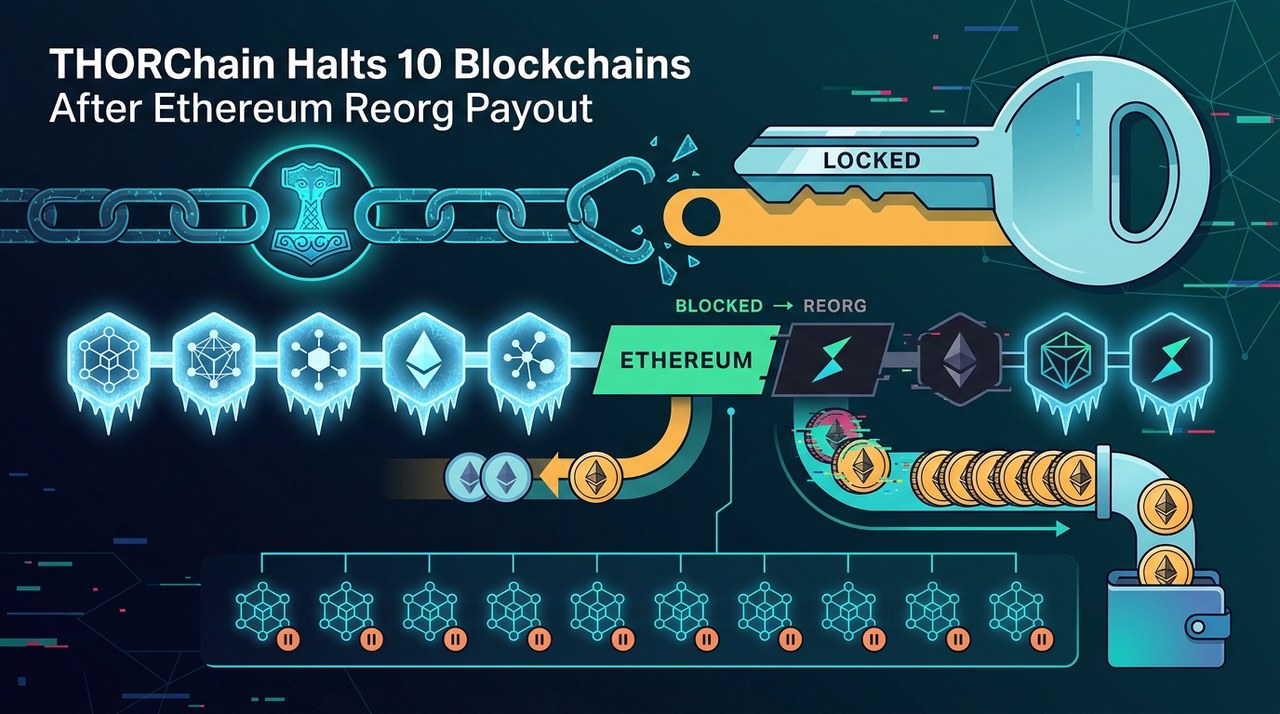
THORChain Halts Trading Across 10 Blockchains
Cross-chain liquidity protocol THORChain paused trading operations on 10 supported blockchains on October 31.
The temporary halt occurred at 11:34 UTC following an unexpected technical glitch.
An EthereumETH+1.79% block reorganization caused the protocol to pay out 10 ETH that it never actually received.
What Is a Block Reorganization?
To understand what happened, it helps to look at how blockchains finalize transactions.
Think of a blockchain as a digital chain of notebooks.
Sometimes, two network miners or validators write a new page at the exact same time.
When the network chooses the longer chain, the other temporary page gets discarded.
This event is called a block reorganization or reorg.
How the 10 ETH Overpayment Happened
During the incident on October 31, Ethereum experienced a single-block reorg.
A user submitted a transaction containing a 10 ETH deposit.
THORChain detected the deposit in the initial block and registered the incoming funds immediately.
However, the token swap missed its specified price limit.
As designed, THORChain's automated system initiated a standard refund to return the funds to the user.
Right as the refund processed, the underlying Ethereum block was dropped by the reorg.
This meant the original 10 ETH deposit vanished from the valid Ethereum chain.
Because the deposit block was dropped after processing began, THORChain sent out a 10 ETH refund without keeping the original deposit.
Why THORChain Paused 10 Connected Chains
THORChain connects multiple independent blockchains, such as BitcoinBTC+1.06%, Ethereum, and BNBBNB+1.58% Chain.
Because cross-chain trading relies on precise balance accounting across networks, a ledger mismatch poses risk.
To prevent further discrepancies or potential security exploits, node operators halted trading on 10 chains.
This allowed developers to review transaction logs and update state parameters safely.
Key Takeaways for Crypto Users
- Reorg risks exist: Fast transaction processing can occasionally collide with block reorganizations.
- Security pauses: Halting trading protects liquidity pools while developers resolve state mismatches.
- Confirmation times: Protocols often adjust confirmation delays to prevent reorg errors.
Understanding how protocols handle technical glitches helps traders evaluate decentralized finance risks.
Past performance of digital assets is not an guarantee of future performance.
You can monitor live Ethereum prices and market data on Bitkub Market.
Latest blog posts



XRP Community Divided Over Ripple Role in Token Price Growth
An open letter to Ripple leadership has ignited a community debate over whether the company has an obligation to support XRP's market price.
|


Cambodia Casino Crackdown Sees $1.07B in Crypto Flows
A report from TRM Labs reveals Sihanoukville casinos processed over $1 billion in crypto, mainly USDT on TRON, despite heavy government enforcement.
|
Strategy CFO Resigns: What It Means for MSTR
Strategy announced CFO Andrew Kang is stepping down on short notice. Here is a clear look at the executive transition, succession plan, and treasury holdings.
|