


Stellar Taps Chainlink to Unlock $3.5B in Tokenized Assets
Bringing Tokenized Assets to Life
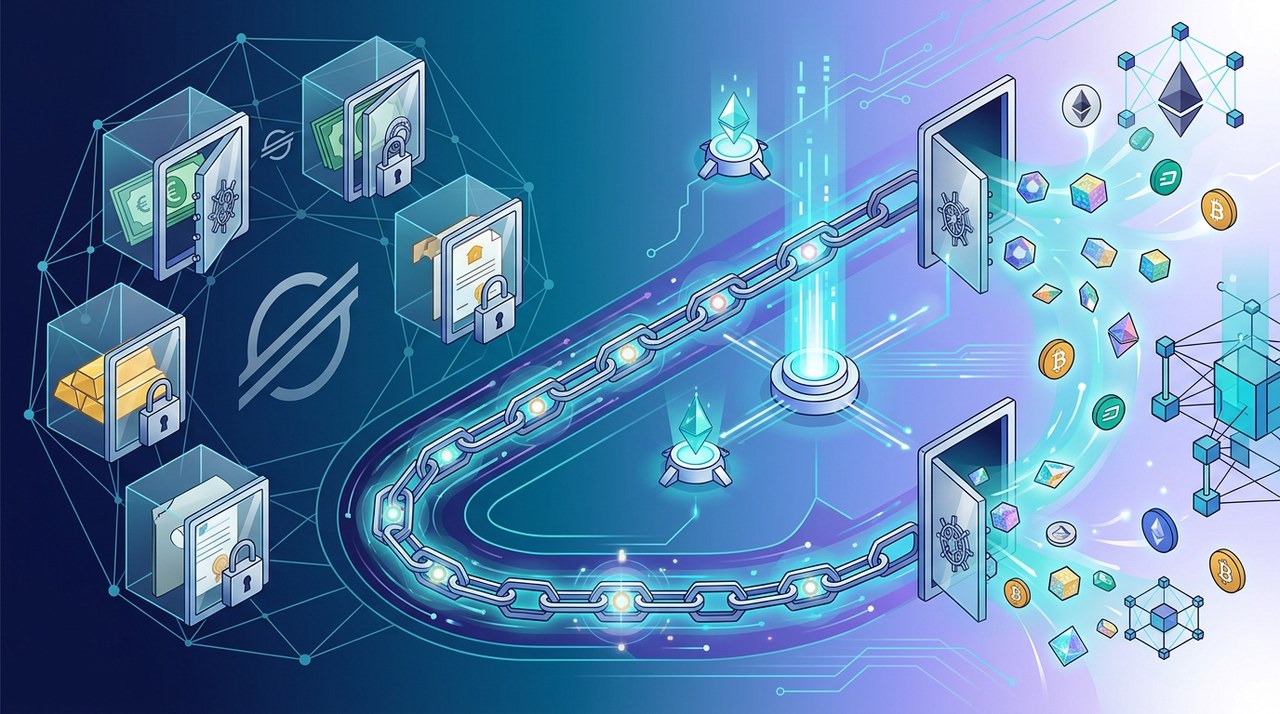
StellarXLM-4.20% has taken a major step forward in decentralized finance by launching ChainlinkLINK-3.50% Data Feeds and Data Streams on its mainnet.
To accelerate adoption, the Stellar Development Foundation is fully covering the operational costs of running these oracles through the Chainlink Scale program.
This move connects $3.54 billion worth of tokenized real-world assets (RWAs) directly to broader crypto markets. Until now, these assets sat mostly isolated on the network.
Where Stellar Stands in the RWA Market
Real-world asset tokenization is growing rapidly, and Stellar is one of the biggest players in the space.
Data from analytics tracker RWA.xyz shows that Stellar ranks fourth globally in total RWA volume, trailing only Ethereum, BNBBNB-2.13% Chain, and Solana.
However, capital on Stellar looks quite different from other networks. It consists primarily of conservative reserves held by institutions across strictly regulated sectors.
Inside Stellar's Institutional Ecosystem
Stellar's tokenized ecosystem includes key financial products across Europe and the United States:
- European Fintech: Platforms like Spiko have digitized Amundi's interbank swaps in euros, pounds, and francs, alongside Eurozone treasury bills.
- U.S. Public Sector: OndoONDO-4.83% Finance provides tokenized products backed by U.S. government bonds, while investment giant Franklin Templeton runs its flagship money market fund on the network.
- Regulated Liquidity: Infrastructure liquidity comes from Circle's USDCUSDC+0.24% stablecoin and Figure's SEC-registered YLDS stablecoin.
Why Billions Sat Idle on the Blockchain
You might wonder why billions of dollars in assets were sitting idle on Stellar without participating in active trading or lending.
The problem was technical. Stellar's smart contract environment, Soroban, had no direct connection to external real-time data.
Without reliable price feeds, the network held massive amounts of liquid assets that operated merely as static digital warehouse receipts.
For instance, users could not use tokenized Ondo bonds as collateral for automated stablecoin loans because the system could not calculate instant market fluctuations or liquidation levels.
How Chainlink Changes the Picture
Integrating Chainlink solves this pricing issue by delivering real-time, low-latency market quotes directly to Soroban smart contracts.
This upgrade unlocks several key capabilities for developers and institutional users:
- Automated Lending: Smart contracts can recalculate collateral values every second.
- Safe Liquidations: Large positions can be unwound smoothly during market volatility without risking system crashes.
- New Financial Products: Builders can create prediction markets, stablecoins, and perpetual futures based on tokenized equities.
A Strategic Play for Institutional DeFi
Stellar's decision to subsidize oracle costs comes during a period of rising activity on the network.
Over the past month, RWA transfer volume on Stellar expanded by 25%, while stablecoin market capitalization grew by 10%.
Please note that past performance of digital asset metrics or network transfers is not an indicator of future results. Crypto markets carry inherent volatility risks.
By removing financial barriers for developers, Stellar is working to challenge leaders like Ethereum in structured DeFi, turning static asset reserves into active working capital.
Latest blog posts


Shiba Inu Forms First 4-Hour Death Cross in October
Shiba Inu faces short-term chart pressure as a 4-hour death cross forms alongside broader market drops.
|
AI Agents Make 138M Crypto Payments as US Leads Spending
AI agents have executed over 138 million crypto transactions, with US wallets driving 88% of AI model payments while China leads in security services.


Standard Chartered Pushes $2T Stablecoin Forecast to 2030
Standard Chartered Bank has revised its $2 trillion stablecoin market cap forecast from 2028 to 2030 due to stalling supply growth.
|