Stablecoin Payments Are Fast But Have Hidden Costs
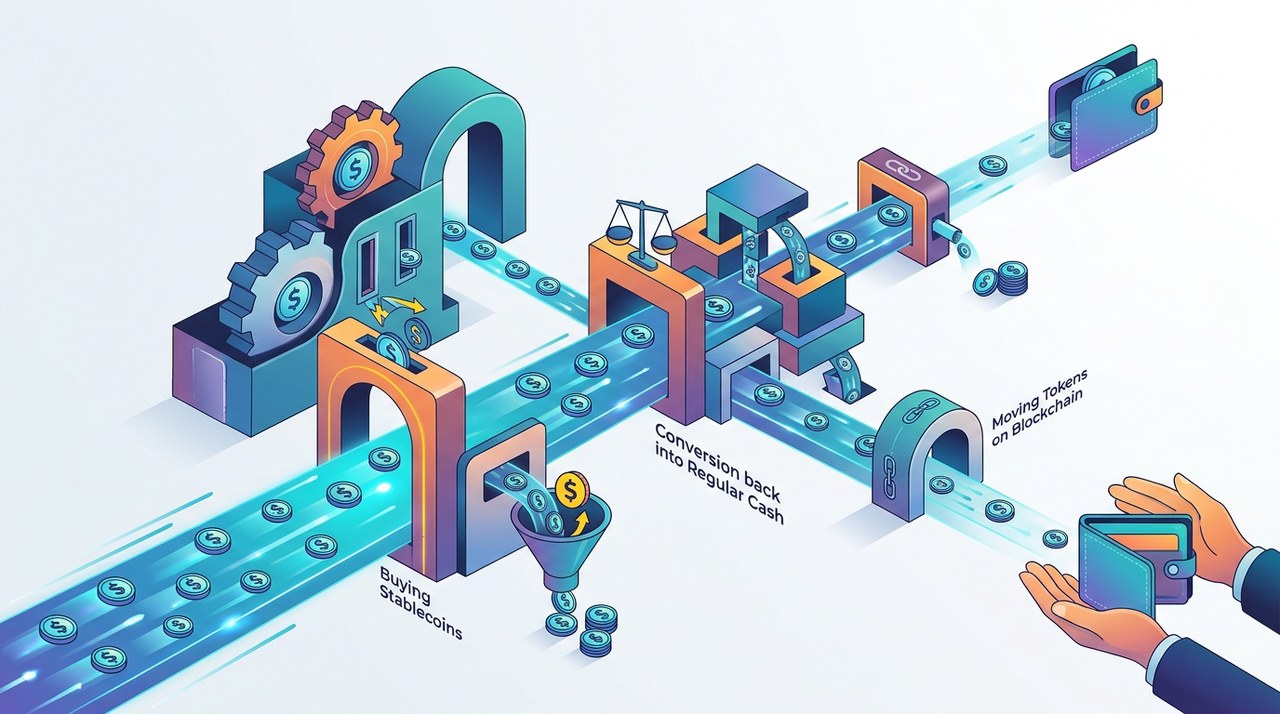
The High Cost of Moving Digital Dollars
Moving money across borders using stablecoins is often praised for its incredible speed.
Transactions can take just seconds on modern blockchains, making digital dollars look like a revolution for global payments.
However, a recent experiment conducted by the Bank of Italy revealed a surprising cost problem hidden behind that speed.
The study found that sending $200 using stablecoins can cost anywhere from just 60 cents up to nearly $18.
Researchers evaluated ten different international payment routes to understand where funds are lost along the way.
The data showed that moving the tokens themselves on a blockchain accounts for only a tiny fraction of the total cost.
Instead, the vast majority of expenses come from buying the tokens in the first place and converting them back into regular cash later.
For everyday workers receiving their salary in stablecoins, these extra conversion costs can turn out to be a major financial burden.
Where Do the Fees Actually Add Up?
To understand why stablecoin payments can get expensive, it helps to break down the process into three distinct steps.
The first step is buying stablecoins with traditional money, which is commonly referred to as on-ramping.
The second step is transferring those digital tokens over a blockchain network to another person's crypto wallet.
The third step happens when the recipient sells those tokens for local cash to spend in the real world, known as off-ramping.
Every single stage in this journey can carry its own separate processing fee.
In addition to upfront processing charges, financial platforms often charge an exchange-rate spread.
An exchange-rate spread is the hidden gap between the market value of a currency and the rate offered by a broker.
Even when a payment platform advertises zero transfer fees, a wide exchange-rate spread can still secretly shrink your final payout.
The Bank of Italy study showed that total costs spanned from 0.30% to nearly 9% across the full payment journey.
It is worth noting that this 0.30% to 9% figure represents the entire end-to-end journey rather than a global average cash-out fee.
Similar research published by the Bank for International Settlements (BIS) examined these exact dynamics.
The BIS study looked at how conversion and withdrawal charges directly impact whether stablecoins can compete with standard banks and fintech services.
Why Freelancers and Gig Workers Feel the Strain
High conversion fees are not just an abstract financial issue; they directly affect gig economy workers.
A survey conducted by BVNK, a stablecoin infrastructure provider recently acquired by Mastercard, highlighted how widely crypto payments are used.
According to BVNK, freelancers, gig workers, and marketplace sellers receive roughly 35% of their total income in stablecoins.
The utility of stablecoins is well-proven across many international industries today.
However, receiving earnings in a crypto wallet creates an obvious real-world problem.
While wages arrive quickly in a digital wallet, monthly rent, groceries, and utilities must still be paid from a traditional bank account.
When workers are forced to convert their digital dollars to pay living expenses, cash-out fees eat away at their hard-earned wages.
The central challenge is not getting the money into a wallet, but how much spendable money remains when it reaches somewhere useful.
Industry Perspectives from TOKEN2049
Industry leaders discussed these lingering payment frictions at the TOKEN2049 conference.
Taylor Bossung, the Head of Corporate Affairs at RedotPay, gave detailed insights into current pain points.
RedotPay issues both physical and virtual cards that allow users to spend stablecoins at over 130 million merchants globally.
"On-ramping and off-ramping is still too expensive."
Bossung explained that while buying small everyday items with a crypto card is now seamless, large withdrawals remain problematic.
For example, using a stablecoin card to buy groceries does not mean you can afford to withdraw cash for a house down payment.
When a user needs to pull out substantial capital for a major purchase, cash-out fees become significantly more costly.
The Challenge of User Experience and Complexity
Beyond high costs, the technical complexity of using crypto creates another significant hurdle for regular consumers.
Before users can even begin comparing fees, they must navigate confusing blockchain systems.
Recipients often have to deal with long wallet addresses, choose between competing blockchain networks, and manage gas tokens.
Gas tokens are separate cryptocurrencies required to pay transaction fees on specific blockchains.
Placing these technical decisions between everyday people and their hard-earned paychecks creates heavy friction.
Raagulan Pathy, CEO of the global stablecoin money app KAST, shared his company's vision for solving this issue.
"Keep the money movement as simple as stablecoins allow while the user experience looks like Web2."
Pathy emphasized that user interfaces should look like familiar banking apps, such as sending money directly to a mobile phone number.
"What people care about is money, not the instrument underneath."
While a sleek app interface hides the complex blockchain technology, someone behind the scenes still has to arrange conversion and delivery.
For businesses adopting stablecoin payroll, this distinction is vital if they want to build payment systems that actually support their workers.
Comparing Stablecoins with Traditional Money Transfers
Whether stablecoins offer better value depends heavily on what the recipient plans to do with the money.
Someone who wants to keep digital dollars in a wallet faces very low ongoing costs.
However, someone who needs local fiat currency immediately must pay conversion charges.
Likewise, someone starting with regular money must factor in the cost of buying stablecoins initially.
To judge stablecoin value accurately, we must compare them to traditional money transfer options.
Data from the World Bank for Q3 2025 showed that the global average cost for traditional international remittances was 6.36%.
During the same period, the World Bank's digital-only money-transfer-operator index sat at 3.54%.
Past performance or historical benchmark rates of money transfer services do not guarantee future costs or performance.
Comparing stablecoins only to expensive traditional bank wires can lead to misleading conclusions.
A true side-by-side comparison must track the exact same payment amount to the same destination, local currency, and payout method.
What Will Drive Down Stablecoin Fees in the Future?
Lowering off-ramp costs for everyday consumers will require a combination of clearer regulations and market growth.
Taylor Bossung believes regulatory frameworks are essential for creating cheaper financial bridges.
He explained that formal regulation allows on-ramp and off-ramp service providers to negotiate better commercial deals with traditional banks.
A healthy, competitive market can then force providers to lower the price of core currency conversion functions.
When commercial terms improve for service providers, those savings can be passed down as better exchange rates and smaller withdrawal fees.
For a freelancer paying rent or a business paying overseas suppliers, the real test of stablecoins comes down to three simple factors.
It is about how much actual money arrives, how fast it reaches the bank account, and whether the recipient can easily spend it.
Latest blog posts

Canadian Crypto King Fraud Trial Handed to Jury
Canadian Crypto King Aiden Pleterski declared his innocence as closing arguments ended in his criminal fraud trial, sending the case to a jury.

CFTC Revives Polymarket Probe Over U.S. Access
U.S. regulators are re-examining Polymarket to see if American traders accessed its offshore platform despite a 2022 agreement.

SK Hynix Posts Record Q3 Profits Amid AI Memory Shortage
SK Hynix reported record Q3 revenue of 104.6 trillion won, powered by explosive AI memory chip demand that is expected to outstrip supply through 2030.