SK Hynix Pauses Solidigm IPO: What It Means for Investors
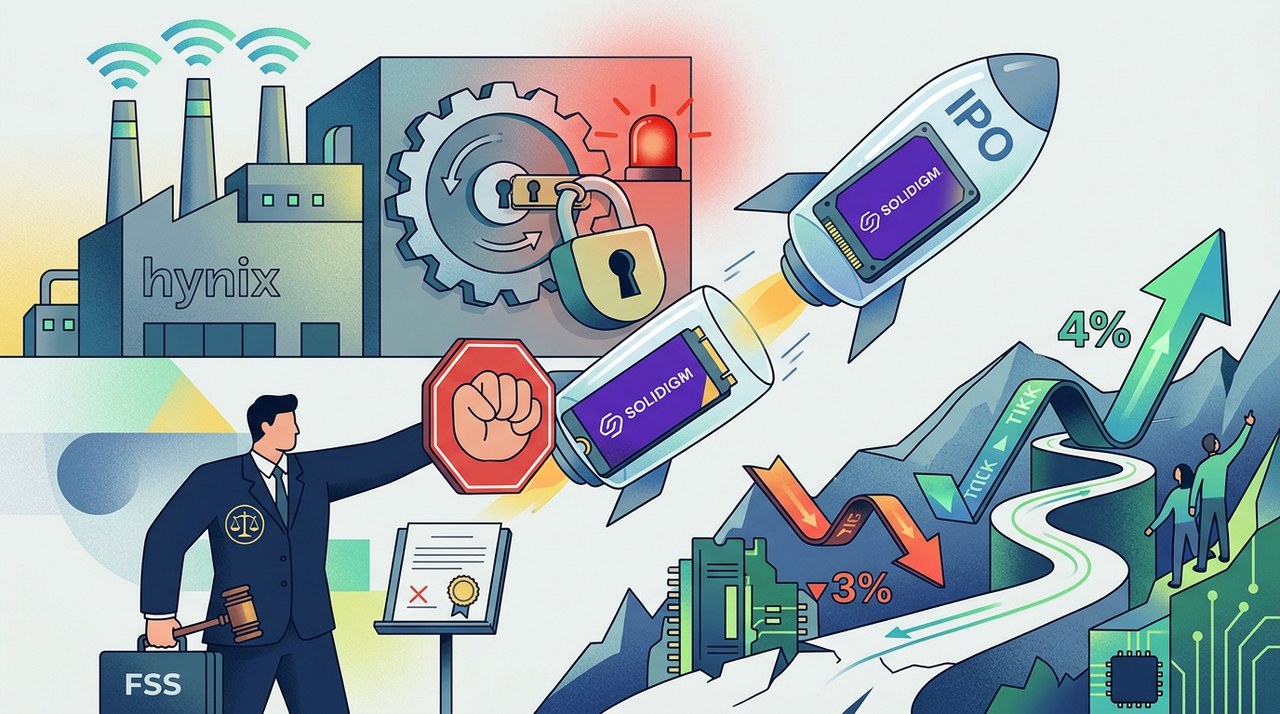
SK Hynix Pauses Solidigm IPO Amid Market Swings
South Korean memory chipmaker SK Hynix has put its plans to review an initial public offering (IPO) for Solidigm on hold.
Solidigm is SK Hynix's US-based solid-state drive unit. It needs new factory space in the United States to keep up with growing demand.
Following the announcement, SK Hynix shares initially dropped by as much as 3%. However, the stock quickly recovered and closed the trading day up 4%.
Please keep in mind that past corporate performance or stock price movements do not guarantee future results.
Why Was the IPO Put on Hold?
There are two main perspectives on why the IPO review was paused: regulatory concerns and general market conditions.
1. Regulatory Scrutiny in South Korea
South Korea's Financial Supervisory Service (FSS) raised questions about listing Solidigm in the United States.
FSS Governor Lee Chan-jin mentioned that officials were checking whether a US listing might breach rules on dual listings.
Regulators are looking closely at how such a listing impacts minority shareholder protection rules in South Korea.
2. Broader Semiconductor Market Turbulence
SK Hynix pointed to recent swings in the technology stock market as the key reason for rethinking the IPO timeline.
The company stated that a correction in chip stocks prompted management to consider whether an immediate listing truly served shareholders.
SK Hynix emphasized that Solidigm's business outlook and overall funding needs remain completely unchanged.
The Capital Dilemma: Factories vs. Shareholder Payouts
SK Hynix originally saw an IPO as a convenient way to raise money for new factories without hurting payouts to shareholders.
A separate listing could also give Solidigm an independent valuation. SK Hynix feels the market currently overlooks Solidigm's growth story.
At the same time, SK Hynix has committed to generous returns for its investors.
- In August, the board approved a 40 trillion won buyback and share cancellation program.
- The company increased its return target to over 50% of cumulative free cash flow through 2027.
- Management plans to detail its future payout strategies during its Q3 earnings call on October 28.
Because no replacement funding plan was announced, SK Hynix is still deciding when, how much, and through what methods to finance new investments.
Looking at the Broader Market Context
Solidigm's current facilities have very little room left to increase output just as artificial intelligence (AI) memory demand climbs.
Despite strong long-term demand, tech stocks across the globe have experienced significant volatility recently.
- South Korea's KOSPI index fell 20.72% over 10 trading sessions leading up to October 20 due to an AI selloff.
- In the US, the Nasdaq Composite dropped 2.6% on Thursday, marking its weakest session since June.
- AI data center operators took hits too, with CoreWeave sliding 10% on Thursday and NextDC dropping nearly 40% on Wednesday.
However, industry leaders remain optimistic about long-term demand. Nvidia CEO Jensen Huang stated he does not expect a memory chip glut by 2029.
Data supports this demand growth, with South Korea's chip exports jumping 222.5% year-over-year in early October.
What Should Investors Watch Next?
Investors will be paying close attention to SK Hynix's upcoming Q3 financial results report scheduled for October 28.
Market participants will look for clear updates regarding alternative funding options for Solidigm's US expansion.
They will also seek details on how the company plans to balance heavy capital expenditures with its generous shareholder payout goals.
Latest blog posts

Bond Market Signal Last Seen in 2025 Tariff Shock Flashes Again
Global corporate bond yield spreads have reached their highest point since May 2025 due to mounting worries over debt-funded AI investments and geopolitical tensions.


HSBC Launches Red Coin Stablecoin for Hong Kong Users
HSBC is introducing Red Coin, a Hong Kong dollar-backed stablecoin, to more than 3.3 million PayMe users for everyday payments and tokenized investments.
|


South Africa Backtracks on Strict Crypto Rules After Public Backlash
South African officials plan to rethink proposed crypto rules after thousands of public complaints warned the laws would harm local innovation.
|