Scientists Reverse 60 Years of Cellular Aging in Lab
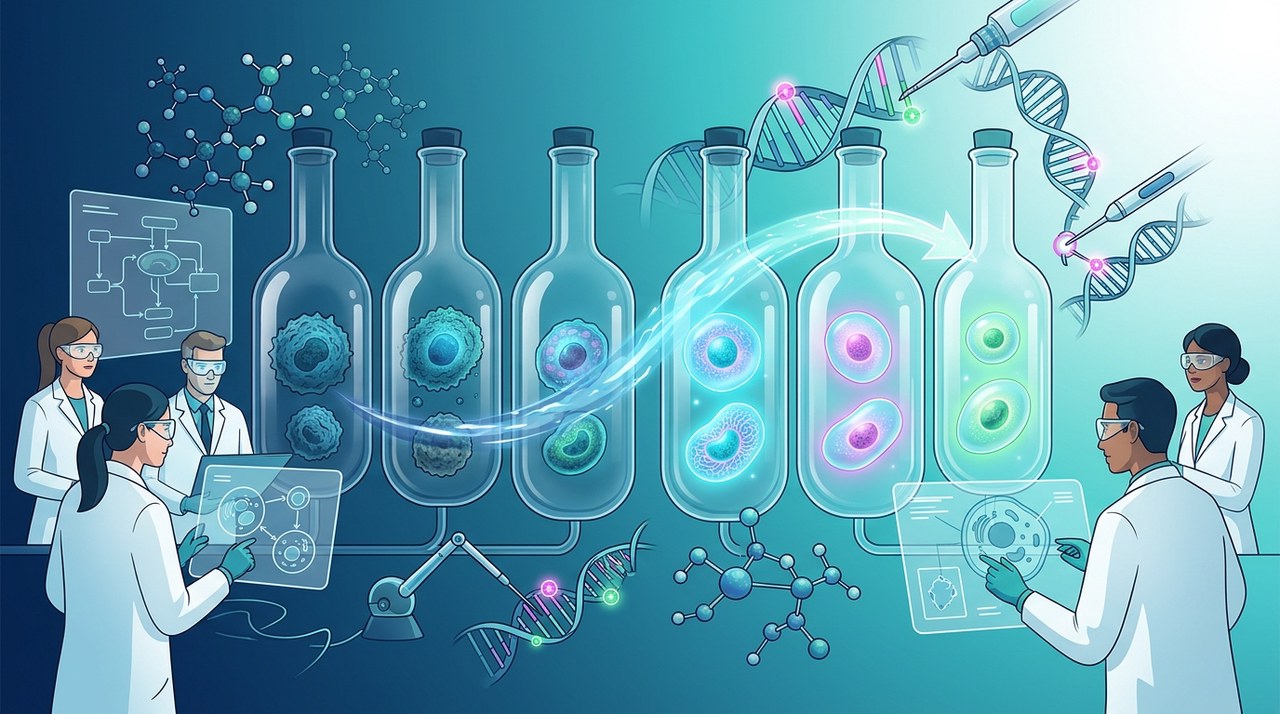
Turning Back the Molecular Clock by Six Decades
Imagine taking blood cells from an 80-year-old person and making them behave like they belong to a teenager. That is precisely what researchers in Germany recently accomplished in a lab dish.
Scientists at the University of Bonn managed to erase more than 60 years of cellular aging. The discovery opens up exciting possibilities for medicine, but it also raises a big question: Can this same science eventually make aging human tissues young again?
Inside the Breakthrough at the University of Bonn
To understand how this worked, it helps to look at how cells normally develop. The Bonn team focused on immature blood cells taken from an 80-year-old donor.
Instead of using traditional reprogramming methods, the scientists converted these blood cells directly into neural stem cells. Neural stem cells are special building blocks that can develop into functional brain cells.
Measuring Age with Epigenetic Clocks
To test whether the cells actually got younger, the researchers used tools known as epigenetic clocks. These biological clocks measure chemical tags on DNA that accumulate as we get older.
When the team checked the converted cells, the biological clocks showed a striking result. The cells registered as younger than 20 years old, meaning over six decades of molecular aging had vanished.
Why Skipping the Stem-Cell Step Matters
In earlier anti-aging experiments, scientists usually passed cells through an intermediate stem-cell phase. That older method reset biological age rapidly, making it difficult to observe what was happening during the transformation.
The University of Bonn team took a different path by skipping that middle step. This allowed the cells to regain their youth at a gradual pace.
“In our approach, rejuvenation occurred gradually and could be tracked for over 100 days,” said Professor Oliver Brüstle, who led the research.
Having a 100-day window gives researchers time to examine which chemical compounds speed up or interrupt the rejuvenation process. This insight could help scientists better understand conditions like Alzheimer's disease, where biological aging is a major risk factor.
However, it is important to remember that this experiment was done entirely in Petri dishes. Researchers still need to determine whether this process can safely treat diseases in living human bodies.
First Steps into Human Testing: Life Biosciences
While lab dish experiments continue to reveal biological secrets, real-world human trials are already starting.
In January, United States regulators gave Life Biosciences approval to test ER-100. This experimental therapy is designed to rejuvenate damaged cells inside the human eye.
Early Results from Human Patients
On October 8, Life Biosciences published initial findings from its early human safety trial:
- Patient group: Three glaucoma patients received the experimental ER-100 treatment.
- Safety window: All three participants tolerated the treatment well across a 56-day evaluation period.
- Vision changes: Two out of the three patients showed preliminary improvements during standard vision tests.
While these early results are interesting, experts emphasize that this study was a small, uncontrolled safety trial. The ER-100 technique also differs from the Bonn laboratory approach. Scientists do not yet know if these cellular changes will lead to lasting health benefits for patients.
The Billion-Dollar Race to Rejuvenate Human Tissues
Even with many questions unanswered, venture capitalists and private investors are directing enormous amounts of capital into longevity science.
Investment stats over recent years show rapid growth across the longevity biotech sector:
- 2024 Capital: Longevity biotech startups pulled in $4.7 billion worldwide.
- 2025 Surge: Total funding jumped to a record $18.4 billion.
- 2026 Momentum: Investors added another $12.1 billion by mid-September 2026.
Tech Founders and Web3 Communities Bet Big
Prominent figures across technology and crypto are funding key projects in this emerging field.
NewLimit and Brian Armstrong
Coinbase co-founder Brian Armstrong launched NewLimit to explore cellular anti-aging remedies. In June, NewLimit secured $435 million in funding, backed by Eli Lilly Ventures.
The company focuses on target therapies for aged liver cells and plans to start human testing by 2027.
Retro Biosciences, Altos Labs, and VitaDAO
OpenAI CEO Sam Altman has backed Retro Biosciences, which reached a $1.8 billion valuation in May. Retro Biosciences is currently evaluating an experimental Alzheimer's pill in early trials.
Another major entity, Altos Labs, raised $3 billion to research cellular rejuvenation mechanisms.
Decentralized Web3 ecosystems are also getting involved. The crypto-backed collective VitaDAO has provided financial backing to more than 30 separate longevity initiatives globally.
What Lies Ahead for Anti-Aging Science?
Each of these companies is exploring a unique scientific angle to combat age-related health conditions. However, every team faces the same core challenge: demonstrating that their techniques work safely and consistently inside living people.
The experiment led by the University of Bonn provides researchers with a novel method to observe cell transformation. Moving molecular clocks backward by six decades in a laboratory environment marks an important scientific step.
The bigger long-term challenge is discovering whether modern medicine can turn these lab dish insights into practical, safe therapies for human health.
Latest blog posts


Tax Preparer Charged Over Fake Crypto Loss Claims
A Connecticut tax preparer faces federal charges for allegedly reporting fake crypto losses on client returns and diverting refund payments.
|
3 Big Tech Earnings Reports to Watch as AI Bills Keep Growing
Microsoft, Alphabet, and Amazon are set to report earnings this week as investors watch cloud growth and massive AI infrastructure spending.


California Opposes SEC Crypto Plan Over Risk Concerns
California regulators warn that a proposed SEC framework could weaken investor protections by limiting state-level pre-sale screening.
|