

Russian Investor Holds Stake in Tether as US Debt Hits $132B
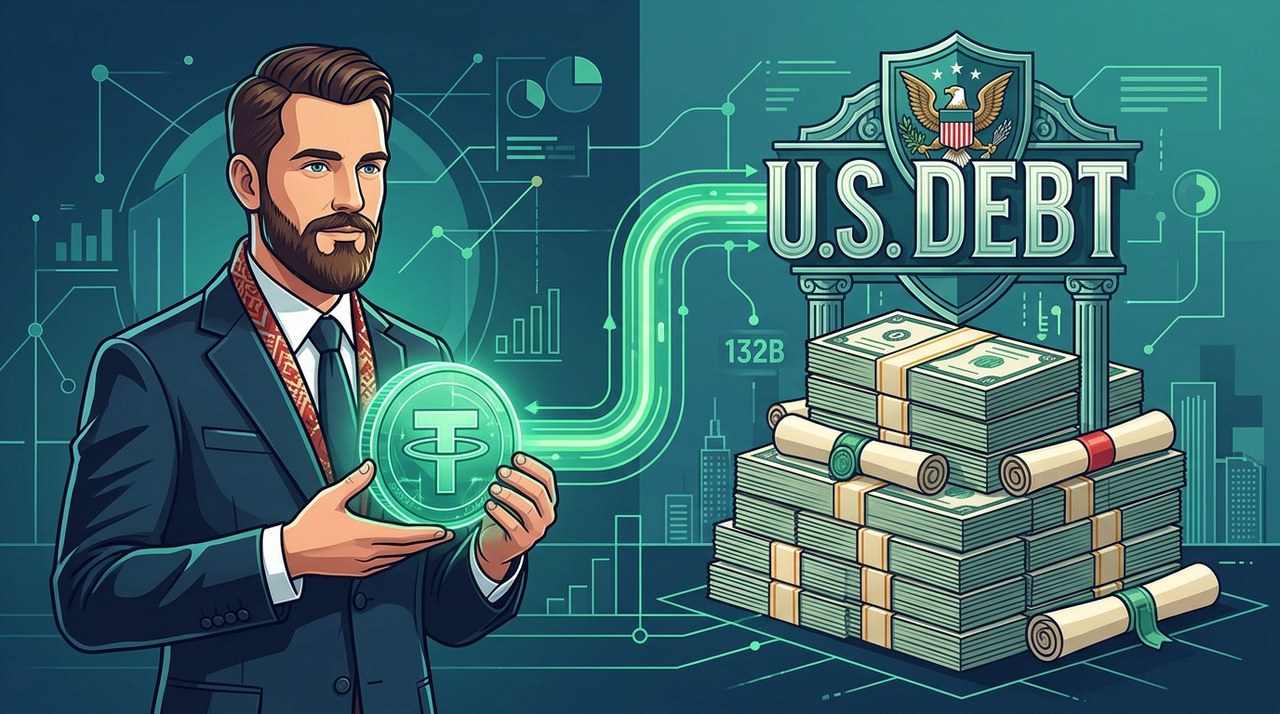
What Happened with TetherUSDT+0.00% and Its Ownership Reveal?
A little-known Russian venture capitalist holds a multibillion-dollar stake in Tether, according to a report by the Financial Times.
Tether issues USDT, which is the world's largest stablecoin. The token is pegged directly to the value of the US dollar.
To back USDT, Tether currently holds $132.4 billion in US government debt. That is more US debt than many countries hold, including the United Arab Emirates.
In contrast, official US data shows Russian residents hold only about $25 million in US Treasuries.
How Does Tether Generate Its Revenue?
Tether earns substantial interest payments from its massive pile of US Treasuries.
This interest income generated most of Tether's $4.5 billion operating profit over the past year.
Past performance of digital assets or corporate earnings does not guarantee future financial results. You can view current market activity for USDT on Bitkub.
Tether Chief Executive Officer Paolo Ardoino recently discussed how the company manages its reserve strategy during uncertain economic times.
We are building Tether for the long term, with the liquidity to meet redemptions and the financial strength to support infrastructure people can rely on amidst the chaotic geopolitical environment we live in.
Who Is Investor Vitaly Bezrodnykh?
The investor named in the report is 56-year-old Vitaly Bezrodnykh. Sources familiar with the matter told the Financial Times he acquired his stake around 2017.
His exact ownership percentage has not been publicly disclosed. Both Tether and a representative for Bezrodnykh declined to comment on the record.
In the early 2000s, Bezrodnykh served as head of business development at Kaspersky, a Russian cybersecurity company. He sold his Kaspersky shares back in 2012.
The US Treasury sanctioned 12 Kaspersky executives in 2024. However, Bezrodnykh was not among them, and no government authority has accused him of any wrongdoing.
Today, Bezrodnykh runs Fulgur Ventures. His firm has backed several BitcoinBTC+0.70% startups alongside Tether.
Together, Tether and Fulgur Ventures help fund Plan B, a major Bitcoin adoption project located in Lugano, Switzerland.
Fulgur Ventures and Tether also joined other investors to back JAN3, which recently raised $5 million in seed funding to expand its AquaBitcoin wallet platform.
Why Tether Matters to Policymakers in Washington
Tether has been expanding its presence directly within the US financial market.
In January, the company introduced USAT, a new dollar-pegged token designed to align with the 2025 US stablecoin regulation known as the GENIUS Act.
Former White House crypto advisor Bo Hines was appointed to lead the USAT initiative.
Additionally, financial firm Cantor Fitzgerald oversees most of Tether's reserve portfolio. US Commerce Secretary Howard Lutnick previously led Cantor Fitzgerald.
What Are Russian Regulators Warning About Stablecoins?
Russian ties to the broader crypto ecosystem continue to draw global regulatory attention.
For instance, VTB, a major Russian bank blacklisted by the United States, now sells Bitcoin directly to its banking clients.
At the same time, the central bank of Russia has issued warnings to citizens who use private stablecoins like USDT.
Kirill Pronin, head of the financial market infrastructure department at the Bank of Russia, voiced these concerns at Crypto Summit 2026 during a panel moderated by BeInCrypto.
I am still not sure that most of our investors who invest or are going to invest in stablecoins and cryptocurrencies really understand… that centralized, centrally issued tokens on the corresponding protocols in open blockchains are fully controlled and are subject to blocking, burning, monitoring, and so on.
What It Means for the Broader Crypto Market
Tether plays a massive role in global crypto liquidity by managing billions of dollars in backing assets.
Details about ownership and governance remain crucial as global authorities draft stricter laws for digital asset issuers.
Investors should note that centralized stablecoins carry specific operational risks. Token issuers reserve the right to freeze accounts under regulatory orders.
Latest blog posts
Adam Back Reassures Crypto World: AI Cannot Break Bitcoin
Cryptographer and Bitcoin pioneer Adam Back has dismissed fears that recent advances in artificial intelligence pose a threat to Bitcoin's security.
|
Dormant 2010 Bitcoin Wallet Wakes Up After 16 Years
A Bitcoin wallet from 2010 moved funds after 16 years, triggering online rumors about quantum attacks that experts quickly disproved.
|
Massachusetts Eyes January Deadline for Crypto ATMs
Regulators in Massachusetts and other states are cracking down on crypto ATM operators following an increase in scam incidents targeting local residents.
|