
Dormant 2010 Bitcoin Wallet Wakes Up After 16 Years
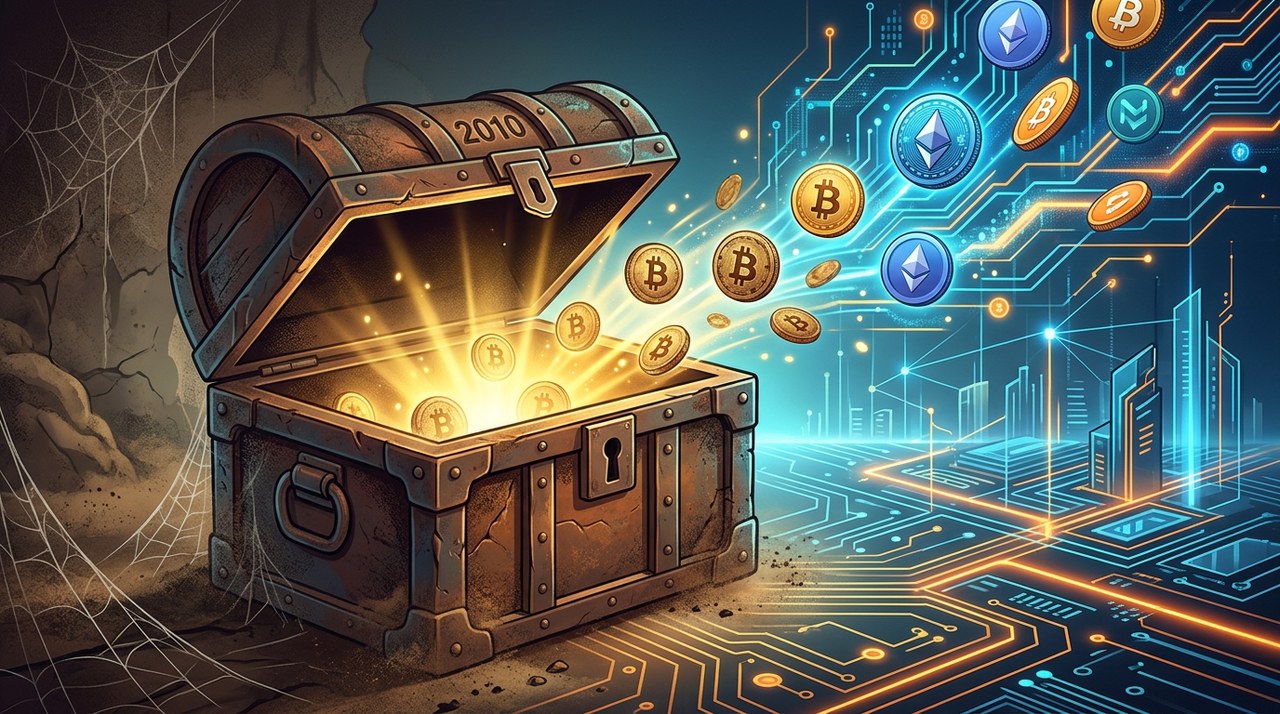
A 16-Year-Old Bitcoin Wallet Suddenly Moves Funds
A long-forgotten Bitcoin wallet from July 2010 came back to life after 16.4 years of inactivity.
The wallet originally received 0.05 BTCBTC+0.95% on July 21, 2010. At that time, those coins were worth less than half a cent.
Today, that small fraction of Bitcoin is worth around $3,000. Past performance of digital assets does not guarantee future results. You can view current market prices on Bitkub Market.
The unexpected transaction quickly caught the attention of the crypto community online. Popular commentator Crypto Rover highlighted the movement on X, noting that some investors panicked about potential quantum or AI-powered attacks.
However, Crypto Rover explicitly stated that no evidence supports any security breach or quantum exploit.
Why Experts Say This Was Not a Quantum Attack
Some social media users speculated that a hacker or AI might start by testing a tiny balance. Blockchain analysts quickly disproved this theory using basic network mechanics.
Educational outlet TFTC explained that the wallet used a standard legacy address starting with the number 1. This address format hides the public key behind a cryptographic hash.
The network only exposes the public key when the wallet owner signs an outgoing transaction. Until that moment, an attacker has no public key to target.
Industry expert Joe Burnett also pointed out that Bitcoin security relies on two distinct layers of protection.
Most bitcoin sits behind two locks. The first lock is a hash that hides the public key. The second lock is a signature that proves the owner approved the spend.
Furthermore, if a quantum computer had cracked Bitcoin encryption, an attacker would target exposed high-value wallets first.
For instance, Satoshi Nakamoto holds an estimated 1.1 million BTC in early addresses. Those public keys have been exposed since 2009, yet those coins remain completely untouched.
Understanding Bitcoin's Theoretical Quantum Risk
Quantum computers running Shor's algorithm could theoretically derive private keys if the public key is already visible on the blockchain.
Researchers estimate that roughly 7.12 million BTC sit in addresses with revealed public keys. That represents about 35% of the total circulating supply.
- Early Outputs: Around 1.7 million to 1.9 million BTC exist in original Pay-to-Public-Key (P2PK) outputs, which reveal public keys by design.
- Address Reuse: Most of the remaining exposed coins stem from users sending multiple transactions from the same address.
Despite these theoretical figures, current quantum hardware remains far too weak to break modern encryption algorithms.
How Developers Plan to Keep Bitcoin Secure
Blockstream CEO Adam Back has repeatedly addressed these concerns, describing current quantum technology as very primitive.
Back estimates that any real quantum threat is still 20 to 40 years away. This gives developers ample time to deploy post-quantum cryptographic upgrades.
Bitcoin developers are already working on long-term defenses. Upgrades like Bitcoin Improvement Proposal 361 (BIP 361) aim to introduce quantum-resistant signatures to the network.
In the meantime, everyday holders can follow simple best practices to protect their coins.
- Avoid reusing Bitcoin addresses for multiple transactions.
- Move older funds stored in legacy P2PK format to modern, unexposed address types.
Latest blog posts

Massachusetts Eyes January Deadline for Crypto ATMs
Regulators in Massachusetts and other states are cracking down on crypto ATM operators following an increase in scam incidents targeting local residents.
|


Solana Founder Explains AI, Public Keys, and Crypto's Future
Solana co-founder Anatoly Yakovenko shared four key pillars for Solana's endgame, highlighting why AI cannot fake cryptographic public keys.
|
Craig Wright Explains Bitcoin Halving Math and Miner Fees
Craig Wright argues Bitcoin must double in price every four years unless network transaction fees grow enough to cover miner revenue gaps.
|