
Ripple Engineering Director Teases Major 2027 XRP Ledger Overhaul

RippleXRP-0.08% Teases Big Plans for XRP Ledger in 2027
Ripple is laying the groundwork for a major technical transformation of the XRP Ledger (XRPL). Viijay Khanna, Ripple's Director of Engineering, recently confirmed that team members are working on big updates scheduled for 2027.
The announcement comes at a time when industry experts and market participants are closely watching how legacy networks adapt to institutional financial needs. The planned upgrades aim to reshape how the network handles smart contracts, bank settlements, and heavy transaction volumes.
We have big plans for performance improvements lined up for 2027.
The Ongoing Debates Around Blockchain Speed and TPS
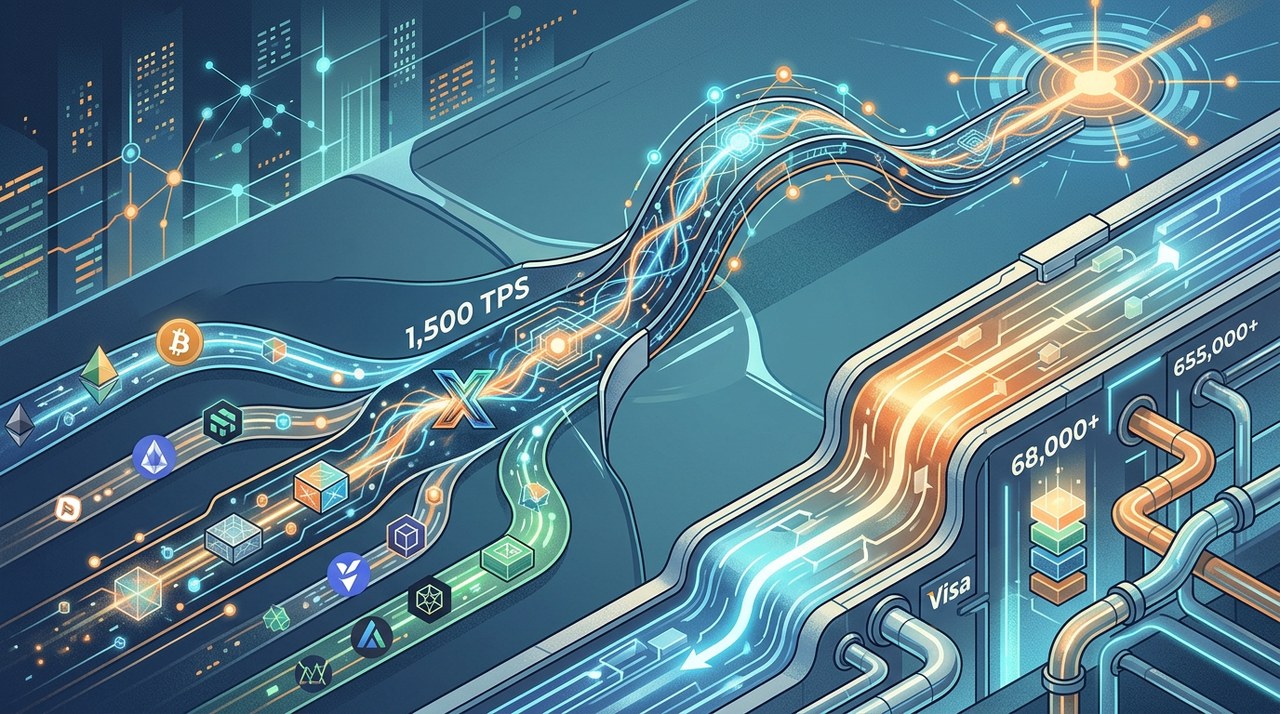
In recent months, technical debates have flared up regarding the performance limits of the XRP Ledger. Critics pointed to XRPL's average speed of around 1,500 transactions per second (TPS).
Some observers compared this rate to traditional financial rails like Visa. They claimed that the main ledger might struggle to match the sheer daily volume of legacy payment networks without upgrades.
However, Ripple's engineering team views transaction speed metrics differently. Rather than focusing solely on raw TPS figures, the core architecture is being designed around efficiency and specialized settlement tasks.
Why Transactions Per Second (TPS) Are Not Everything
Ripple is moving away from the race for massive vanity numbers in baseline TPS statistics. The logic behind this decision relies on a simple structural principle of modern distributed ledgers.
A base Layer-1 blockchain does not need to handle millions of small retail transactions directly on its main chain. Think of Layer-1 like a heavy cargo freight railway, while Layer-2 acts like local delivery vans.
- Layer-2 Networks: Small retail transactions and micro-traffic move off the main network onto secondary layers, such as Dassie (Interledger).
- Layer-1 Base Chain: The main ledger focuses on protecting high-value transfers, institutional reserves, and commercial bank liquidity.
By shifting small payments off the main chain, the XRP Ledger can prioritize security and stability for massive institutional transfers.
Fixing the Engine: Recent Code Updates and Node Memory Optimization
The path toward 2027 has already started with concrete infrastructure updates. Engineers recently launched the xrpld 3.3.0 release, bringing immediate performance relief to server node operators.
Technical audits showed that previous performance bottlenecks were not caused by broken logic. Instead, system memory allocators were withholding RAM resources even after clearing out cached data.
- RAM Usage Reduced: The 3.3.0 update cut server node RAM consumption by 13% to 23%.
- Lower Costs: Fixing the memory allocation bug lets network validators run nodes with far lower hardware expenses.
- Cleanup Package: On November 4, the network introduced a follow-up cleanup patch to streamline operational processes.
Connecting Commercial Banks directly to XRP Ledger
The recent software patches are building toward a broader corporate goal. Ripple President Monica Long previously shared plans to move significant portions of client payment traffic directly onto the XRP Ledger.
Under this strategy, international cross-border remittances will link directly into new lending and liquidity modules built on the chain.
Preparing the system now prevents performance bottlenecks later. As commercial banking clients test these features, network throughput must remain stable.
The 2027 Roadmap: Smart Contracts and Institutional Features
To support institutional adoption, the XRP Ledger Foundation outlined a detailed technical roadmap heading toward 2027.
The initiative funds 24 complex technical amendments with a budget allocation of $5.774 million dedicated to development and third-party code audits.
- Native Smart Contracts (XLS-101): Implementing WebAssembly (Wasm) capabilities directly on the chain for custom business logic.
- Lending Pools and Options (XLS-62): Creating native decentralized finance primitive tools tailored for institutional liquidity.
- Repo Markets: Enabling interbank lending facilities collateralized by tokenized real-world assets.
- DEX Optimization: Overhauling search pathfinding algorithms on the native decentralized exchange to lower heavy CPU requirements.
Preparing for Stablecoins and Tokenized Real-World Assets
The planned upgrades are a proactive step against future network congestion. Blockchain networks often face severe slowdowns when trading activity spikes unexpectedly.
Ripple builders are actively optimizing core code using specialized internal AI engineering teams to test edge cases. This ensures the protocol can handle daily routine operations for stablecoins like RLUSD.
In the coming years, tokenized stock trading and institutional interbank loans are expected to move from experimental pilot projects into full commercial production.
Understanding Market Dynamics and Risks
While technological upgrades improve ledger capacity and features, digital asset markets remain inherently volatile. Network improvements do not eliminate broader market risks or price shifts.
Development roadmaps can experience delays, and institutional adoption depends heavily on global regulatory approvals and macroeconomic trends.
Past performance of digital assets is not an indicator of future results. Investors should carefully evaluate technical developments alongside broader market conditions before making financial choices. You can review historical market statistics on bitkub.com/th/market/XRP.
Latest blog posts


 +2
Is 1,500 TPS Enough? XRP Expert Explains Scaling Roadmaps
A debate over blockchain speeds highlights why layer-1 TPS isn't the only metric that matters for future global finance.
|


 +2
Blue Wave, Red Week: Global Markets and Crypto Dynamics
A friendly breakdown of how U.S. midterm elections, stock market swings, and crypto security updates shaped the week.
|
Bitcoin Developer Proposes Strategy to Neutralize Quantum Threat
A new proposal by Bitcoin developers uses game theory and cryptographic updates to make quantum computing attacks economically unviable for hackers.
|