
Bitcoin Developer Proposes Strategy to Neutralize Quantum Threat

Introduction: Quantum Computing and the Future of BitcoinBTC+0.36% Security
Imagine a computer so powerful that it could solve complex mathematical puzzles in seconds—puzzles that would take today's fastest supercomputers thousands of years to crack. That is the promise, and potential threat, of quantum computing.
For years, cryptocurrency enthusiasts and computer scientists have debated what might happen if a powerful quantum computer ever emerges. Could it break Bitcoin's encryption? Could an attacker steal funds from old Bitcoin addresses?
A new concept proposed by Bitcoin developers aims to tackle this exact issue. Instead of simply relying on complex new cryptography, the idea introduces clever game theory to make attacking Bitcoin with a quantum computer an expensive losing bet.
Understanding How Bitcoin Cryptography Works Today
To understand the solution, we first need to look at how Bitcoin protects user funds today. Bitcoin relies on elliptic curve cryptography, specifically an algorithm called secp256k1.
When you create a Bitcoin wallet, you get two key pieces of information: a private key and a public key. Your private key acts like a digital signature stamp that only you control.
Your public key is shared with the world so others can verify your signature. Under current classical computing capabilities, calculating a private key from a known public key is virtually impossible. It would take billions of years of computation.
This asymmetric encryption forms the bedrock of modern blockchain security. As long as your private key remains secret, your funds stay safe on the blockchain.
The Quantum Threat: Shor's Algorithm and Exposed Keys
Enter quantum computers. A quantum algorithm known as Shor's algorithm can solve the discrete logarithm problem relatively quickly compared to classical computers.
If a quantum computer with enough stable qubits is built, it could theoretically derive a private key directly from an exposed public key.
This creates a specific vulnerability for Bitcoin addresses where the public key has already been published on the blockchain ledger.
For example, older "Pay-to-Public-Key" (P2PK) addresses used in the early days of Bitcoin, including coins attributed to creator Satoshi Nakamoto, explicitly expose their public keys on the public ledger.
If a quantum adversary were to target these coins, they might try to compute the matching private key and spend the unspent transaction outputs (UTXOs).
How the New Proposal Makes Quantum Attacks a Losing Bet
The developer's proposal shifts the focus from pure mathematical defenses to economic incentives and consensus rules.
The main idea relies on changing how the Bitcoin network responds when vulnerable public keys are targeted in a transaction.
If a quantum attacker attempts to derive a private key and broadcast a fraudulent transaction, network rules can introduce a delay period or specialized consensus validation.
During this period, the network or rightful owner can intervene through predefined cryptographic mechanisms, such as revealing a post-quantum proof or burning the contested output.
Running a fault-tolerant quantum computer requires massive energy, capital, and specialized infrastructure. If the network guarantees that stolen funds cannot be finalized or liquidated, the attacker spends millions of dollars only to end up with zero profit.
By turning the exploit into a guaranteed financial loss, the proposal disincentivizes attackers from attempting quantum exploits in the first place.
Exploring Upgrades: Post-Quantum Cryptography Solutions
Transitioning Bitcoin to quantum resistance does not require building an entirely new blockchain. Developers can implement upgrades through backward-compatible soft forks.
Several post-quantum signature schemes are currently being researched by developer communities worldwide to complement game-theoretic defenses:
- Lamport Signatures: A simple, hash-based signature scheme that resists quantum attacks, though it requires larger signature sizes.
- Winternitz One-Time Signatures (WOTS): An optimized version of hash-based signatures designed to reduce block data footprint.
- Falcon and Dilithium: Modern lattice-based cryptographic algorithms currently standardized for post-quantum security.
Integrating these algorithms allows users to migrate their funds safely before large-scale quantum computers become operational.
Market Sentiments and Prediction Trends
Alongside technical discussions about future-proofing Bitcoin, market participants regularly track probability distributions on prediction platforms regarding Bitcoin's near-term price milestones.
For instance, recent prediction market data for target price points reflects varying probability levels among traders:
- $80,000 threshold: Estimated at around 50% probability in prediction contracts.
- $82,500 threshold: Estimated at around 37% probability.
- $85,000 threshold: Estimated at around 23% probability.
- $87,500 threshold: Estimated at around 13% probability.
- $90,000 threshold: Estimated at around 8% probability.
While these percentages offer insight into market sentiment, price predictions depend on macro factors, liquidity, and regulatory shifts. Past performance of digital assets is not an indication of future performance. Prices may fluctuate downwards or consolidate depending on broader economic conditions.
Why Timely Preparation Matters for Crypto Holders
Most quantum physicists and software engineers agree that quantum computers capable of breaking 256-bit encryption are still years, if not decades, away.
However, reaching network-wide consensus on a decentralized system like Bitcoin requires careful testing, review, and gradual deployment.
Proactive solutions ensure that when quantum hardware matures, Bitcoin will already be fortified against potential exploits.
For regular users, keeping funds in modern address formats like Pay-to-Witness-Public-Key-Hash (P2WPKH) or Taproot (P2TR) provides strong privacy, as public keys remain hidden until spent.
Conclusion: A Resilient Future for Bitcoin
Bitcoin has faced numerous technical challenges throughout its history, from scaling discussions to network upgrades.
By combining advanced cryptography with smart economic incentives, developers continue to design solutions that protect the network against future technological disruptions.
As research into quantum resistance progresses, Bitcoin's decentralized architecture demonstrates its ongoing capacity to adapt and maintain robust security.
Latest blog posts


 +2
Blue Wave, Red Week: Global Markets and Crypto Dynamics
A friendly breakdown of how U.S. midterm elections, stock market swings, and crypto security updates shaped the week.
|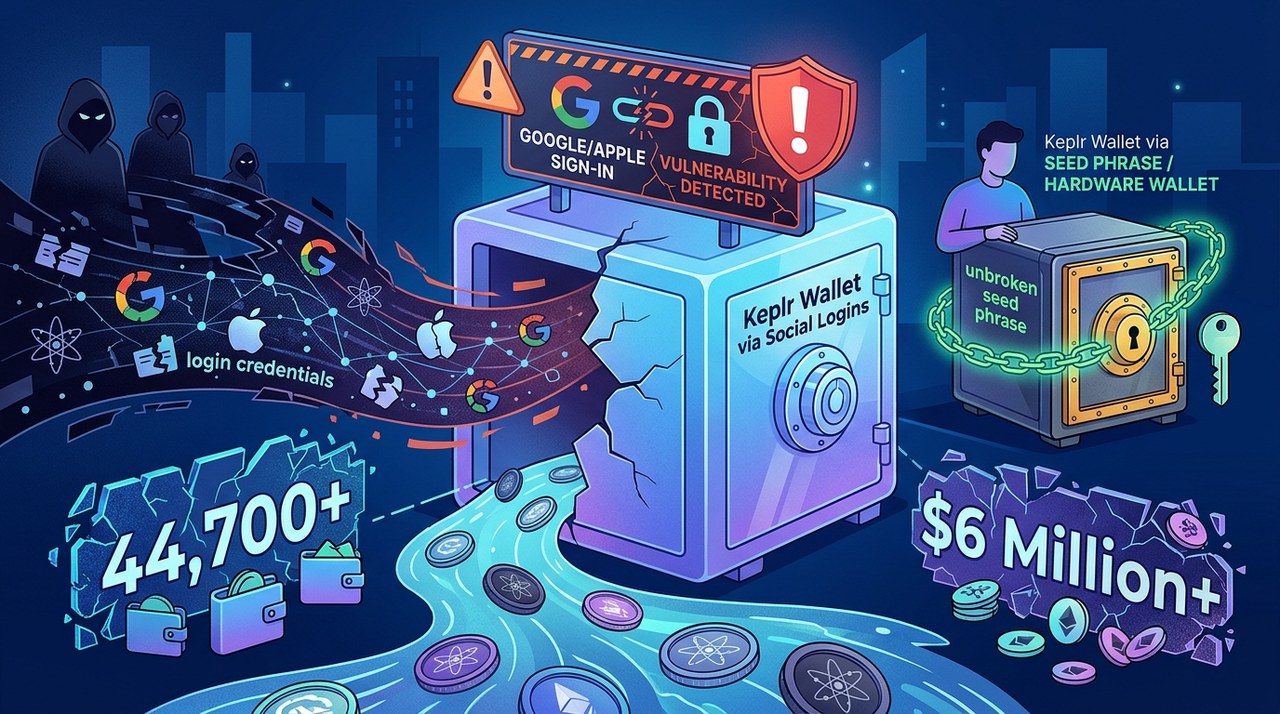


Keplr Wallet Hack Impacts Google and Apple Login Users
A security vulnerability in Web3Auth infrastructure affected Keplr users who created wallets via social logins, prompting a rescue operation to secure funds.
|
Two Solo Bitcoin Miners Beat Huge Odds to Win $230,000
Two independent solo Bitcoin miners successfully solved blocks just hours apart on November 7, earning over $230,000 each.
|