
Qubic Explains Hack: Weak Wallet Seeds Were to Blame
What Caused the Recent Qubic Security Incident?
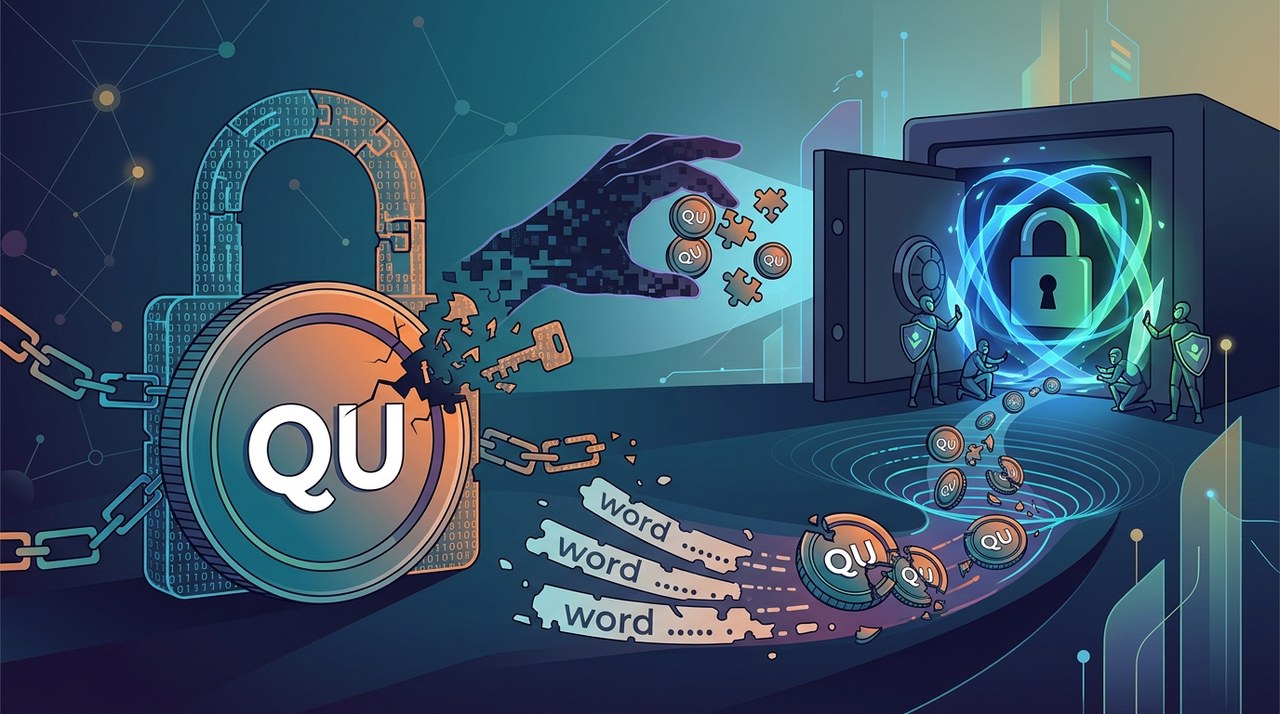
Between October 17 and 18, the Qubic network experienced a major security incident. An attacker managed to drain 1,404 wallets, stealing approximately 2.94 trillion QUBIC (QU) tokens.
The Qubic core team promptly issued an update to explain what happened. They emphasized that the exploit was not caused by a vulnerability in the Qubic core protocol itself.
Instead, the root cause was weak wallet seed phrase generation. Seed phrases rely on random number generation to create secure keys. When that randomness is insufficient, keys become predictable and easier for hackers to guess.
Who Was Impacted by the Weak Seed Bug?
According to Qubic's announcement, the seed generation flaw was limited to specific devices and software conditions where randomness was lacking.
- iPhones and iPads using any web browser prior to October 18
- Mac computers using the Safari web browser prior to October 18
- Users who created wallets on the Qubic iOS app prior to July 2025
Seeds generated under these specific conditions lacked sufficient entropy, making those specific wallets vulnerable to unauthorized access.
How Network Validators Froze the Stolen Tokens
To protect the ecosystem, Qubic's network validators—known as Computors—coordinated a emergency network halt at tick 85,371,949.
Pausing transaction activity successfully locked 87.1% of the drained tokens directly on the network, preventing the attacker from transferring them further.
The remaining 12.9% of the stolen funds was transferred to the MEXC exchange. MEXC acted quickly to freeze the recipient account within about an hour of the transfer.
Other major centralized crypto exchanges were notified immediately, and they suspended QUBIC token deposits and withdrawals to prevent further movement.
Fixes Applied and Next Steps for Users
Qubic confirmed that the seed generation flaw has been completely patched in software version 4.26.4. Under this updated code, no new weak seeds can be created.
The final resolution now lies with the Computor quorum, which will vote on how to resolve the incident in accordance with network rules. The Core team is currently gathering data on affected identities to present actionable options to the quorum.
A feedback poll is currently active on Qubic's official Discord channel to gather community perspectives.
Qubic strongly advises all affected users to file a formal complaint with local police or cybercrime authorities. Incident reports should include the affected wallet ID, the exact amount lost, and the relevant transaction link from the Qubic block explorer.
Context: A Difficult September for Crypto Security
The Qubic breach follows an unusually costly month of security incidents across the digital asset industry.
Data from security firm PeckShield reveals that 55 major crypto hacks occurred during September, leading to overall losses of nearly $766.5 million.
This represents a 462% increase compared to August, when total exploit losses reached approximately $136.3 million.
Major Losses: Bitget and Liquid Network Incidents
Two major exploits accounted for the majority of September's total stolen value.
The breach on exchange Bitget involved roughly $387 million. Bitget CEO Gracy Chen stated that an attacker exploited a backend system to tamper with transaction data and bypass security checks.
Bitget announced it will compensate users using its User Protection Fund, which currently holds over $464 million.
In another incident, Liquid Network suffered an exploit where approximately 4,000 BTCBTC+1.58% (valued at roughly $320 million) was withdrawn from its federation wallet.
Liquid Network eventually recovered $285 million after the attacker promised to return funds once network nodes were patched. However, Ledger CTO Charles Guillemet voiced skepticism about whether the perpetrator was a genuine security researcher.
Maintaining Security in Digital Assets
These events remind users that device safety and software integrity are fundamental aspects of participating in Web3 systems.
Past performance of digital assets or past operational stability does not guarantee future results. Users are encouraged to keep software updated and verify wallet creation protocols.
Latest blog posts

XRP Ledger Patches Lending Protocol Before Network Launch
XRP Ledger developers released a follow-up code amendment to fix their new lending feature while it is still waiting for validator approval.
|
Crypto PAC Spends $362K on Decided California Race
A Fairshake crypto PAC affiliate spent $362,000 on ads supporting Aisha Wahab, despite voters essentially settling the race in August.

France Borrowing Costs Surge Past Italy After Recent Riots
France faces a sharp rise in government borrowing costs following weekend unrest, sparking fresh economic concerns for European markets and everyday households.
|