


Moody's Rates Ripple's RLUSD Stablecoin Grade A2
What Just Happened with RippleXRP-0.25%'s RLUSD?
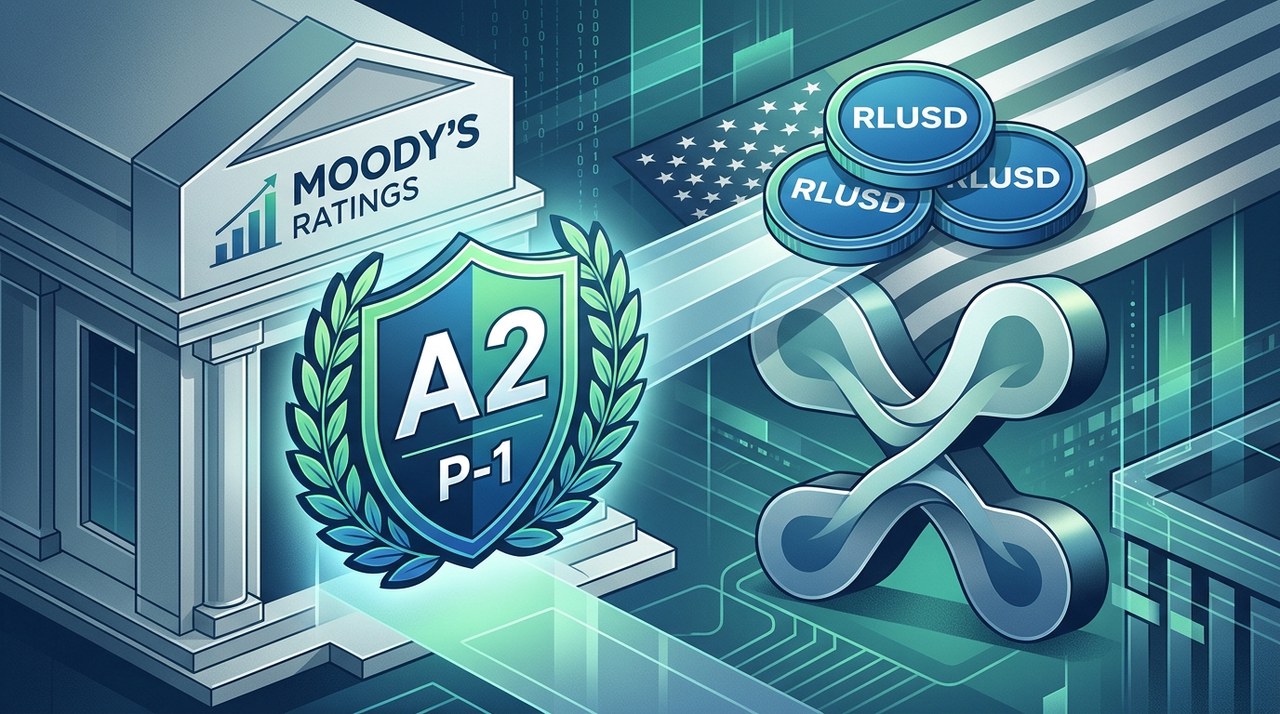
Ripple's dollar-backed stablecoin, RLUSD, just scored a major financial milestone. Moody's Ratings assigned an A2 long-term deposit rating and a P-1 short-term deposit rating to the token.
This rating arrived right after another key regulatory development. Just one day earlier, Ripple received final approval from the U.S. Office of the Comptroller of the Currency (OCC) for Ripple National Trust Bank.
The stablecoin itself is issued by Standard Custody & Trust Company, a subsidiary of Ripple. With state and federal oversight now in place, RLUSD is building its position among institutional digital assets.
Breaking Down the Moody's Rating Scale
What do these ratings mean in simple terms? Credit ratings serve as a financial report card, helping large institutions assess potential risks before committing capital.
An A2 rating represents the sixth-highest long-term grade on Moody's scale. It suggests that the underlying asset structure carries low credit risk.
Meanwhile, the P-1 rating is Moody's top short-term grade. This indicates strong confidence in the issuer's ability to clear short-term deposit obligations quickly.
Moody's noted that these ratings were requested directly by the issuer. The grades reflect the overall quality of the underlying reserves backing every RLUSD token.
How RLUSD Backs Its Value
Stablecoins maintain their 1:1 value with the U.S. dollar by holding matching reserve assets. Moody's highlighted that RLUSD relies on short-term U.S. government backing.
The reserves consist mostly of short-term U.S. Treasury bills, government-backed assets, and cash. Most of these funds are safely stored with BNY (Bank of New York Mellon) as custodian.
To add an extra layer of security, Ripple maintains a target reserve coverage ratio of 103%. This means there is slightly more collateral in reserve than the total market value of tokens issued.
Under this framework, eligible institutional holders can redeem their RLUSD tokens at face value (at par) within two business days.
What Structural Risks Did Analysts Highlight?
Even with strong credit scores, rating agencies carefully evaluate structural protections. Moody's pointed out a few legal gaps that holders should understand.
Currently, Standard Custody is not structured as a bankruptcy-remote entity. Additionally, RLUSD holders do not hold a direct legal ownership interest in the specific reserve assets.
If the issuing entity ever faced insolvency, those reserves might not be automatically separated under today's rules.
However, clearer protections are coming down the road. Moody's noted that the upcoming GENIUS Act—a major U.S. stablecoin law taking effect in 2027—will explicitly exclude required reserves from an issuer's bankruptcy estate.
Dual State and Federal Supervision
Regulatory oversight is essential for attracting major corporate clients. RLUSD operates under a distinct dual-supervision framework across two levels of government.
At the state level, Standard Custody continues to issue RLUSD under oversight from the New York Department of Financial Services (NYDFS).
At the federal level, the newly approved Ripple National Trust Bank will manage reserve assets and act as collateral trustee under OCC rules.
Combining NYDFS state rules with OCC federal regulation creates a unique compliance structure for the token.
RLUSD Market Footprint and Growth
RLUSD launched back in December 2024 across both EthereumETH+0.17% and the XRP Ledger (XRPL). Data from CoinGecko shows its market capitalization stands at approximately $2.6 billion.
While $2.6 billion is significant, it remains a smaller fraction of the overall $300 billion global stablecoin market. Past growth performance of digital assets is not a guarantee of future performance.
Rather than focusing on retail trading, Ripple deliberately built RLUSD to serve institutional banking and payment needs.
Key Partnerships with Traditional Finance Leaders
Institutional interest in RLUSD has expanded through several high-profile corporate partnerships across the financial sector.
Standard Chartered recently began offering institutional custody for RLUSD via its Dubai branch. The bank partnered with Ripple and LMAX Group on a specialized setup known as collateral mirroring.
This collateral mirroring structure allows corporate clients to use RLUSD as trading margin without moving tokens off the bank's balance sheet.
In November 2025, Ripple also partnered with Mastercard, WebBank, and Gemini. They set out to explore using RLUSD on the XRP Ledger to settle transactions on the Gemini Credit Card, pending regulatory clearance.
At that time, RLUSD had just crossed $1 billion in market cap, ranking as the 11th-largest stablecoin according to DefiLlama.
What This Rating Means for the Broader Crypto Market
Independent ratings from established institutions like Moody's bring greater transparency to stablecoin reserve structures.
As banking oversight and national framework laws like the GENIUS Act evolve, rated stablecoins are becoming key bridges between traditional finance and blockchain infrastructure.
Latest blog posts


 +2
Bitcoin Rebounds Above $81,000 as Tech Stocks Surge
Bitcoin recovered above $81,000 following a strong rally in Asian tech stocks, while Pepe surged over 9% on whale holdings.
|

Shiba Inu Daily Burn Rate Jumps Over 400,000%
Shiba Inu recorded a 428,862% surge in its 24-hour token burn rate, destroying over 1.4 million tokens as prices slightly rebounded.
|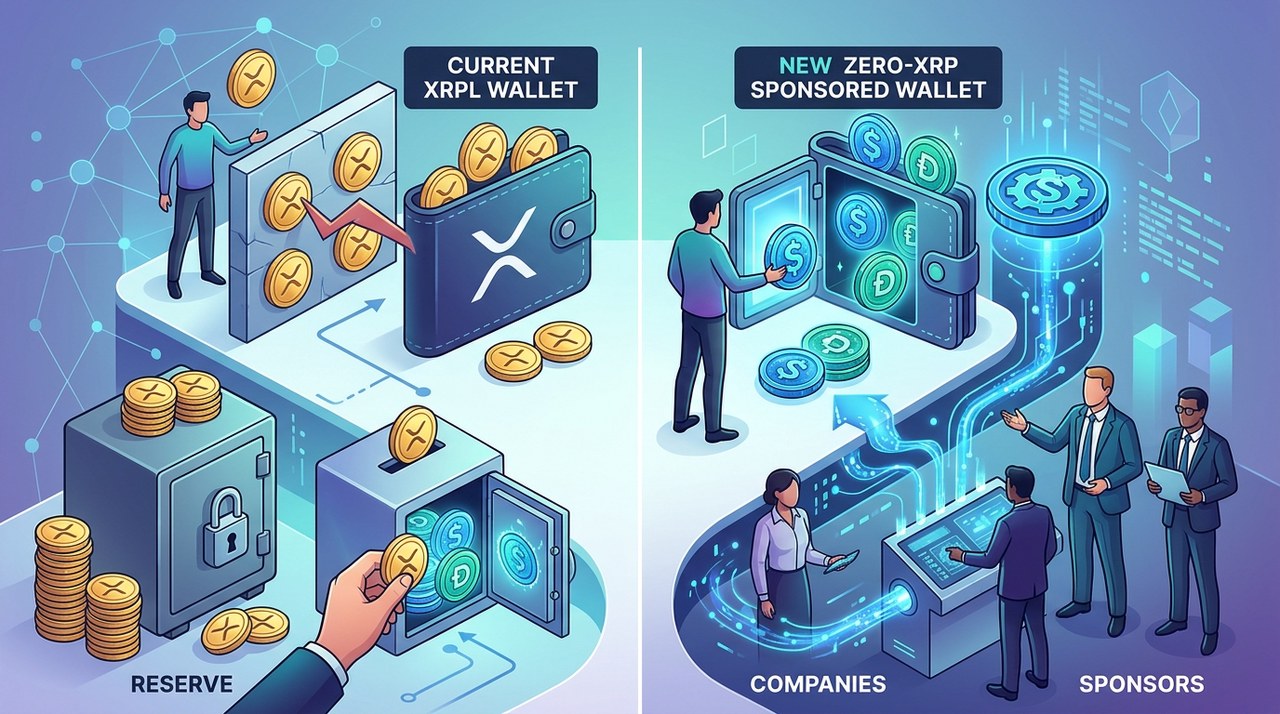

XRP Developers Propose Zero-XRP Wallets for Stablecoins
XRP Ledger developers are testing a new feature that allows sponsors to pay wallet reserves, enabling zero-XRP balances for stablecoin payments.
|