
Michael Burry Warns Stock Market Faces Supervolcano Risk

Michael Burry Issues a New Market Warning
Michael Burry is famous for predicting the 2008 housing market crash. Now, he is sounding the alarm on the traditional stock market once again.
Burry believes the stock market is building up massive pressure beneath a peaceful surface. He warns that the next bear market could last for a very long time.
His warning relies on a century of inflation-adjusted data from the S&P 500 index. On paper, traditional markets look healthy. In fact, the S&P 500 reached a record high on October 6.
However, Burry points out that looks can be deceiving. Beneath that headline record, dangerous pressure might be building up behind the scenes.
The Supervolcano Analogy Explained
To explain what is happening, Burry uses a vivid analogy. He compares the current stock market to a supervolcano caldera, similar to the one beneath Yellowstone Park.
A caldera looks calm and quiet on top. Visitors walk across green grass without seeing any immediate danger. But underground, massive pools of hot magma build up extreme pressure over time.
"For each of the ten market tops over the last 40 years, one will find a caldera of lava underneath the placid S. Park-like valley floor." — Michael Burry
According to Burry, the same hidden pressure existed before every major market top over the past 40 years. While everything appears peaceful right now, hot magma is stirring underneath.
Shrinking Market Breadth and Low Volume
Why does Burry feel so confident about this warning? One key reason is a concept called market breadth.
Market breadth measures how many individual stocks are participating in a price rally. When market breadth is healthy, most stocks rise together.
Right now, market breadth is shrinking. That means fewer giant companies are carrying the entire index higher, while smaller stocks lag behind.
Burry described the record high on October 6 as unremarkable. Trading volume remained light during the rally. Similar quiet peaks in June and August led only to brief pauses before momentum fizzled out.
Gold advocate Peter Schiff has raised similar concerns about shrinking market breadth. Both commentators argue that a rally powered by only a handful of stocks is inherently fragile.
History Shows Bear Markets Can Last Decades
Burry argues that many modern algorithmic trading bots ignore economic history. He looks closely at real, inflation-adjusted price returns over the past century to see the true picture.
History shows that major market downturns are often less about sudden crashes and more about long periods of weak returns.
- 1929 to 1949: The inflation-adjusted S&P 500 dropped roughly 58% over two decades.
- 1966 to 1982: Real stock prices fell about 53% during a prolonged period of high inflation.
- 2000 to 2011: Real prices dropped around 40% from the peak of the dot-com bubble to the post-crisis trough.
Past performance of financial market indices is not indicative of future performance.
The Cushion of Dividends vs. The Reality of Time
Investors who held stocks through those historical downturns did get some relief from dividends. Reinvesting cash dividends helped reduce total losses over time.
For example, with dividend reinvestment, the 1966 to 1982 decline shrank from 53% down to roughly 10%.
Likewise, reinvesting dividends during the 2000 to 2011 period reduced the overall real loss from 40% down to about 25%.
Even so, Burry emphasizes that the biggest danger to investors is time. In each historical case, long-term investors had to wait 10 to 20 years just to break even in real terms.
Clashing with Today's "Buy the Dip" Culture
Burry's warning challenges the modern mindset of many retail investors. Over the last decade, traders have learned to "buy the dip" whenever prices drop, expecting quick recoveries.
A multi-decade period of weak real returns directly contradicts that strategy. If the stock market enters a long cooling phase, buying every dip may not produce quick gains.
Other market watchers share this cautious perspective. Financial firm Panmure Liberum released Wall Street's most bearish forecast, setting an S&P 500 target of 5,000 points for 2027.
If economic growth slows and inflation stays sticky, analysts argue the index could adjust downward toward 5,000 points — though shifting interest rates or economic strength could lead to a different outcome.
Additional factors driving Burry's thesis include high retail speculation, stretched stock valuations, and lingering inflation pressures. He recently noted that investors may have entered a "denial stage" similar to 2000 and 2008.
What Does This Mean for Crypto Holders?
The big question for cryptocurrency investors is whether digital assets like BitcoinBTC+0.69% can decouple from traditional financial markets.
If traditional stocks enter a long, stagnant period, will capital flow into decentralized assets?
Bitwise Chief Investment Officer Matt Hougan has previously argued that Bitcoin is designed to thrive across various global economic scenarios. Because Bitcoin operates outside traditional banking systems, some view it as a potential hedge against macroeconomic stress.
However, digital assets remain subject to high market volatility and sudden price swings. Past performance of digital assets or market indices does not guarantee future results.
If a Michael Burry bear market lasts for a decade, it will serve as the ultimate test for Bitcoin's decoupling narrative. Investors will closely watch whether crypto assets follow traditional stocks or forge their own independent path.
Latest blog posts

SEC Chair Atkins Reaffirms Push for U.S. Crypto Rules
SEC Chair Paul Atkins has reaffirmed the agency's commitment to building a clear U.S. crypto framework despite Senate delays and White House personnel changes.

Chinese Suspect Arrested in Bangkok Over $75M Crime Ring
Thai police have arrested a Chinese suspect linked to a $75 million international crime network that used cryptocurrency to move illicit funds.
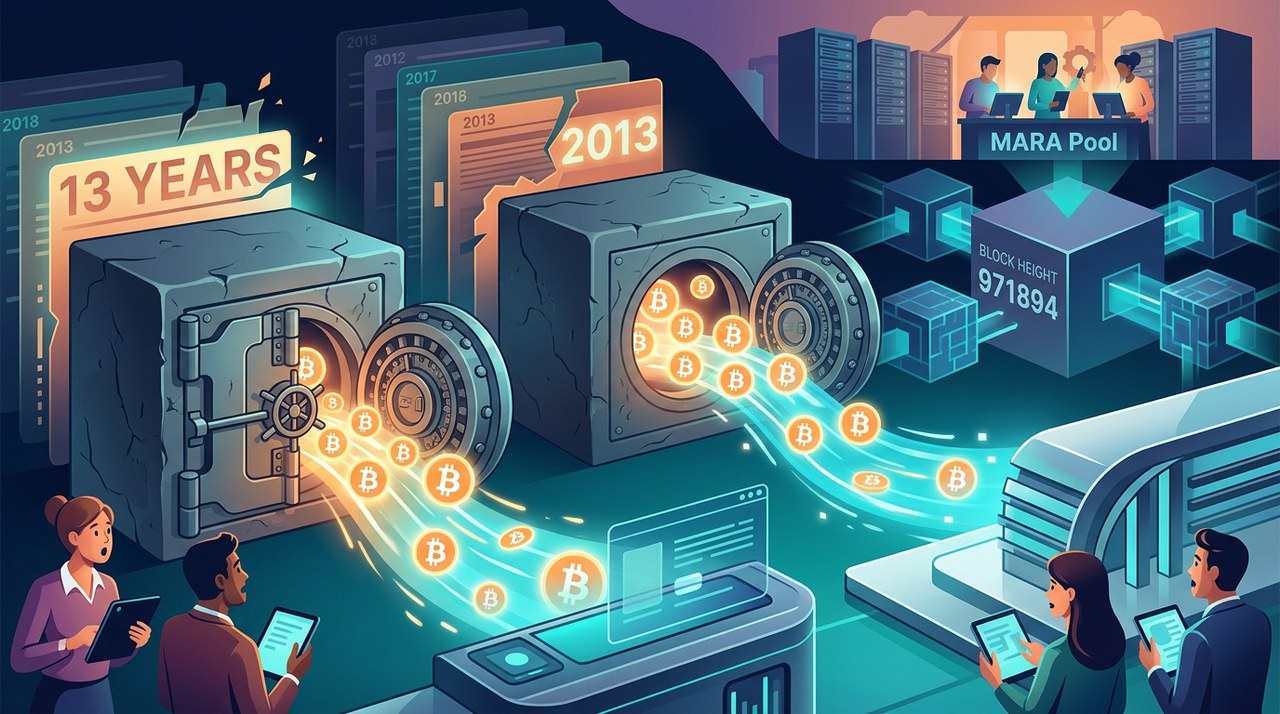

Bitcoin Whales Wake Up: 13-Year-Old Wallets Move $34M
Two original Bitcoin wallets created in 2013 moved 416.69 BTC worth $34 million in a single block. Here is what onchain data tells us.
|