
Mediamarkt Suspends Ledger Sales After Spy Implant Scandal
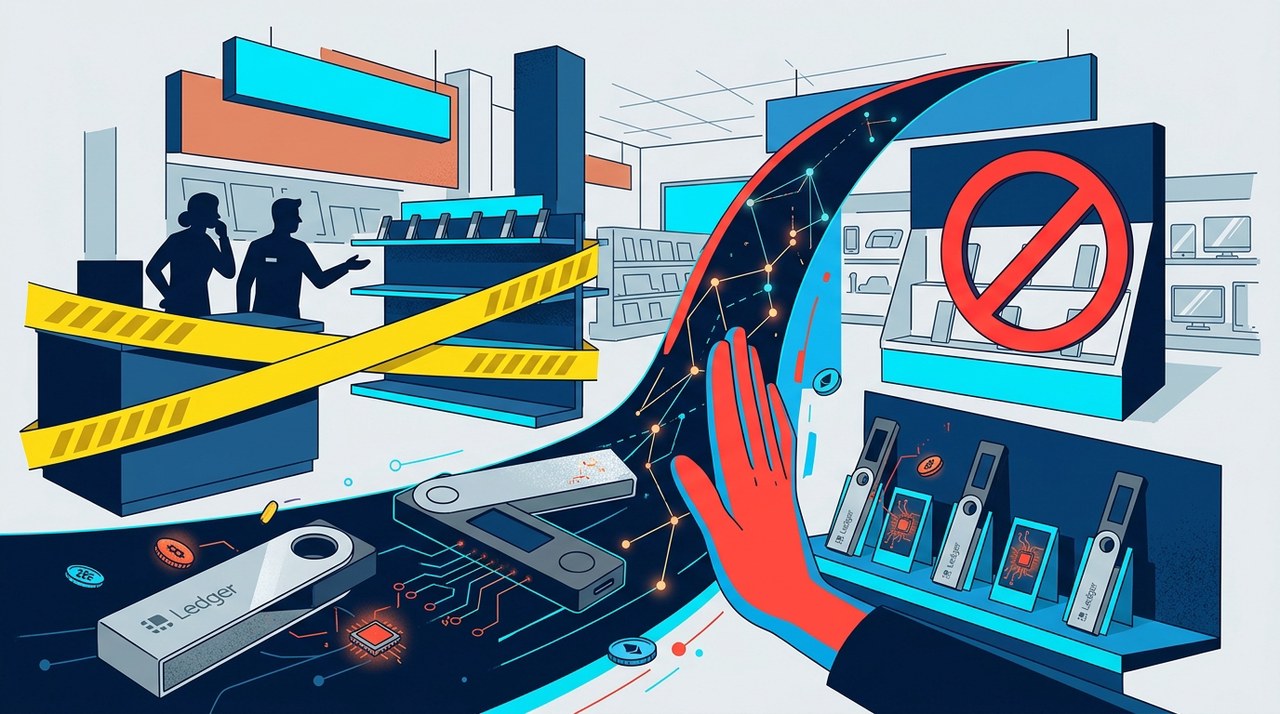
Ledger Spy Implant Scandal: What You Need to Know
On October 13, 2026, popular crypto hardware wallet manufacturer Ledger shared serious updates regarding a complex supply chain attack. Attackers managed to physically alter hardware devices before they reached customers, resulting in stolen funds.
Initial reports suggested projected losses were around $86 million. However, newer estimates indicate potential losses could be as high as $93 million. Ledger pointed out that these overall figures remain unverified, but confirmed losses have been tied directly to devices sold by a specific reseller.
The situation has created major ripples across the hardware wallet industry. Major European electronics retailer Mediamarkt Saturn halted sales of Ledger devices, and competitor Trezor announced immediate changes to tighten its reseller network.
How the Secret Hardware Implant Actually Works
Hardware wallets are usually considered one of the safest options for storing digital assets because they keep private keys offline, away from internet hackers. But what happens when the physical device itself is compromised before you open the box?
Ledger's specialized security research team, known as Donjon, conducted a deep forensic analysis of the compromised units. What they discovered involved a tiny, custom-built hardware implant hidden inside the device casing.
This rogue component sits quietly inside the enclosure and actively monitors the screen display. When a user sets up a new hardware wallet, the device generates a unique 24-word recovery phrase and displays it on the screen. This recovery phrase serves as the master key to the wallet.
Based on the Donjon's analysis of the attack, the implant sits inside the enclosure and reads the data shown on the screen. During setup, the signer displays the 24-word recovery phrase. When the implant detects these screens, its microcontroller decodes the words and transmits them over LTE using a provisioned eSIM.
Once the implant reads those 24 words from the screen display, its built-in microcontroller decodes the text. It then uses a cellular connection via a pre-programmed eSIM card to secretly broadcast the secret phrase directly to the attackers. The user has no indication this transmission is occurring because it bypasses local Wi-Fi networks entirely.
What Was Compromised and What Stayed Intact
To understand how this attack operated, it helps to look at hardware wallet architecture. Normally, a Secure Element chip stores private keys safely, while an internal operating system manages processes and signs transactions.
Ledger emphasized that the physical implant did not breach or modify the core security chip itself. Instead, it piggybacked on the visible output shown on the hardware screen.
The implant is a separate component. It does not modify the Secure Element or the Ledger operating system, and it does not alter transactions or signatures.
Because the core chip and operating system remained unmodified, the hardware wallet appeared to function completely normally to the user. It signed transactions as expected without showing software errors. The vulnerability existed purely because the hardware implant could visually capture the secret recovery phrase during initial setup and transmit it over cellular networks.
Southeast Asian Reseller Cryptobilis at the Center of Losses
According to Ledger's investigation, all confirmed cases of lost funds so far are connected to hardware wallets purchased through Cryptobilis, an authorized reseller operating in Southeast Asia.
While total loss claims circulating online reach up to $93 million, Ledger stressed that these figures remain unverified. Nevertheless, the company is urging extreme caution for anyone who bought a device through Cryptobilis.
If you bought a device from Cryptobilis and have not set it up yet, Ledger strongly advises avoiding device activation. If you have already configured a device from this distributor, transferring assets to a confirmed safe wallet is recommended.
Mediamarkt Halts Ledger Sales in Europe Following German Report
The supply chain concerns are not limited to Southeast Asia. Concerns spread across Europe after social media reports on X claimed physical tampering with devices bought in European retail stores.
In response, major European electronics giant Mediamarkt Saturn temporarily suspended all sales of Ledger hardware wallets across both physical retail stores and online platforms.
Ledger confirmed that Mediamarkt's sales pause followed a single customer report in Germany describing a suspect physical implant inside a newly purchased unit.
The sale of Ledger devices in their stores and online while the investigation continues.
Ledger noted that no financial losses have been reported in connection with the Mediamarkt unit in Germany so far. However, because reports continue to circulate across social media, the retailer chose to halt sales as a precautionary measure while investigations continue.
Industry Reaction: Competitors Adjust Reseller Networks
The news of physical tampering has impacted the wider hardware security sector. Hardware wallet manufacturers rely on reseller networks for global distribution, but this incident shows how vulnerable third-party logistics can be.
Recognizing these risks, competitor Trezor announced on Tuesday that it is scaling back its number of third-party resale partners. By consolidating its distribution network, Trezor aims to reduce potential exposure points where devices could be intercepted during transit.
This industry response highlights that supply chain security is just as critical as software code audits. When bad actors can physically modify hardware components, every step of the delivery process requires careful oversight.
Understanding Supply Chain Attacks vs. Software Hacks
Crypto users are familiar with software bugs, smart contract exploits, or phishing links. However, supply chain attacks are fundamentally different and harder to detect visually.
In a software hack, attackers target code vulnerabilities or deceive users. In a supply chain attack, attackers intercept physical products before they reach store shelves or end buyers.
Once attackers gain physical access, they insert custom hardware components or microcontrollers. They then repackage the device to appear completely new. When a customer purchases the product from a legitimate retail store, the exterior packaging looks entirely untampered.
Best Practices for Hardware Wallet Safety
Protecting digital assets requires ongoing vigilance. Here are practical steps to keep in mind when acquiring and setting up hardware security devices:
- Purchase Directly: Order hardware devices directly from official manufacturer websites whenever possible rather than third-party marketplace sellers.
- Inspect Physical Packaging: Examine the box and physical device casing carefully for signs of tampering, broken anti-tamper seals, or unusual gaps along seams.
- Never Use Pre-Printed Recovery Phrase Cards: If a device arrives with a pre-filled 24-word recovery phrase card inside, do not use it. Legitimate devices always generate phrases randomly on the screen during setup.
- Verify Setup Integrity: Use official manufacturer companion apps to verify genuine device firmware before moving funds.
- Keep Phrases Offline: Always write down or stamp recovery phrases onto paper or metal, storing them completely separate from internet-connected hardware.
Maintaining self-custody over private keys remains a core foundation of crypto security, but verifying physical hardware integrity is equally crucial. As investigations proceed, hardware manufacturers continue to refine supply chain security measures.
Past security performance of digital asset hardware or historical returns of digital assets are not indicative of future performance or absolute security guarantees.
Latest blog posts


Paul Tudor Jones Warns 2027 Could Be Tough for Stocks
Veteran investor Paul Tudor Jones warns that a flood of AI share listings could crash stock markets by 2027, raising questions about Bitcoin's resilience.
|


Tokenized Stock Trading Spikes Outside US Market Hours
Tokenized equities have reached nearly $3.3 billion in value, with most trading on Solana and BNB Chain occurring outside traditional US market hours.
|
Ripple Partners With Stripe's Privy to Upgrade XRPL Wallets
Ripple has partnered with Stripe-owned Privy to bring embedded wallets to the XRP Ledger, simplifying crypto payments for developers and users.
|