
Major Flaw Exposes 178 Websites to Crypto Theft
CyberCYBER-5.28% Attack Hits 178 Major Websites
Imagine sending funds to a friend, but someone secretly changes the recipient address right before you hit confirm. That exact scenario unfolded recently across nearly 200 popular web platforms.
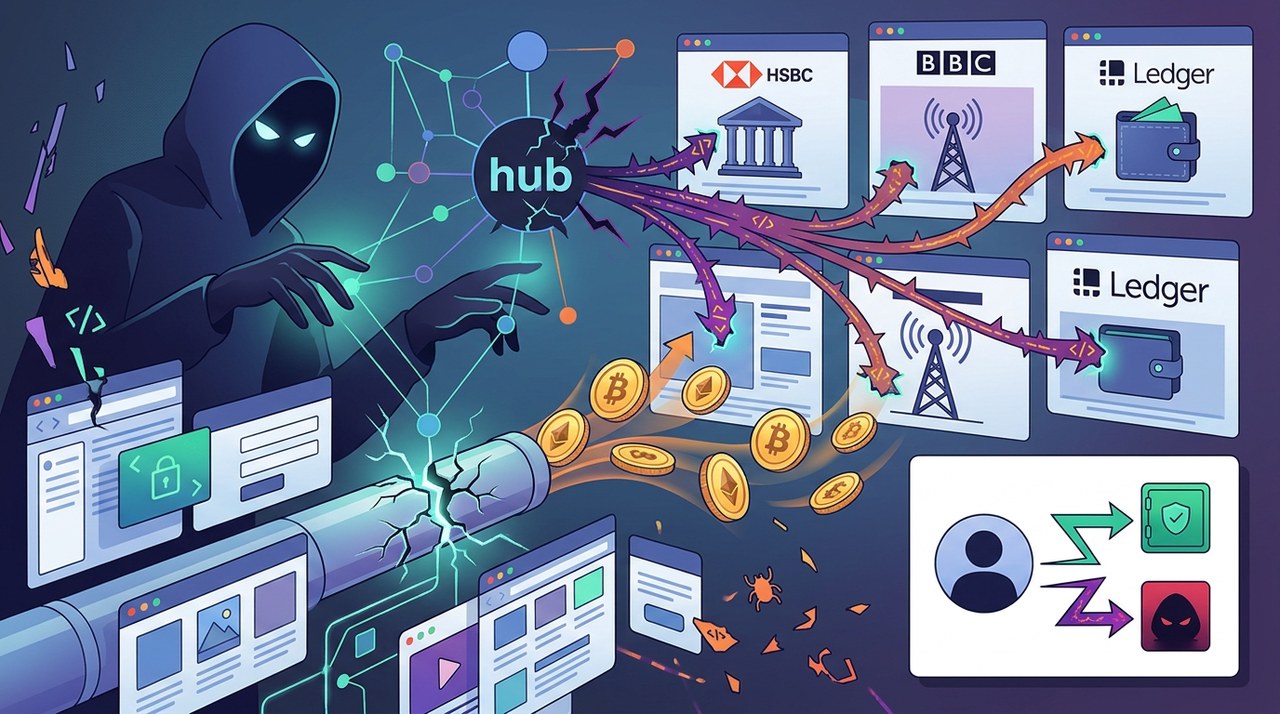
Attackers successfully injected malicious crypto-stealing code into 178 high-profile websites. The list of affected platforms includes major names like HSBC bank, the BBC news network, and crypto hardware wallet manufacturer Ledger.
How the Optimizely Vulnerability Worked
The breach did not happen because each individual company was hacked directly. Instead, attackers targeted a third-party service provider called Optimizely.
Optimizely is a widely used platform that helps businesses run website experiments and improve user experiences. A signup flaw in Optimizely allowed an attacker to gain unauthorized access and deploy malicious code across customer websites.
What Is Address-Swapping Code?
The injected code was specifically created to execute an address-swapping attack. This tactic monitors webpage interactions or clipboard activity for cryptocurrency wallet addresses.
When a user attempts to send crypto or copy an address from an affected site, the script secretly replaces the real address with a wallet controlled by the hacker. If the user fails to double-check the address, the funds go directly to the attacker.
Extent of the Damage and AI Involvement
At this stage, security investigators have not confirmed the total amount of cryptocurrency stolen in this attack. Security teams continue to monitor blockchain activity to assess the full impact.
Investigators also clarified that they have not linked this cyber attack to artificial intelligence. The breach relied on software registration flaws rather than AI-driven exploits.
How to Protect Yourself from Address-Swapping Attacks
Incidents like this serve as a crucial reminder to stay alert whenever you interact with web applications and digital assets. Here are practical steps to protect your transactions:
- Always check every single character of a wallet address before approving a transaction.
- Send a small test amount first when transferring large sums of cryptocurrency.
- Avoid relying solely on copy-and-paste when handling transaction details.
- Keep your web browser and security software up to date with the latest patches.
Looking Ahead
Supply chain vulnerabilities in web tools remain a major vector for hackers trying to reach large audiences. Verification practices remain your strongest defense when managing digital assets online.
Latest blog posts



 +2
Ledger Clarifies Web Incident Caused by Third-Party Service
Hardware wallet maker Ledger addressed a web security incident linked to provider Optimizely, confirming user private keys and hardware devices remained safe.
|
Hackers Target Ledger and 177 Brands in Web Attack
A security breach at web testing platform Optimizely allowed hackers to inject wallet-swapping code across 178 websites, including hardware wallet maker Ledger.


US Judge Clears Brothers in $25M Ethereum MEV Case
A US federal judge has cleared two brothers involved in a $25 million Ethereum MEV exploit after a mistrial, ruling that the transactions did not involve false promises.
|