
Ledger Security Update Sparks Questions Over Supply Chain
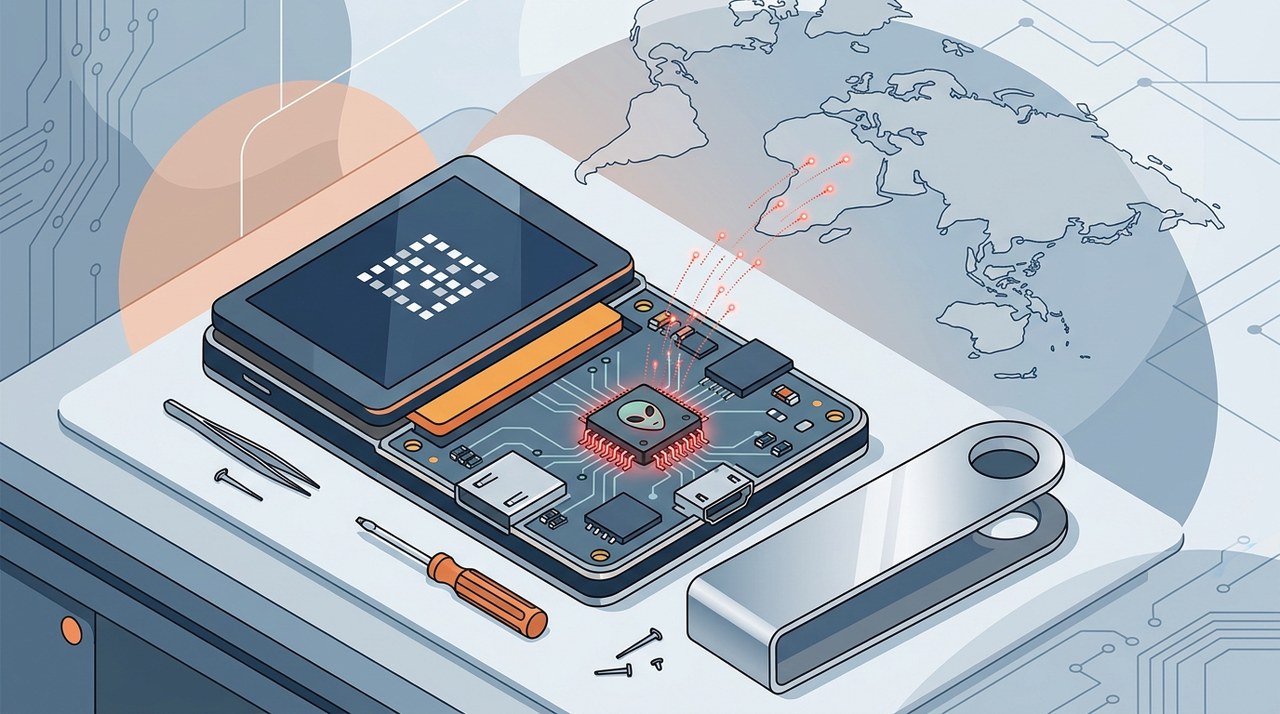
The Ledger Security Update: What You Need to Know
Imagine buying a physical vault to store your savings, only to discover someone installed a hidden transmitter inside it before it reached the store shelf. That is similar to what the crypto community is discussing following recent findings regarding tampered hardware wallets.
On October 13, hardware wallet producer Ledger shared an official investigation update regarding signers modified with unauthorized hardware implants.
In its statement, Ledger focused on devices sold by CryptoBilis, an authorized reseller based in Southeast Asia. Ledger previously confirmed on October 10th that an unauthorized hardware implant was found inside a signer owned by an affected user.
However, within minutes of publishing the update, community members pushed back, arguing that modified devices had also been encountered far outside Southeast Asia.
How the Hardware Implant Attack Works
To understand why this issue is generating widespread concern, it helps to look at how hardware wallets work.
When setting up a new Ledger device, the screen generates a unique 24-word recovery phrase. This recovery phrase serves as the master backup key to access digital assets stored on the blockchain.
According to Ledger Donjon, the company's internal security research team, the unauthorized hardware implant operates in a stealthy manner.
The modified internal chip reads the 24-word recovery phrase directly off the display screen during the initial setup process.
Once captured, the implant uses a hidden cellular module to transmit those 24 words over a mobile network to unauthorized third parties, all while the screen appears completely normal to the user.
Is the Issue Limited to Asia, or Has It Reached Europe?
While Ledger’s official October 13 report named only CryptoBilis, many community members asked why other major retailers were missing from the update.
Several users noted that tampered signers were also reported at MediaMarkt, a major European electronics store chain. Critics suggested that omitting these locations downplayed the potential scope of the problem.
On October 12, a user named Johannes (@0xJohannes_) posted video proof online showing a modified device bought directly from a MediaMarkt store.
In the video, Johannes demonstrated that a newly purchased device contained unauthorized internal wiring and a cellular transmission unit. Store records traced the inventory path back to Aqipa, a European distributor of consumer electronics.
Johannes confirmed he sent the unit directly to Ledger for technical examination and called for a broader product recall. Ledger noted it is actively investigating reports of implants in other signers and locations, though it has not formally confirmed any cases outside CryptoBilis so far.
Why Ledger's Genuine Check Missed the Modded Hardware
A common question among wallet owners is why Ledger's built-in authenticity verification did not detect the modification.
Ledger devices utilize an automatic security tool known as the Genuine Check, which connects with the wallet's Secure Element chip to confirm it is authentic and running genuine software.
However, the Genuine Check specifically verifies the core Secure Element chip itself. It is not designed to scan surrounding components or added secondary wires on the circuit board.
Because the unauthorized spy chip tapped into display data rather than altering the Secure Element chip itself, the device continued to pass the Genuine Check test without raising alerts.
Financial Impact and Official Guidance for Users
The financial consequences of tampered hardware can be substantial. In one reported instance, a trader lost $6.6 million worth of BitcoinBTC-1.25% after setting up a device bought through the reseller network.
Ledger has not yet confirmed the total number of affected users or the aggregate financial loss across all incidents.
The company asks any user who suspects their device has been modified or who has experienced lost funds to contact Ledger Support and file a formal police report.
Ledger's public update did not detail any policies regarding financial reimbursement for affected customers.
Ledger reminded users that company staff will never place phone calls, send direct messages, or request a user's 24-word recovery phrase.
For users who purchased hardware from CryptoBilis or suspect physical compromise, Ledger strongly advises transferring all funds to a secure wallet initialized with an entirely new recovery phrase.
How Community Members Are Trying to Spot Tampered Wallets
In response to these findings, some hardware wallet owners have turned to practical inspection methods.
Certain users have started using precision scales to weigh their devices, hoping that extra internal cables and cellular modules will result in a noticeable weight difference.
However, security experts caution that weight checks are not conclusive, as subtle factory manufacturing variations mean weight alone cannot guarantee a device is uncompromised.
Ultimately, these events highlight how hardware security depends not only on software encryption and secure chips, but also on complete supply chain integrity from factory floor to retail counter.
Best Practices for Hardware Wallet Security
- Order hardware devices directly from official manufacturer stores whenever possible to reduce third-party supply chain exposure.
- Carefully inspect outer packaging, seals, and device casings upon arrival for signs of opening or physical alterations.
- Never use a device that arrives with a pre-printed seed phrase sheet or pre-filled setup instructions.
- Ensure recovery phrase setup is performed carefully in a private environment.
- If suspicious activity or physical defects are detected, avoid transferring funds to the generated addresses and contact support immediately.
Latest blog posts


 +1
BlackRock Files for New Protected Bitcoin ETF (PBIT)
BlackRock has filed for a new Bitcoin ETF named PBIT, designed to limit downside risks while capping upside gains for cautious investors.
|


Asian Chip Stock Selloff Impacts Crypto Markets
A sharp downturn in South Korean and Taiwanese tech stocks is spilling over into major cryptocurrencies like Bitcoin and Ethereum.
|
US Bitcoin ETFs See $527M Inflow in Massive Comeback
US spot Bitcoin ETFs recorded $527 million in net inflows, led by BlackRock's $665.2 million surge despite outflows from competitors.
|