


Ledger Confirms Hardware Tampering in CryptoBilis Wallets
What Happened to the CryptoBilis Ledger Wallets?
Cryptocurrency security company Ledger has confirmed a physical security breach involving some of its devices.
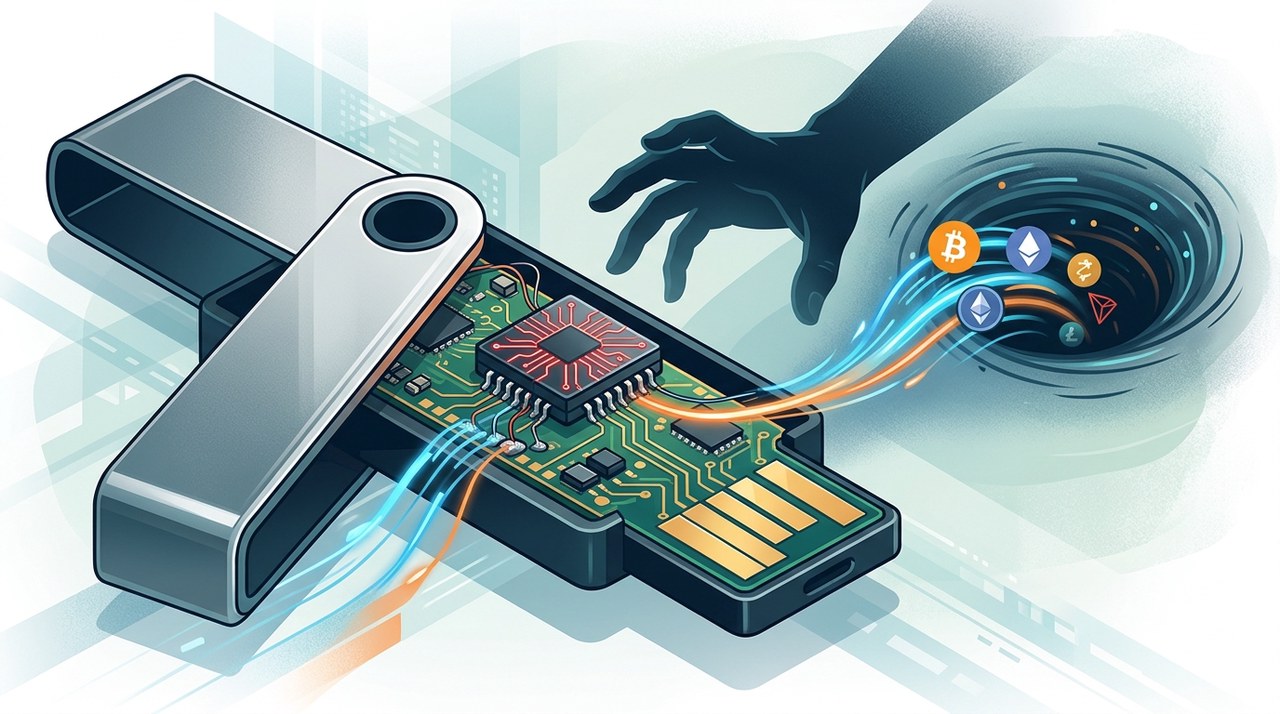
An unauthorized hardware implant was discovered inside at least one hardware wallet sold by Southeast Asian reseller CryptoBilis.
The confirmation comes after on-chain researchers spotted millions of dollars disappearing from user wallets in October 2026.
Inside the Numbers: How Much Was Lost?
Independent on-chain researchers estimate total losses between $86 million and $93 million across more than 300 affected wallets.
The stolen funds were drained from multiple major blockchains, including BitcoinBTC+0.15%, EthereumETH+0.58%, and TronTRX+0.72%.
Ledger emphasized that its internal software systems and official direct sales channels were not compromised.
The security flaw was isolated to physical devices distributed through third-party supply channels.
What Is a Supply Chain Hardware Implant?
Think of a hardware wallet like a brand-new safe you buy from a neighborhood store.
If someone secretly intercepts that safe before it reaches you, opens it up, installs a master lock, and repackages it, they now have full access to your savings.
That is essentially what a physical supply chain attack looks like.
Someone physically modified the wallet components somewhere during distribution, allowing unauthorized access once the device was activated.
Crucial Action Steps for CryptoBilis Customers
CryptoBilis handles distribution across Southeast Asia, including major markets in Indonesia, Malaysia, and the Philippines.
Ledger issued urgent instructions for anyone who bought a device from CryptoBilis:
- Unused Devices: Do not set up or initialize any unused hardware wallets bought through CryptoBilis.
- Active Devices: If your device is currently active, move your funds immediately to a new seed phrase generated on a device bought directly from Ledger.
- Contact Support: Reach out to official Ledger Support channels if you suspect your funds were compromised.
- File Reports: Contact local law enforcement agencies to submit formal complaint details.
Watch Out for Scam Attempts
Major security incidents often cause panic, making users vulnerable to secondary scams.
Bad actors frequently pose as support agents to trick people into giving away private information.
Ledger reminded users that the company will never call you, send direct messages, or ask for your 24-word recovery phrase.
Never type your 24-word recovery phrase into a website or share it with anyone claiming to offer help.
Unverified Claims and Ongoing Investigations
How attackers managed to physically modify the hardware remains under active investigation.
Binance co-founder Changpeng Zhao (CZ) posted on social media claiming that attackers bought the reseller firm and forced non-disclosure agreements.
These specific statements have not been independently verified, and CryptoBilis has not publicly commented on those claims.
CryptoBilis has temporarily paused all sales of hardware wallet inventory while investigations continue.
The Bigger Challenge for Self-Custody
Following the collapse of FTX in 2022, millions of crypto holders turned to self-custody wallets to manage their own private keys.
While self-custody eliminates exchange risk, physical hardware storage comes with its own unique operational risks.
Physical tampering and firmware flaws have caused major issues in the past across the industry.
For example, in July 2026, a firmware seed-generation bug in Coldcard devices led to an estimated $100 million to $130 million loss.
These events demonstrate that physical supply chain management is just as critical as software security.
How Ledger Plans to Strengthen Distribution
In response to the exploit, Ledger is updating its distributor guidelines and anti-tamper safeguards.
The company announced key updates for its official supply chains:
- Products must strictly originate from verified, direct distribution logistics.
- Resellers are strictly forbidden from restocking or reselling returned inventory.
- Hardware protection mechanisms are being updated to detect physical tampering earlier.
Final Takeaways for Crypto Holders
Hardware wallets remain a strong standard for protecting digital assets from remote hackers.
However, physical security breaches prove that where you purchase your hardware wallet matters tremendously.
Always buy hardware devices directly from official manufacturer channels whenever possible.
Staying educated about supply chain safety helps keep your digital assets secure in an evolving landscape.
Latest blog posts



Circle Shareholder Sues Trump Over UAE Crypto Deals
A Circle shareholder has filed a federal lawsuit against US President Donald Trump, claiming foreign crypto deals violate the US Constitution.
|
SEC Targets Tokenization, AI, and Quantum Tech for 2027
The US SEC has highlighted tokenized securities, artificial intelligence, and quantum computing in its fiscal year 2027 examination priorities.
|

Senate Probe Targets Tether Over White House Adviser Deal
U.S. Senator Richard Blumenthal demands records from Tether over payments made to a consulting firm tied to former White House crypto adviser Bo Hines.
|