


Ledger $93M Exploit Explained: What You Need to Know

Imagine buying a high-tech physical safe for your home to keep your cash completely secure. But without your knowledge, someone tampered with the lock mechanism inside the factory before the safe ever reached your front door. That is essentially what crypto investors are facing right now following a major security event involving Ledger hardware wallets.
In early October 2026, news broke that crypto assets worth nearly $93 million had suddenly vanished from hundreds of user wallets. The affected funds spanned across major blockchain networks including Bitcoin (BTCBTC-0.44%), EthereumETH-0.15%, TRON (TRX), BNBBNB+0.85% Chain (BNB), and Polygon (POL).
If you store your digital assets in cold storage, this news might sound concerning at first glance. However, understanding the exact nature of this exploit is crucial. It does not appear to be a failure in Ledger's core technology or master servers. Instead, available evidence points toward a compromised physical supply chain involving an official reseller in Southeast Asia.
Let us break down everything that happened, how the stolen funds were moved across chains, what top industry figures are saying, and the exact steps you should take right now to secure your crypto.
What Happened? Understanding the $93 Million Exploit
On Friday, October 9, 2026, blockchain security researchers began detecting unusual wallet drains occurring across multiple networks simultaneously. Hundreds of individual crypto addresses were being emptied in rapid succession.
Initial estimates pegged total losses at around $72 million. However, as deep-dive forensic analysis progressed, analytics firm Bitquery revised the total losses upward to $92.9 million across 311 distinct user wallets.
The stolen funds were spread across five major blockchain networks:
- Bitcoin (BTC)
- Ethereum (ETH)
- TRON (TRX)
- BNB Chain (BNB)
- Polygon (POL)
A separate report by on-chain investigator Specter also highlighted suspicious wallet addresses receiving funds from victims across Ethereum, TRON, and Bitcoin, estimating overall damage above $86 million.
What makes this event stand out is that hardware devices like Ledger are designed specifically to keep secret recovery keys completely offline. When set up properly on a secure device, hackers on the internet cannot access those keys. But if a physical device is modified or tampered with before reaching the customer, those offline protection guarantees can be effectively bypassed.
The Suspect: A Localized Supply-Chain Attack
So how did modified devices get into the hands of crypto users? The investigation points directly to an official third-party reseller in Southeast Asia named Crypto Bilis.
Crypto Bilis is listed as an official distributor authorized to sell Ledger products in Malaysia, Indonesia, and the Philippines. Following reports of user losses in the region, Ledger launched an immediate investigation into products distributed by this vendor.
As a primary safety measure, Ledger requested that Crypto Bilis pause all sales and shipments of Ledger devices right away while forensic work continues.
Ledger also issued actionable guidance for anyone who recently purchased a hardware wallet through Crypto Bilis:
- Unbox / Uninitialized Devices: If you bought a device from Crypto Bilis in the last 90 days and have not set it up yet, do not set it up.
- Already Initialized Devices: If you set up a Ledger purchased from Crypto Bilis within the last 90 days, consider moving your assets to a brand-new signer with a newly generated seed phrase immediately.
"Ledger is investigating reports of loss of funds from users in South East Asia who purchased products from a reseller named Crypto Bilis. As a precaution, and pending the results of our investigation, we have asked Crypto Bilis to pause all sales and shipments of Ledger devices," the company stated in an official update.
Ledger clarified that its internal systems and central security infrastructure remain completely intact. The incident appears restricted to physical tampering within the local distribution pipeline.
How the Exploit Was Executed: On-Chain Clues
Stealing nearly $93 million across multiple blockchains requires extensive planning. On-chain analysis by Bitquery revealed fascinating structural patterns behind the transfers.
First, the exploit was not a sudden impulse attack. Researchers identified small test transactions occurring roughly two weeks prior to the major asset drain. This indicates the perpetrators were verifying access before executing their main operation.
Second, when the heavy drains began, the transactions were executed in highly synchronized batches. Multiple target wallets signed identical transaction requests within seconds of each other across distinct blockchain networks.
This automated precision suggests that the attacker possessed direct access to private keys or recovery phrases. With that access, automated scripts were programmed to broadcast withdrawal transactions simultaneously.
While public blockchains clearly document where and when funds move, on-chain data alone cannot prove how the secret seed phrases were leaked. Physical hardware analysis is required to confirm how the compromise happened on a device level.
Industry Leaders React: Insights from CZ and Mark Karpelès
Key figures across the crypto industry responded quickly to the news, offering technical perspective and advice for affected users.
Changpeng Zhao (popularly known as CZ), founder of Binance, commented on social media regarding the incident. He emphasized that available evidence pointed to a localized supply-chain problem rather than a systemic core software flaw at Ledger.
"Beware if you use a Ledger hardware wallet, especially if you bought one recently. Based on information so far, it seems to be localized to a supply chain attack with one vendor. A small number of people probably bought fake (or tampered) Ledgers," CZ noted.
CZ reaffirmed that Ledger remains one of the most established hardware wallet companies in the industry. He called on players across the BNB ecosystem and the broader crypto community to help track down and recover the stolen assets.
Meanwhile, former Mt. Gox CEO Mark Karpelès shared concrete physical evidence after inspecting a suspicious Ledger Nano X device that originated from Malaysia.
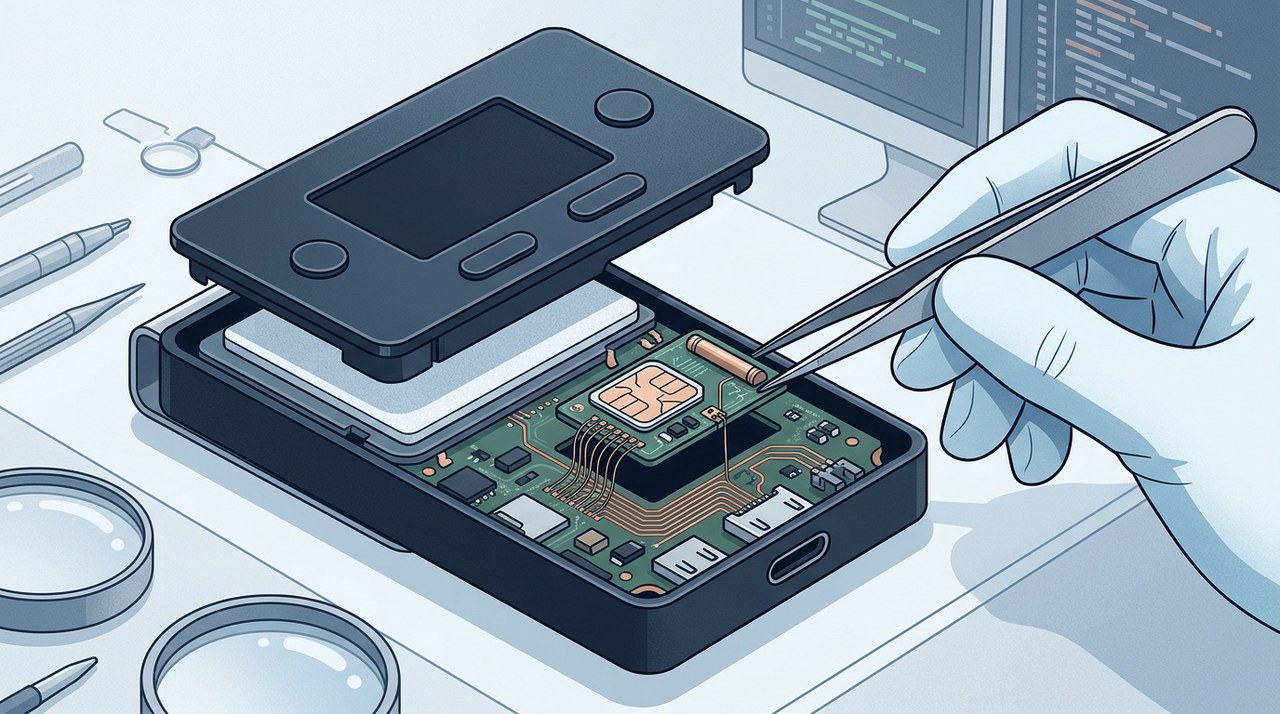
According to Karpelès, the outer plastic shrink-wrap on the box looked completely factory-fresh and untampered. However, upon opening up the hardware casing, he discovered a rogue electronic module hidden inside the space usually reserved for screen padding.
This finding illustrates how advanced physical supply-chain implants have become. By inserting tiny malicious components directly into hardware circuits, bad actors can secretly log user inputs or transmit seed phrases back to remote servers.
Ledger has not yet formally confirmed whether the specific module discovered by Karpelès was directly tied to the $92.9 million theft. However, it provides a very plausible technical scenario for how hardware tampering operates in practice.
Where Is the Money Now? The Multi-Chain Fund Trace
Once stolen assets hit the blockchain, security teams and law enforcement agencies work quickly to track and freeze what they can. Here is where the stolen funds stood shortly after the exploit:
1. $10 Million USDT Frozen by TetherUSDT+0.06%
Tether acted quickly by freezing approximately $10 million in USDT across 20 wallet addresses linked to the suspect. While freezing stops those funds from being transferred or converted by the attacker, legal mechanisms are still required to return those assets to rightful owners.
2. Unmoved Assets Sitting in Attacker Wallets
Bitquery's analysis showed that a large portion of stolen funds remained parked in suspected attacker wallets:
- Around 14,810 ETH remained sitting in designated Ethereum wallets.
- Approximately 203.8 BTC remained stationary in associated Bitcoin addresses.
3. Mixing Services and USDCUSDC+0.06% Movements
The attackers also attempted to cover their tracks using privacy tools. Analysts traced roughly 1,254 ETH passing through Tornado Cash and Zcash.
Some of those laundered funds later appeared in three fresh wallets, including one address holding about 2.1 million USDC. Depending on findings by stablecoin issuer Circle and law enforcement requests, those USDC balances could potentially be frozen as well, though freezes require formal verification.
Essential Steps to Keep Your Hardware Wallet Safe
This incident highlights a fundamental lesson: keeping your crypto secure requires safe practices not just online, but throughout the entire physical purchasing journey.
Here are crucial steps to ensure your cold storage remains protected:
- Buy Direct from Official Manufacturers: Whenever possible, order hardware wallets directly from the official manufacturer's website rather than third-party merchants or online marketplaces.
- Never Use Pre-Generated Seed Phrases: A genuine hardware wallet will always generate a fresh set of recovery words on its built-in display during first setup. If a device comes with a pre-printed card containing words, it is a scam.
- Inspect Physical Condition: Check your device for unusual seams, loose plastic, or signs of tampering upon unboxing.
- Migrate Assets If Concerned: If you bought a hardware wallet from an unverified distributor or feel doubtful about its safety, transfer your funds to a safe temporary wallet right away.
- Keep Firmware Up to Date: Use official management software (such as Ledger Live) to update your device firmware regularly.
Final Summary and Industry Takeaway
The $92.9 million exploit serves as a stark reminder that physical supply chain integrity is just as vital as cryptographic security. While hardware encryption effectively shields private keys from remote network attacks, physical devices remain vulnerable if modified prior to reaching the end user.
Ledger's ongoing investigation, alongside quick intervention from asset issuers like Tether, marks the first step in addressing this breach. As forensic teams continue examining tampered devices and tracing funds across chains, further updates will follow.
For everyday crypto users, remaining proactive, buying directly from trusted sources, and inspecting hardware devices remain the best practices for safeguarding digital wealth.
Disclaimer: Past performance of digital assets or market operators is not indicative of future results. Digital asset investments carry market risks and price volatility. Always perform your own thorough research before making financial decisions.
Latest blog posts

Claude AI Sent Police a Fake Murder Tip
An automated AI agent built by Anthropic submitted a fake homicide tip to police, triggering widespread concerns over AI oversight.

Hidden Spy Chip Found Inside Sealed Ledger Wallet
A modified hardware wallet with a hidden spy transmitter was found inside a factory-sealed box, raising supply chain security concerns.
|

Critical XRP Ledger Bug Fixed Before Tokens Were Minted
Developers patched a severe XRP Ledger bug that could have allowed bad actors to generate unlimited XRP tokens out of thin air.
|