Larry Fink Warns AI Data Center Freeze Could Trigger Recession
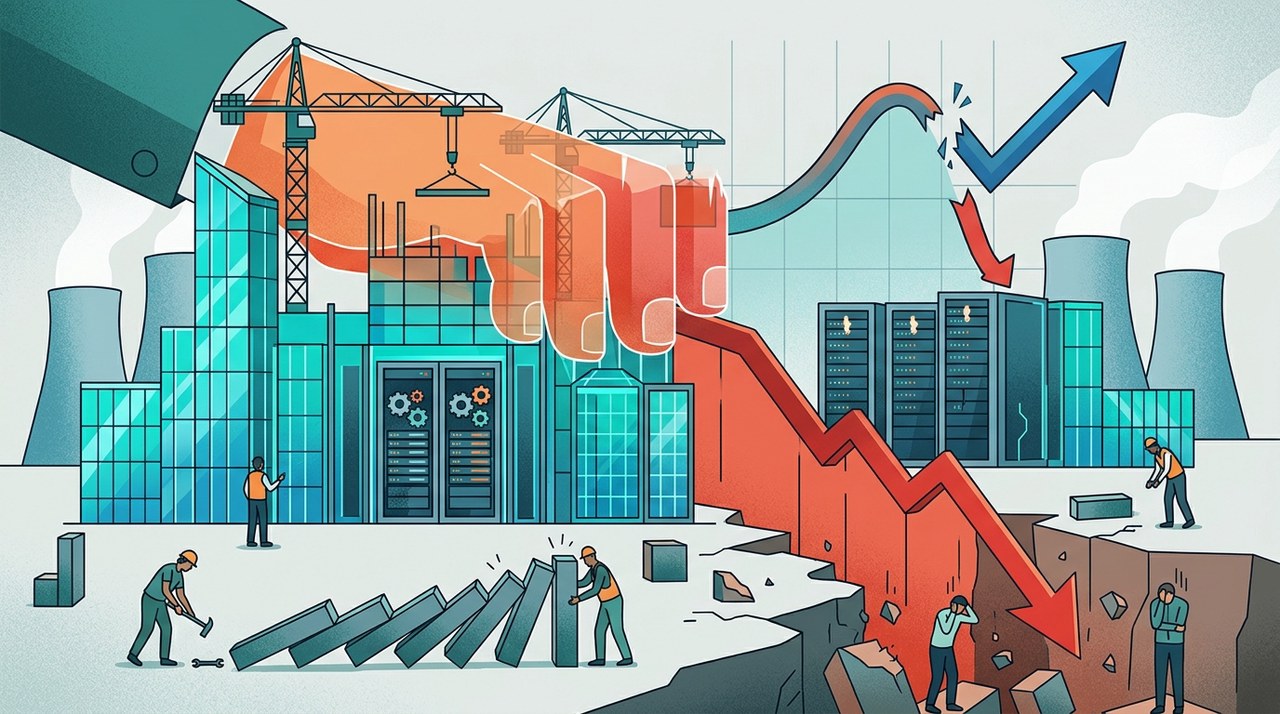
Larry Fink Warns of Potential Recession Risks
Imagine hitting the pause button on one of the fastest-growing sectors of the economy. That is precisely what BlackRock CEO Larry Fink warns could happen if lawmakers halt artificial intelligence data center construction.
Speaking to CNBC following BlackRock's third-quarter earnings report, Fink delivered a direct assessment of proposed construction freezes across the country. He argued that stopping these massive infrastructure projects could tip the United States into a recession.
If we have a moratorium of some sort in this country, we will be in a recession.
Fink highlighted that a major portion of current economic momentum relies on capital expenditures supporting AI infrastructure. He also addressed public pushback, stating that data centers are creating more jobs than ever before and claiming that much of the criticism stems from misinformation.
Why Lawmakers and Local Communities Are Pushing Back
The controversy surrounding data centers stems from their tremendous consumption of electricity and water. As opposition builds ahead of upcoming elections, local residents and lawmakers are questioning whether the economic benefits outweigh the local costs.
Prominent leaders, including Senator Bernie Sanders and Representative Alexandria Ocasio-Cortez, have called for a federal pause on certain AI facility builds until stronger consumer, labor, and environmental protections are established.
- Rising Utility Costs: Residents worry that massive energy consumption by tech firms could drive up household electricity bills.
- Environmental Impact: Groups like Food & Water Watch are pushing for restrictions to protect local water supplies and energy grids.
- State Action: New York has already put a temporary statewide pause on certain large AI data center projects while considering permanent regulations.
BlackRock's $100 Billion Stake in AI Infrastructure
Beyond macro-economic concerns, BlackRock has significant financial commitments tied to the continued expansion of AI data centers. The asset management giant is leading major financing efforts across the sector.
Through its AI Infrastructure Partnership alongside Microsoft, MGX, and other key investors, BlackRock seeks to mobilize $30 billion in equity and up to $100 billion including debt. This includes a major acquisition of Aligned Data Centers valued at approximately $40 billion.
Wall Street projections estimate that annual AI capital expenditures could exceed $1 trillion by 2027, with cumulative global spending reaching $5 trillion by 2030. These figures demonstrate why market leaders view uninterrupted construction as vital to macroeconomic momentum.
Examining the Water and Energy Footprint
A central point of debate remains the actual resource footprint of AI computing facilities. Critics argue that surrounding communities shouldn't bear the infrastructure burden while tech companies scale up computing capacity.
Conversely, AI advocates contend that resource usage claims are often exaggerated. While early estimates suggested a single ChatGPT query used half a liter of water, recent data from Google indicates a typical Gemini prompt uses only about 0.26 milliliters—roughly five drops of water.
Supporters also point out that modern facilities use advanced closed-loop systems that recycle water or rely on air cooling. Compared to golf course irrigation or traditional agriculture, data centers represent a relatively modest portion of national freshwater usage, though localized utility strain remains a valid issue.
Looking Ahead: Balancing Growth and Community Impact
The debate over AI infrastructure highlights the challenge of balancing economic expansion with community resources. While institutional investors view data centers as core engines of future job growth, local regions are demanding fair protections against rising power costs and resource depletion.
As the technology landscape continues to evolve, market participants will be closely following regulatory updates and infrastructure developments. Please note that past digital asset and market performance is not a guarantee of future results.
Latest blog posts



Australia Drafts Bill for OECD Crypto Tax Framework
Australia has released a draft bill to adopt the OECD's Crypto-Asset Reporting Framework, setting the stage for global tax data exchanges by 2028.
|
Grayscale: Bitcoin Volatility Drops to S&P 500 Range
Grayscale reports Bitcoin's one-year volatility fell to 43%, putting it on par with some S&P 500 stocks as the market matures.
|
MicroStrategy May Be Dropped from Major Global MSCI Indexes
New MSCI rules targeting companies acting as asset holding funds could force index ETFs to sell MicroStrategy shares.
|