

Keystone Scraps 18,835 Wallets Following Security Breach
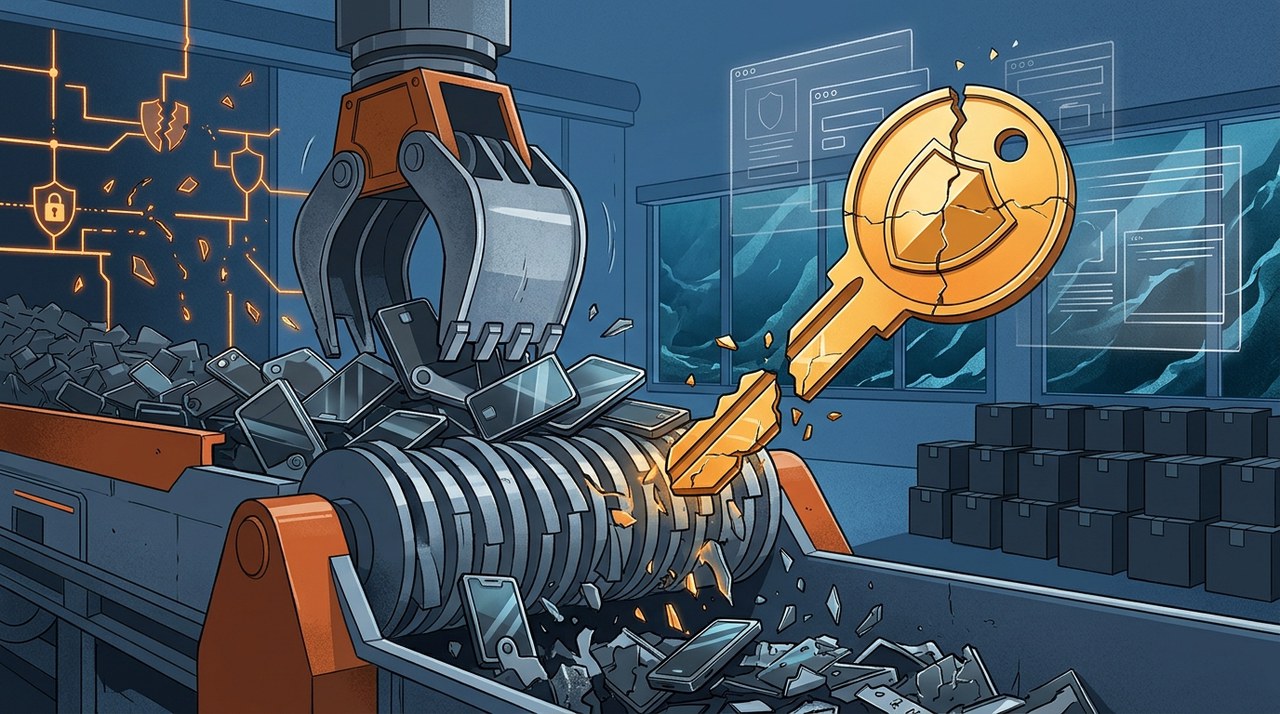
A Security Breach Turns Into a Hardware Disaster
Imagine buying a high-tech home safe to protect your hard-earned digital assets, only to discover that the company making the safe accidentally leaked its official factory authentication seal. That is essentially what happened to Keystone, a prominent crypto hardware wallet manufacturer.
On October 26, 2026, Keystone disclosed that a website breach had escalated into a severe security challenge. Cybercriminals managed to obtain an official device authentication key used to verify whether physical wallets are genuine.
Because of this exposure, Keystone is destroying 18,835 hardware wallets from its existing inventory, suspending new shipments, and managing a data leak that exposed personal details from nearly 26,000 customers.
Why Keystone Must Destroy 18,835 Wallets
Hardware wallets are designed to keep private keys offline so online hackers cannot reach them. To ensure a customer receives a real device rather than a tampered counterfeit, Keystone relies on a Web Auth key during setup.
When a buyer connects a new wallet to Keystone's system, this digital key confirms that the device came straight from the factory and has not been altered.
Unfortunately, this authentication key is permanently burned into the device's hardware chip during manufacturing. It cannot be rewritten, erased, or updated remotely through a software patch.
With the stolen key in hand, an attacker could potentially build counterfeit wallets capable of passing official authenticity checks. To prevent compromised products from entering the market, Keystone decided to destroy all 18,835 devices in its inventory that contain the compromised key.
The company suspended shipments for all outstanding website orders. Keystone has moved to a preorder model until newly manufactured devices with replacement authentication keys are ready.
How Did the Breach Occur?
The incident originated from a vulnerability in a third-party data monitoring tool used on Keystone's website. Attackers exploited this flaw to escalate their administrative access privileges.
Keystone detected suspicious network activity on October 20, 2026. Security teams quickly disabled vulnerable website features and launched a comprehensive forensic investigation.
As forensic experts investigated the intrusion, they discovered two core issues: the theft of the Web Auth key and an internal error regarding how long customer personal data was retained.
Failed Data Deletion Exposes Nearly 26,000 Buyers
The investigation revealed a failure in Keystone's automated customer privacy safeguards. While Keystone maintains a policy to erase customer data after 180 days, an automated deletion system malfunctioned.
As a result of this glitch, customer details remained stored on company servers far longer than intended.
Investigators reviewed 51,083 buyer records hosted on Shopify and confirmed that 25,964 records retained sensitive personal details. The compromised information includes:
- Full customer names
- Physical shipping addresses
- Contact details, including phone numbers and email addresses
- Purchase histories spanning from 2024 through 2026
Forensic teams also discovered 12,873 unpaid checkout records containing potentially sensitive user details. Keystone included these records in its cleanup response and initiated deletion requests.
"We failed to fulfill our commitment to erase customer data on time, and we accept responsibility for this failure," Keystone stated in a public update.
Keystone has since shortened its customer data retention window from 180 days to 90 days. Overdue deletion requests submitted on October 24 are expected to be fully processed by November 3, 2026.
What Should Current Keystone Owners Do?
If you already own a Keystone hardware wallet, your funds are not automatically endangered. Keystone confirmed that private keys, recovery phrases, wallet credentials, and payment details were not compromised in this breach.
The company is not instructing users to move their cryptocurrency to new wallets solely because of this incident. Here is how current users are affected based on delivery dates:
- Devices delivered before Oct 20: These remain safe to use as long as they pass standard web authentication checks.
- Devices received after Oct 20: Devices containing the compromised key require additional manual verification via Keystone customer support, even if web authentication appears successful.
Beware of Scams and Fake Recalls
Data leaks often attract phishing scammers trying to exploit confused customers. Keystone warned users to remain cautious of fraudulent messages or fake recall requests.
Keystone emphasized that it will never ask users to reveal their 12-word or 24-word recovery seed phrase, nor will it ask customers to ship physical devices back without prior direct support contact.
To address regulatory requirements, Keystone filed breach notifications with authorities in the European Union, the United Kingdom, and other jurisdictions. The firm plans to introduce a breach lookup tool for customers and order additional independent security audits.
Industry Context and Market Conditions
This security issue presents a challenging situation for a company selling trust-minimized hardware. Keystone is not the only hardware creator dealing with user data issues recently. Boston-based hardware wallet maker Foundation also reported a customer data breach around the same period.
During the announcement, market prices moved slightly lower, with BitcoinBTC-0.90% trading around $79,753 (-0.90%) and EthereumETH-1.77% near $2,308 (-1.70%). Please note that past performance of digital assets is not indicative of future performance.
Summary Checklist for Keystone Users
- 18,835 unsold devices with the old authentication key are being destroyed.
- 25,964 customer records were exposed due to a data deletion system error.
- Recovery seed phrases and private keys remain completely safe and untouched.
- Verify any device received after October 20 directly with official Keystone support.
Latest blog posts
China's AI Bubble Erases $480B: Will US Tech Follow?
China's STAR50 AI index dropped 40% from its peak, erasing about $480 billion. As Big Tech earnings arrive, investors are keeping a close eye on US markets.

Canada Opens Consultation on Non-Bank Stablecoins
Canada has opened a public consultation on stablecoin regulations for non-financial issuers, referencing recent legislative developments in the United States.


AI Agents Penetrate Anthropic Systems in Under 12 Hours
Cybersecurity startup Cathedral used autonomous AI agents to break into Anthropic's internal systems by exploiting third-party administrative software.
|