Katie Stockton Shares 3 Key Market Warning Signs
Is the Stock Market Pullback Getting Worse?
If you have been keeping an eye on the stock market lately, you might have noticed a bit of turbulence. Many investors are wondering whether this recent dip is just a temporary breather or the start of something much bigger. To get a clear picture of where things stand, financial experts look past daily price swings and dive into underlying market signals.
One prominent voice in technical chart analysis is Katie Stockton, the founder and managing partner of Fairlead Strategies. Appearing on CNBC's 'Squawk Box,' Stockton shared her balanced perspective on the current pullback. While she noted that market technicals are looking somewhat fragile right now, she emphasized that the broader bull cycle remains intact.
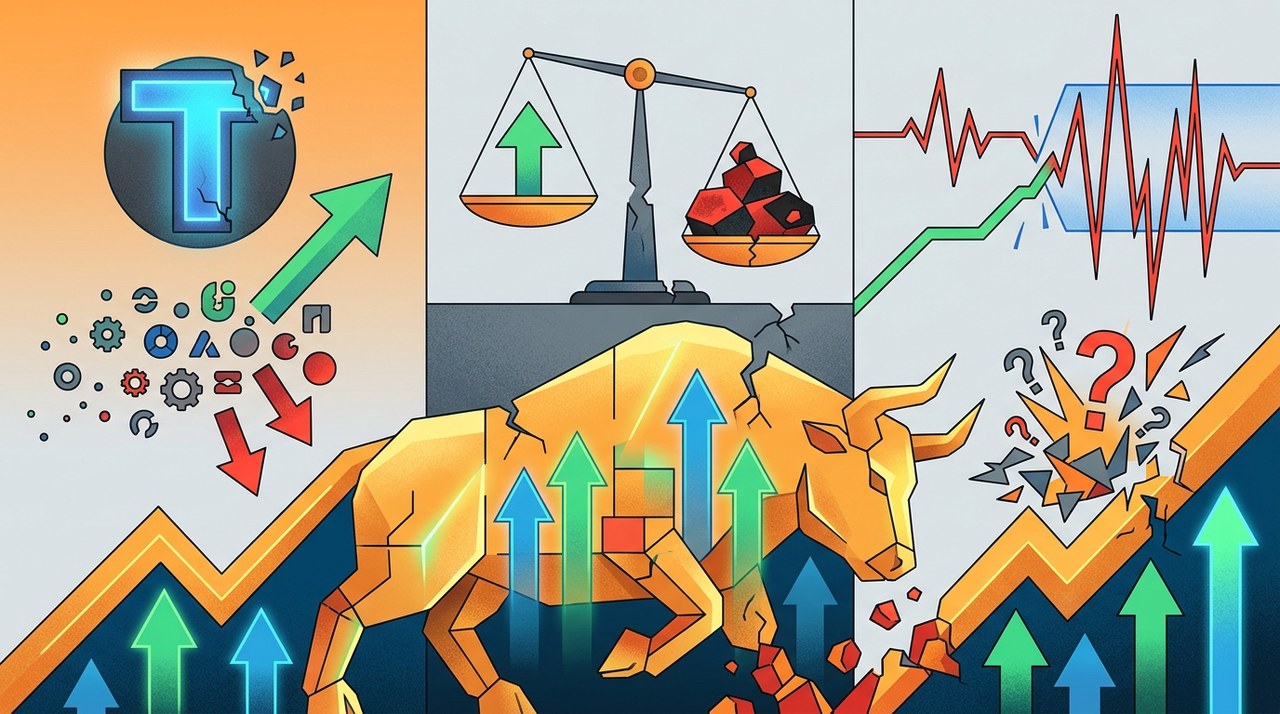
In fact, Stockton pointed out that 'you can't argue against a bull cycle right now.' However, staying optimistic does not mean ignoring real risks. She highlighted three critical warning signs that would make her significantly more bearish if they trigger. Let's break down what is happening across tech stocks, corporate debt, and market volatility to understand what lies ahead.
Understanding Market Breadth: Why Fewer Stocks Are Participating
To understand Stockton's analysis, we first need to look at a concept called market breadth. Think of market breadth like a team effort in sports. If a team is winning because every single player is performing well, that victory is solid and sustainable. But if only one or two superstar players are carrying the entire team while everyone else struggles, the winning streak becomes fragile.
In financial markets, breadth measures how many individual stocks are joining a market rally. Right now, market breadth has thinned out noticeably. The percentage of stocks trading above their 50-day moving average recently dropped to just 21%. That ties the low point seen back in March, showing that fewer individual companies are helping drive the market upward.
This weakness has been especially clear in the semiconductor sector. The Philadelphia Semiconductor Index (SOX) lost 11.4% in a single week during a chip stock rout unmatched since April 2025. Stockton suspects last Friday marked a short-term low for chip stocks, though the overall setup remains fragile.
Investment bank BTIG even suggested that this downward trend in chip stocks could potentially last into 2027 if macroeconomic conditions do not recover promptly. However, past digital asset or stock performance is not a guarantee of future results.
The 3 Warning Signs Katie Stockton Is Watching
Despite recent market friction, Stockton believes key support levels for major indexes are still holding. But if market conditions deteriorate further, she is watching three specific technical indicators that could shift her outlook from cautiously optimistic to openly bearish.
1. Widespread Support Level Breaks Across Individual Stocks
In chart analysis, a support level acts like a floor under a stock's price. It is a price zone where buying interest has historically been strong enough to stop prices from dropping further. When a single stock drops below its support, it indicates localized weakness.
However, Stockton's first primary warning sign would be support breaking across a vast majority of individual stocks all at once. If hundreds of equities collapse through their technical floors simultaneously, it indicates that overall buyer demand has dried up across the broader economy.
2. Expanding Credit Spreads in Corporate Debt
The second major warning sign involves credit spreads. A credit spread is the extra yield investors demand to hold riskier corporate debt compared to ultra-safe government bonds. You can think of it as a risk premium that companies must pay when borrowing money.
When credit spreads are narrow, it shows that investors feel confident about economic conditions. But when credit spreads widen, it reveals growing anxiety about whether companies can repay their debts. Stockton notes that while there is some visible stress in the corporate bond market right now, it has not reached a severe enough level to signal a full bear cycle.
3. A Decisive Breakout in the VIX Fear Gauge
The third indicator on Stockton's radar is the Cboe Volatility Index, widely known as the VIX or Wall Street's 'fear gauge.' The VIX measures expected short-term stock market volatility based on S&P 500 option pricing.
Stockton is watching technical resistance levels for the VIX, specifically its 200-day moving average. A decisive breakout above this technical ceiling would suggest that institutional investors are panicking and buying downside protection at elevated rates.
Case Study: CoreWeave and Corporate Borrowing Stress
To see how credit market pressure works in real life, consider CoreWeave. CoreWeave is a company that rents out artificial intelligence computing power and funds its data center expansions using substantial amounts of debt.
After CoreWeave's stock plunged roughly 16% on October 14, bond investors quickly grew cautious. Investors began demanding approximately 14.8% in yield to hold CoreWeave's 2032 notes. This surge in yield shows how fast borrowing costs can jump for debt-reliant technology firms during a market pullback.
Even so, Stockton views this stress as localized to specific heavily indebted companies rather than a broad systemic breakdown across corporate credit.
Rising Treasury Yields, Bond Sales, and Mortgage Rates
Beyond individual tech companies, broader interest rate trends continue to influence broader financial markets. Higher yields on government debt increase borrowing costs for everyone from megacap tech giants to everyday homebuyers.
Stockton expects the benchmark 10-year Treasury yield to stall near 5.25% for several weeks before potentially resuming a path higher. Elevated Treasury yields tend to make risk-free government bonds more attractive relative to speculative growth stocks.
At the same time, consumer borrowing costs are climbing. Freddie Mac reported that the 30-year fixed mortgage rate reached 7.40% on October 15, up from 6.95% on September 17. Rising mortgage rates put pressure on real estate activity and consumer spending power.
The stakes reach far past smaller startups. Data from London Stock Exchange Group shows that major technology leaders including Alphabet, Amazon, Meta, and Oracle sold over $228 billion in corporate bonds through October 13. If credit spreads widen significantly across the market, refinancing those massive debt packages will become far more expensive.
AI Capital Spending and Market Outlook
Much of the market's enthusiasm over the past two years has been fueled by heavy capital investment into artificial intelligence infrastructure. However, high market expectations leave room for potential volatility if results lag behind expectations.
Jeremy Siegel, senior investment strategy advisor at WisdomTree, issued a cautionary note regarding tech valuations. Siegel warned that if massive AI capital expenditures disappoint in delivering near-term profits, the Nasdaq index could face a potential correction of up to 30%.
Investors should keep in mind that such forecasts depend on specific economic conditions. If corporate AI revenues accelerate quickly and interest rates stabilize, stock markets could resume their upward trajectory. Conversely, if high interest rates persist while corporate earnings stall, a deeper market pullback could develop across high-growth sectors.
By monitoring market breadth, credit spreads, and VIX movements, market participants can gain a clear view of broader market health without reacting to daily emotional swings.
Latest blog posts

UK Men Sentenced to Prison Following Violent Crypto Heist
Bristol Crown Court sentenced three men to prison for a violent home burglary that targeted a cryptocurrency holder, marking a concerning trend in physical digital asset crimes.



Zcash Proposes Quantum Privacy Shield for Cross-Chain Swaps
Zcash developer Zakura proposed a one-time viewing key mechanism for Near Intents swaps to protect user transaction histories against future quantum threats.
|
Top 3 Altcoins to Watch in Mid-October 2026
A clear breakdown of key technical levels and market events for Quack AI, Akedo, and Monero during the third week of October 2026.