Italy Busts Mafia Underground Bank That Used Crypto
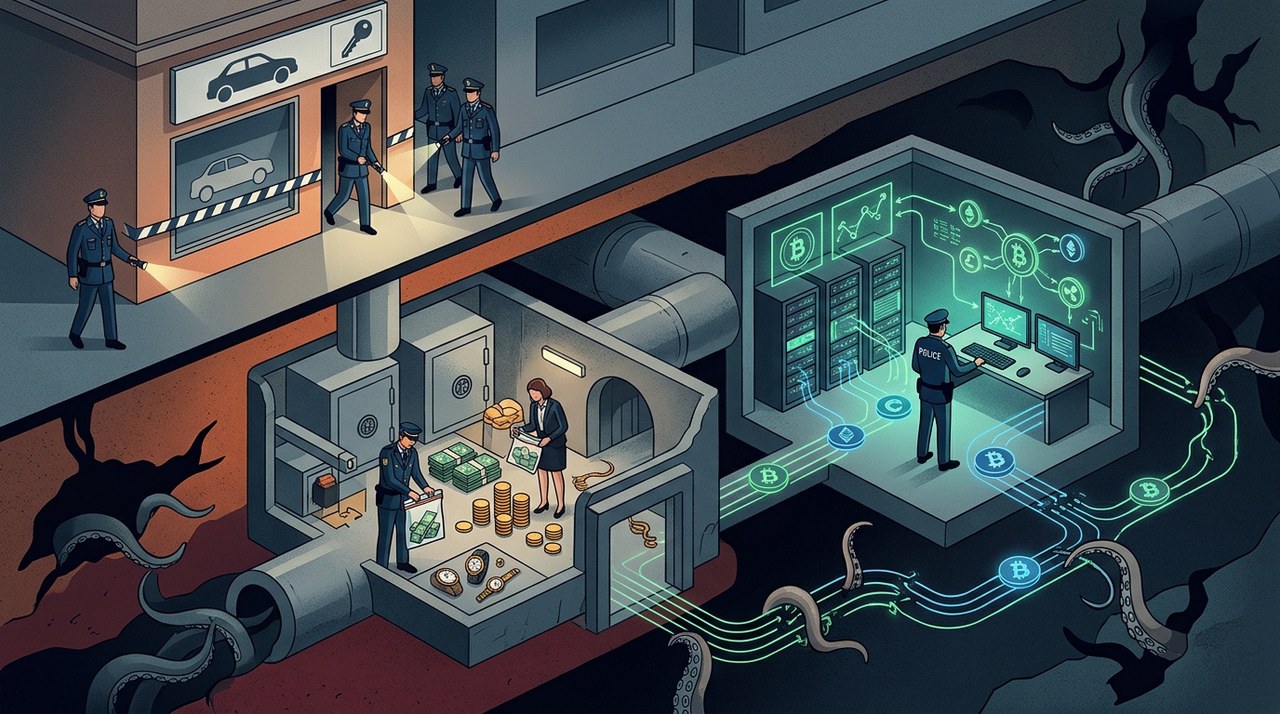
A Fake Car Rental Shop with Big Secrets
Italian police have shut down a secret underground bank hidden behind a car-rental business near Milan. The operation was allegedly laundering tens of millions of euros for organized crime networks.
Authorities arrested 30 people linked to infamous mafia groups across Italy and Europe. They also seized about €21 million ($23.6 million) in assets during the operation.
The seized items included cash, bank accounts, cryptocurrency, luxury watches, jewelry, and even boats. The raid was led by Italy's financial police, the Guardia di Finanza, following orders from Milan's anti-mafia prosecutors.
Who Ran the Network?
The illicit enterprise was based in Pero, a small town on the outskirts of Milan. According to investigators, three Italian men ran the daily operations.
Two of the men had long-standing ties to 'Ndrangheta clans in Crotone and had prior mafia convictions. The third man belonged to the Camorra's Casalesi clan.
The network targeted suspects linked to the 'Ndrangheta, the Camorra, and organized crime groups from Foggia in southern Italy. It also relied on Chinese and Albanian accomplices to keep money moving smoothly.
How the Money Laundering Scheme Worked
The group created shell companies that issued over €110 million in fake invoices for services that were never actually delivered. Local businesses used these fake invoices to artificially lower their official tax bills.
These business clients paid the shell companies via standard bank transfers. The criminal network then returned the funds back to the business owners in cash, minus a set commission fee.
In total, prosecutors estimate the network moved around €68 million out of Italy.
Routing Funds Through European Banks and Crypto
To clean the illicit cash, funds gathered in the shell accounts were transferred to traditional banks in Luxembourg, Lithuania, and Germany.
From those European accounts, the money was sent to crypto exchanges and deposited into digital wallets controlled directly by the network.
This network served as a multi-purpose financial service for criminals. Drug traffickers handed over cash and received cryptocurrency or international wire transfers in return.
Investigators also found that the network processed stolen funds taken from victims of online crypto investment scams.
Corrupt Insiders and International Arrests
The crackdown followed an extensive investigation supported by the Guardia di Finanza's specialized technology fraud unit. The resulting court order stretched over 500 pages.
Out of the 30 people targeted, 16 were placed into police custody and 14 were placed under house arrest. The arrests reached beyond Italy, with two suspects detained in Spain and one in Switzerland.
The investigation also uncovered troubling corruption among public officials.
A Guardia di Finanza inspector was placed under house arrest on corruption charges. Additionally, a Milan court employee was accused of leaking confidential information about active cases. A lawyer and a former financial police officer were also implicated.
Organized Crime Meets Modern Financial Tech
Italian law enforcement agencies have warned for years that criminal groups are adopting modern digital payment methods to hide their activities.
Back in 2021, Italy's Anti-Mafia Investigative Directorate noted that all major criminal syndicates want to leverage digital financial tools.
They specifically highlighted that the 'Ndrangheta, Italy's most powerful mafia syndicate, has grown increasingly skilled at using cryptocurrencies and the deep web to expand its business.
Latest blog posts


45-Day Bitcoin Clock: Why the Next Month Is Critical
Bitcoin trader Bob Loukas highlights a 30 to 45-day window for buyers to build on current momentum before a potential winter slowdown.
|

How Much Money Would You Let an AI Control?
A new study reveals how AI agents spend pennies on research and whether traders are ready to trust software with their crypto portfolios.
|
Bitcoin Pulls Back Below $82K Following Tesla Q3 Results
Bitcoin paused its push toward $85,000 and dropped below $82,000 as Tesla's lower Q3 capital expenditure and a falling KOSPI weighed on market mood.
|