

How Jeff Bezos' Parents Turned $250K into $40 Billion
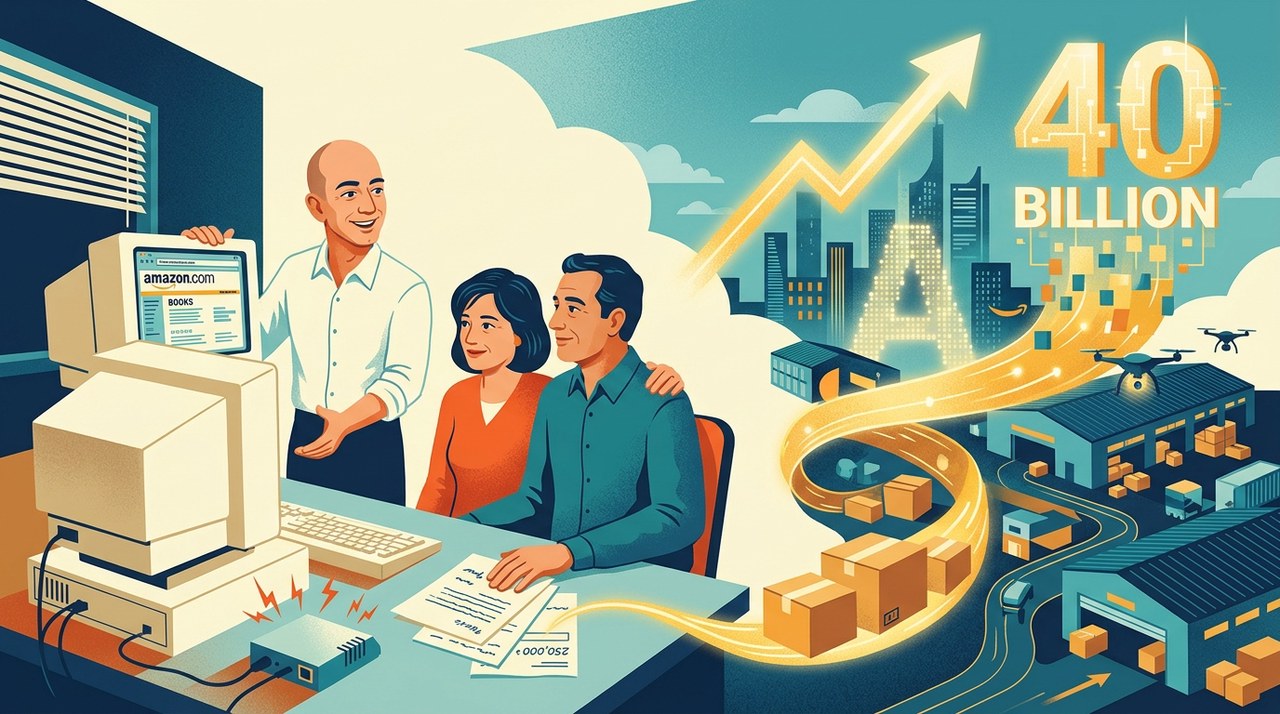
The $250,000 Risk That Built an Empire
Imagine asking your parents for their life savings to fund a new business idea. Now imagine telling them there is a 70% chance they will lose every single penny.
That is exactly what Jeff Bezos did in 1995. He pitched his parents, Miguel and Jackie Bezos, on a crazy idea for an online bookstore.
They decided to trust him anyway. They wired $250,000 into his startup, taking a massive gamble on an unfamiliar technology.
Reporting by Quentin Couprie on October 14, 2026, looks back at this moment in tech history while BitcoinBTC-0.44% traded around $83,400 and EthereumETH-0.98% held near $2,504.
What Is the Internet? A Leap of Faith in 1995
Every major tech empire starts with a small decision that feels ordinary at the time. For Amazon, that moment arrived when Jeff Bezos walked away from a comfortable Wall Street career.
When Bezos explained the idea to his parents, they did not start with complex business models. Instead, they asked a fundamental question: what is the internet?
That simple question made sense for the mid-1990s. Dial-up modems were loud, e-commerce barely existed, and buying products on a computer was completely alien to daily life.
Bezos was asking for a huge commitment. He wanted about $250,000 of their savings, as later detailed in reporter Brad Stone's book about the company.
Bezos made sure not to hide the real risks. He warned them directly that the company had a 70% probability of complete failure.
His parents were not investing because they understood the tech. They invested because they believed in their son's ability to execute his plan.
Breaking Down the Numbers Behind the Legendary Bet
Over time, official public disclosures from the Securities and Exchange Commission (SEC) revealed the exact figures behind this famous family transaction.
The filings show that Miguel and Jackie Bezos purchased 1,430,244 shares for a total price of $243,141.48. That works out to roughly $0.17 per share.
As Amazon transformed from an online bookstore into a global powerhouse, those initial shares grew to a total value exceeding $40 billion.
Past performance of a company or asset is not an indicator of future results.
These numbers show how early-stage venture funding functions. Small groups take big financial risks early on, creating cap tables that become legendary once the public market validates the model.
Beyond Books: The Evolution of Amazon's Infrastructure
Amazon did not grow into a multi-trillion-dollar company simply by selling more items, though it quickly expanded into electronics, home goods, and groceries.
The company's real strength came from building core operational systems that competitors could not match.
- Advanced fulfillment networks designed for super-fast delivery
- Software-driven inventory management to track millions of items
- Amazon Web Services (AWS) to power modern cloud infrastructure
This shift is why that early 1995 check remains so significant today. It bridges the gap between the online shop consumers see and the industrial backbone behind the scenes.
Today, automated robotics fill Amazon warehouses while AWS provides critical cloud computing power for enterprise software and modern AI workloads.
Looking Ahead to the Next Big Horizon
Looking back at 1995 reminds us how quickly emerging technology can shift from an obscure concept to vital infrastructure.
As artificial intelligence and decentralized networks continue to develop, investors today are asking similar questions about emerging tech platforms.
It leaves us with an interesting thought: how many foundational bets are happening right now that will define the next thirty years?
Latest blog posts
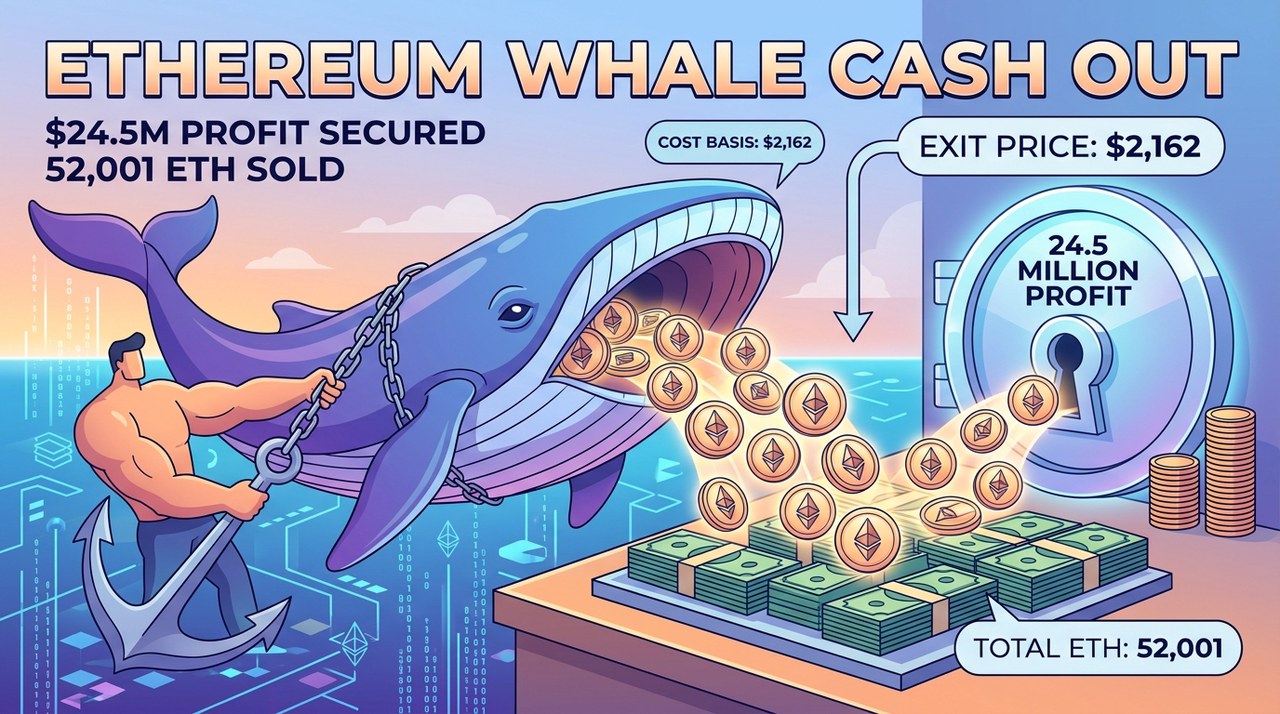
Ethereum Whale Cash Out: $24.5M Profit Secured
A crypto whale recently sold off 52,001 ETH, locking in a $24.5 million profit. Meanwhile, other large holders are rotating funds into Ethereum.
|

Ripple Partners With Meritz Securities in South Korea
Ripple has joined forces with Meritz Securities, its first partnership with a South Korean securities firm to explore institutional digital asset custody and tokenization.
|
Former OpenAI Engineer Arrested Over Hidden Bugging Device
A former OpenAI engineer faces federal charges after allegedly hiding an audio recorder behind a conference room TV wrapped in toilet paper.