
Grayscale Views Market Dip as Bitcoin Hits $64,000

Have you been watching the recent price shifts in the crypto market? BitcoinBTC-0.39% recently pulled back toward the $64,000 mark, causing some traders to pause and re-evaluate their outlook.
When major digital assets experience a price dip, it is natural to wonder what is driving the movement. Is it just short-term market noise, or is something deeper happening across the crypto ecosystem?
According to Zach Pandl, Head of Research at crypto asset management firm Grayscale, there is more to the story than just red price charts. Pandl points out that underlying demand for digital assets remains solid, driven by institutional adoption of stablecoins.
Inside Grayscale's Market Assessment
When asset prices drop, investor sentiment can quickly swing from excitement to caution. However, institutional market analysts often look past short-term chart fluctuations to assess long-term network health.
Zach Pandl emphasized that core fundamental activity across public blockchains continues to show strength. While Bitcoin's price drop grabs headlines, real-world utility metrics tell a more nuanced story.
Crypto still has strong fundamental demand, such as institutional adoption of stablecoins.
This insight draws a clear distinction between short-term market volatility and long-term blockchain integration.
What Are Stablecoins and Why Do They Matter?
To understand why Grayscale highlights stablecoins, it helps to look at how these assets function in modern finance. Stablecoins act as a bridge between traditional money and blockchain networks.
Unlike floating cryptocurrencies, stablecoins maintain a constant value by pegging their worth to conventional fiat currencies, most commonly the U.S. dollar.
They allow financial institutions and individuals to move capital around the globe rapidly, operating 24 hours a day without waiting for standard banking clearance windows.
How Financial Firms Use Stablecoins
Major enterprise players are finding practical ways to integrate stablecoin networks into their core infrastructure:
- Cross-border payments: Moving money internationally at lower fees compared to traditional wire networks.
- Immediate settlement: Achieving quick settlement times for institutional trades and liquidity management.
- Digital cash management: Allowing corporate treasuries to hold liquid digital balances for fast transactions.
As institutional adoption grows, activity on underlying blockchain networks expands. Researchers view this growing utility as a foundational pillar for the broader digital asset economy.
Understanding the Bitcoin Price Pullback
Bitcoin's move to $64,000 comes after periods of rapid price growth. Market pullbacks are common occurrences in crypto asset history and often clear out excessive leverage in trading markets.
Several macroeconomic and market factors contribute to price pullbacks:
- Macroeconomic interest rates: Central bank policies affect how investors allocate capital toward risk assets.
- Profit-taking: Traders who accumulated assets during lower price ranges often realize gains after large rallies.
- Futures market adjustments: Sharp price drops can trigger automated liquidations in derivatives markets, accelerating temporary dips.
While short-term price movements can create market uncertainty, institutional observers focus on steady metrics like active wallets, transaction volume, and network usage.
Evaluating Scenarios and Risks
Grayscale's commentary suggests that market pullbacks can highlight long-term value for observers who follow underlying network fundamentals.
However, navigating digital asset markets requires evaluating both positive developments and potential downside risks, as asset prices react to changing global economic conditions.
Potential Upside Conditions
If institutional stablecoin usage continues to expand, it could increase global demand for public blockchain infrastructure, supporting long-term network valuation over time.
Furthermore, if global macroeconomic conditions ease and central banks cut interest rates, liquidity could return to broader financial and crypto markets.
Potential Downside Risks
Conversely, if inflation remains high and central banks maintain tighter monetary policies, risk assets including Bitcoin could face additional downward price pressure.
Unexpected regulatory shifts or broader macroeconomic downturns could also slow down institutional adoption rates, leading to extended market consolidation periods.
Important Digital Asset Risk Notice
Cryptocurrency markets carry high market volatility, and asset values can change significantly within short timeframes.
Market participants should thoroughly evaluate their financial goals and risk tolerance before participating in digital asset markets.
Past performance of digital assets is not indicative of future performance. Historical asset prices do not guarantee future performance. You can monitor current market rates and trading activity directly on the Bitkub Market platform.
Key Summary
Here is a quick recap of the key developments from Grayscale's market analysis:
- Bitcoin pulled back to $64,000: Short-term price dips reflect market adjustments and broader macroeconomic factors.
- Stablecoin adoption remains active: Financial institutions continue to integrate stablecoins for payments and trade settlements.
- Fundamentals guide institutional views: Industry researchers look beyond short-term price charts to measure overall ecosystem health.
- Risk management is essential: Crypto assets remain volatile, making careful research and risk balance crucial for all market participants.
Understanding both short-term market movements and long-term utility helps provide a clear perspective on the evolving cryptocurrency landscape.
Latest blog posts


Hackers Target 178 Major Websites in Crypto Address Attack
A supply chain attack on Optimizely affected 178 major websites, secretly altering crypto deposit addresses to divert user funds to hackers.
|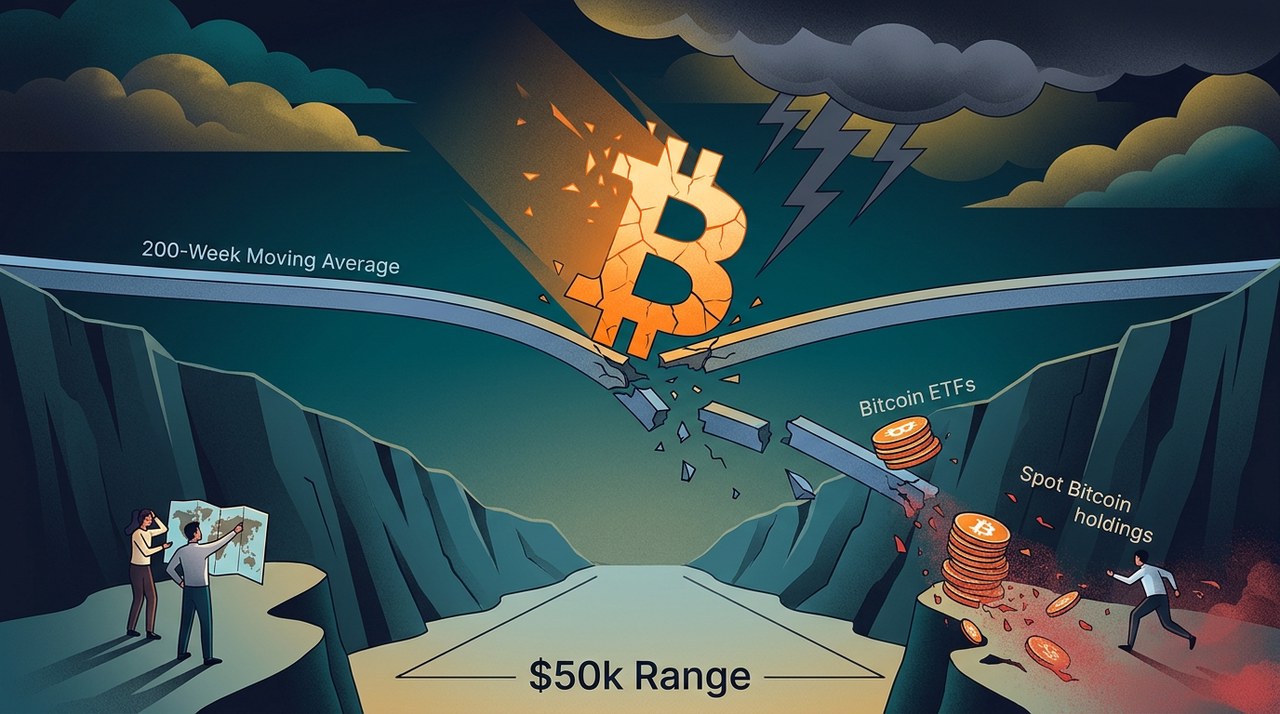
Bitcoin Could Slide into $50k Range as Risks Mount
Market maker Wintermute warns Bitcoin could retest the $50,000s due to ETF outflows, weak spot demand, and Fed rate hike concerns.
|
Could an AI Bubble Burst Impact Bitcoin's 2028 Halving?
Former SEC Chair Gary Gensler warns that an AI bubble could trigger an economic slowdown before late 2028, coinciding with Bitcoin's next block reward reduction.
|