
Could an AI Bubble Burst Impact Bitcoin's 2028 Halving?

The Intersection of AI Hype and Bitcoin's Supply Code
Former US Securities and Exchange Commission (SEC) Chair Gary Gensler has voiced concerns over potential headwinds in the technology sector. He cautions that an artificial intelligence (AI) bubble could burst, leading to a broader economic slowdown before November 2028.
This timeframe is particularly notable for cryptocurrency market participants. According to blockchain estimates, the fifth Bitcoin (BTCBTC-0.29%) halving is projected to occur around April 2028. This means the scheduled supply reduction would happen just seven months before Gensler's economic deadline.
While Bitcoin's issuing algorithm is hardcoded into the network and cannot be modified, investor demand remains dynamic. If risk assets reprice sharply across global financial markets, miners and holders could face an unprecedented macro environment.
Gensler's Economic Outlook: Dot-Com Echoes
Gary Gensler, who served as SEC Chair from 2021 to 2025, highlighted massive capital expenditures across the tech sector. Some estimates place global AI infrastructure spending near $800 billion annually.
In a recent interview with CNN, Gensler compared potential market fallout to the dot-com crash of the early 2000s, though he noted it would likely remain less severe than the 2008 global financial crisis.
"I think we’re going to have this repricing and a softening of the economy that happens before November 2028." — Gary Gensler, Former SEC Chair
Because Bitcoin launched in early 2009—shortly after the 2008 financial crisis—it has never navigated a major tech-led recession of the scale Gensler describes. Past performance of digital assets is not an indication of future results, leaving the market without direct historical precedents for this specific scenario.
Understanding the 2028 Bitcoin Halving Math
The halving mechanism is a core part of Bitcoin's code designed to control inflation. It cuts the creation rate of new coins in half approximately every four years until all 21 million Bitcoins are minted.
- Target Block: Block 1,050,000
- Current Reward: 3.125 BTC per block
- New Reward: 1.5625 BTC per block
- Daily Issuance Reduction: From roughly 450 BTC per day down to approximately 225 BTC per day
Data from tracking platform CoinGecko shows that while the exact date shifts with block processing times, estimates firmly point toward spring 2028.
A Soft Landing or a Sudden Burst? Industry Perspectives
Not all market commentators share Gensler's dramatic forecast. Ed Yardeni, president of Yardeni Research, suggests the market may experience a gradual adjustment rather than a sudden collapse.
"What we’re seeing here is the air coming out of the bubble. It doesn’t have to burst." — Ed Yardeni, President of Yardeni Research
Yardeni points out that price-to-earnings (P/E) ratios for major semiconductor manufacturers have already dropped below broader market averages, signaling that valuation adjustments may already be occurring naturally.
However, other financial leaders share concerns about high tech valuations. Mike Novogratz, CEO of Galaxy Digital, is among several industry figures who have previously issued warnings regarding rapid capital flow into AI ventures.
Near-Term Factors and the Four-Year Cycle Test
Market focus is not strictly limited to 2028. Short-term events could also influence liquidity trends. For instance, AI firm Anthropic is preparing for a potential record initial public offering (IPO).
Market analyst Ben Cowen pointed out that massive tech listings like Anthropic's IPO could temporarily draw investor capital and attention away from alternative asset classes like cryptocurrencies.
Ultimately, two distinct paths could unfold for Bitcoin's traditional four-year cycle thesis:
- Gradual Adjustment Scenario: If Yardeni's thesis holds true, the fifth halving will take place in a deflated but stable market where tech valuations have cooled down smoothly.
- Macro Recession Scenario: If Gensler's timeline proves accurate, the supply cut will arrive during a major economic contraction, testing how Bitcoin performs under broader market stress.
Investors should keep a close eye on macro developments and risk factors as both tech valuations and crypto market cycles evolve over the coming years.
Latest blog posts


Twenty One Capital Buys $10M Bitcoin Dip Amid Stock Slump
Twenty One Capital bought 154.32 Bitcoin for $10 million during a price dip, increasing its treasury even as its stock price faces downward pressure.
|

Bitcoin Price Stands Flat 940 Days After 2024 Halving
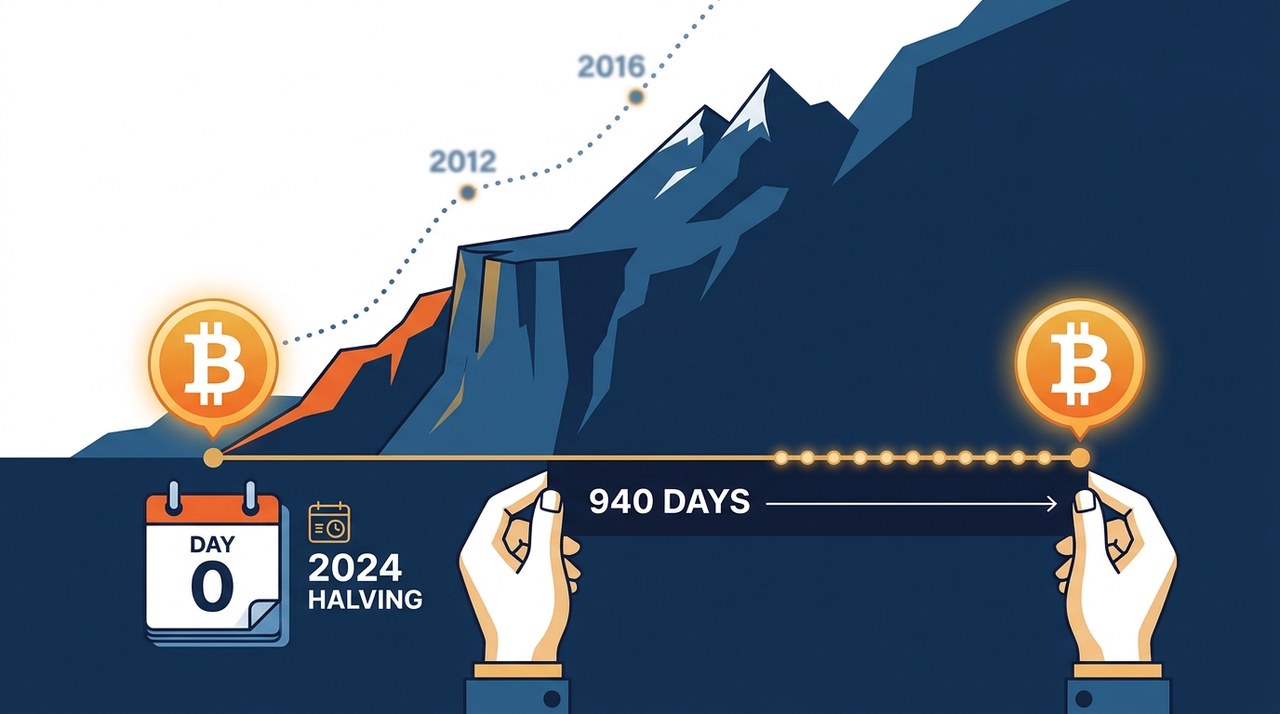
For the first time in crypto history, Bitcoin's price is unchanged 940 days after a halving event, trading near $64,606.
|

 +2
Optimizely Hack Compromises 178 Sites to Steal Crypto
A major supply-chain cyberattack on Optimizely affected 178 organizations, injecting malicious code to steal crypto and credit card data.
|