

Google Willow Breakthrough Raises Quantum Threats for Bitcoin
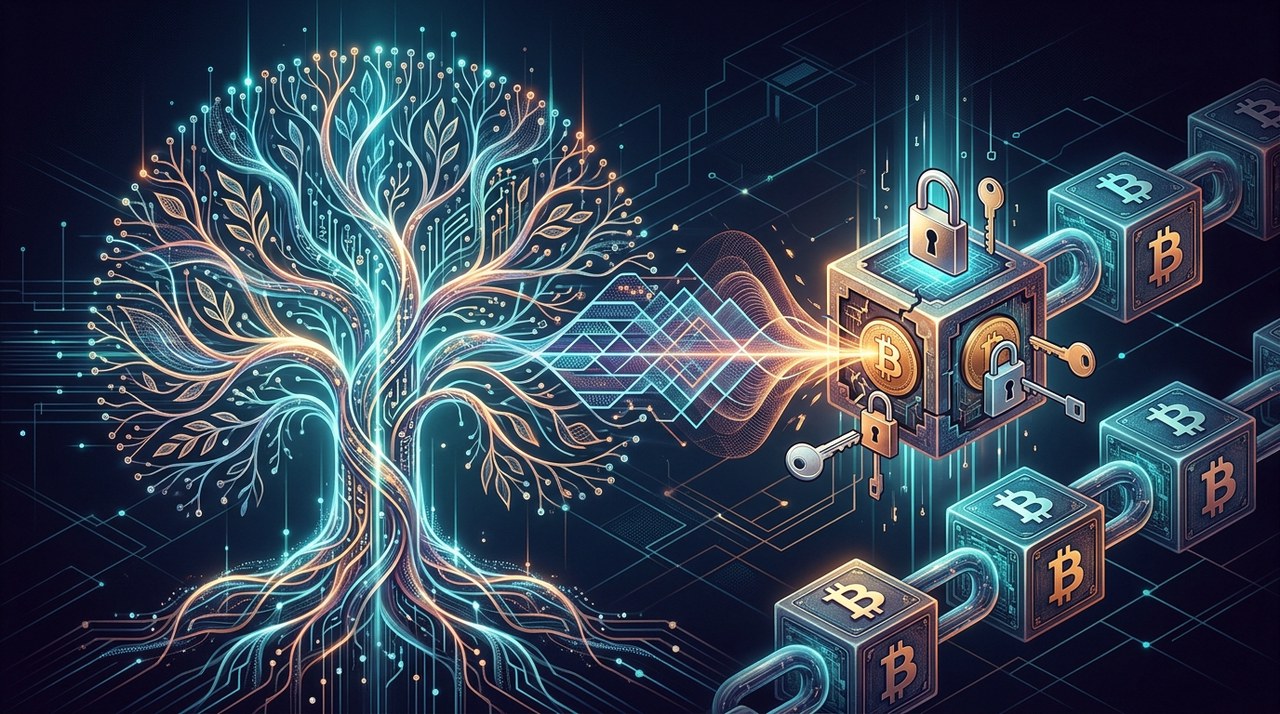
What Did Google Actually Achieve with Willow?
Google recently unveiled a major breakthrough in quantum computing with its new chip named Willow. The tech giant reported that Willow can prepare special quantum states with roughly 40 times fewer errors than previous methods.
Published in the journal Science, this discovery tackles a massive technical hurdle. It focuses on how efficiently a quantum computer can prepare itself to perform heavy calculations.
Does this mean someone can crack Bitcoin tomorrow? No, it does not. However, it solves a major engineering bottleneck that scientists have worried about for years.
Why Satoshi-Era Bitcoins Face the Biggest Threat
To understand the risk, we need to look at how Bitcoin wallets work. Every wallet relies on a private secret key to approve spending and a public key to verify ownership.
In standard cryptography, figuring out a private key from a public key takes an impossible amount of time for regular computers.
In 1994, mathematician Peter Shor created a mathematical method known as Shor's algorithm. In theory, a large enough quantum computer running this algorithm could easily reverse-engineer a private key from an exposed public key.
Modern Bitcoin transactions hide your public key behind a digital fingerprint called a hash until you spend your coins. But Satoshi-era coins mined in Bitcoin's earliest days exposed their public keys directly on the public blockchain.
If an old public key is already exposed on the blockchain, keeping a seed phrase in a safe physical drawer will not protect it from a quantum machine.
Ancient Coins Are Already on the Move
As quantum discussions grow louder, some long-dormant Bitcoins have started moving. On October 7, a total of 100.02 BTCBTC-1.07% untouched since July 2010 moved after over 16 years, carrying a value of about $8.5 million.
Back in August, six separate wallets dormant since 2011 to 2014 moved another 553.59 BTC, valued at roughly $40 million at the time.
These transfers do not automatically prove that early holders are panicking about quantum computing. Investors often move coins to reorganize holdings, change wallet security, or prepare to sell. While digital asset markets continue to evolve, tracking these movements provides valuable context for long-term network security.
Past performance of digital assets is not an indication of future returns. You can view real-time market data anytime at Bitkub Market.
Understanding Qubits and Magic States
Quantum computers process data using qubits. Unlike standard computer bits, qubits are extremely delicate. Tiny changes in temperature, vibration, or electromagnetic signals cause errors.
To fix this, scientists group multiple physical qubits together to form a reliable logical qubit. These logical units require ongoing streams of specially prepared quantum fuel called magic states.
Think of a busy restaurant kitchen where every custom dish needs a fresh sauce that spoils instantly. If half the kitchen staff must constantly cook sauce, fewer chefs are available to make main courses.
In a quantum computer, hardware tied up preparing magic states cannot be used for actual calculations. Google's new method frees up those resources.
How Google's Cultivation Method Works
Google calls its new technique cultivation. The system generates a rough magic state, inspects it for flaws, and immediately discards bad attempts.
The Willow chip achieved roughly 99.99% fidelity on the states that successfully passed inspection.
However, the process is still in early stages. Only about 8% of total attempts passed inspection, meaning roughly 8 out of every 100 tries survived.
Researchers still need to scale this method up significantly and keep those magic states stable during longer, more complex computations.
How Close Are We to a Real Attack?
In March, Google estimated that a superconducting quantum computer with fewer than 500,000 physical qubits could theoretically break Bitcoin and EthereumETH-1.09% wallet cryptography under specific ideal hardware assumptions.
Later research in September showed ways to reduce the mathematical workload further. Google's latest breakthrough targets the hardware setup costs needed during such an attack.
For an attack scenario lasting nine minutes after a public key is exposed, scientists calculate that a machine would need roughly 500,000 reliable magic states every single second.
While Willow marks significant progress, building a machine that can scale to that performance level remains a massive engineering hurdle.
What Lies Ahead for Bitcoin Security?
The Bitcoin network is not standing still. Developers are actively researching quantum-resistant upgrades that can be implemented long before quantum hardware reaches dangerous scales.
Active users will simply need to migrate their funds to new, quantum-safe address types when updates roll out.
The primary challenge remains abandoned or lost Satoshi-era coins. Because no owner is present to move those funds, exposed public keys from Bitcoin's early years will remain a focal point of quantum research for years to come.
Latest blog posts



Solana Apps Hit $193M Revenue as Real-World Assets Surge
Solana applications generated $193.1 million in revenue over 30 days, driven by trading platforms and a massive 600% boom in real-world assets.
|

Wall Street Veterans Launch DeFi Platform for 77 Markets
Former Goldman Sachs and Google experts have unveiled Deepsigma, bringing 77 traditional financial markets to decentralized perpetual trading.
|
Solana Postpones Shanghai Event as Registrations Quadruple
The Solana Foundation postponed its Accelerate event in Shanghai following an unexpected registration surge and reports of police presence at the venue.
|