
Google May Take Stake in TeraWulf $19B AI Deal
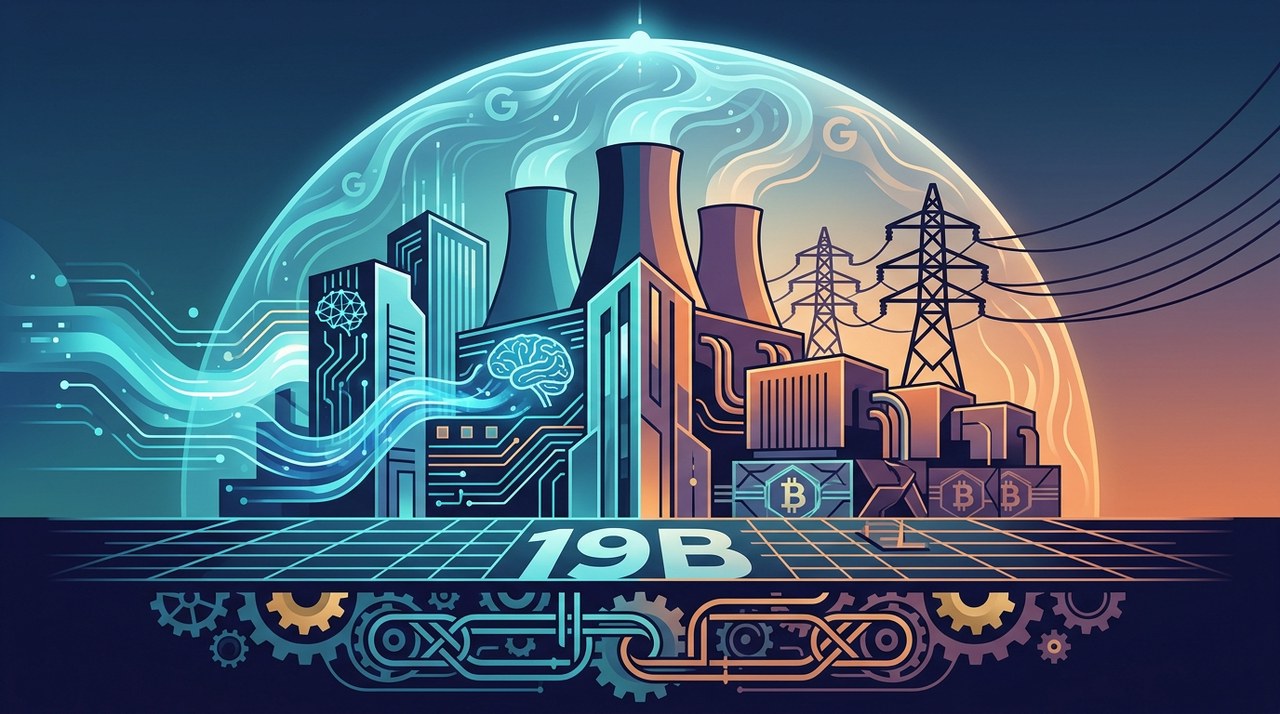
Google Secures Backing Option in Massive $19 Billion Deal
Google has secured a protective contingency clause in a major $19 billion data center agreement involving artificial intelligence startup Anthropic and public Bitcoin mining company TeraWulf. Under the terms of the complex agreement, Google has the right to acquire an equity stake in the project if Anthropic fails to meet its rental payment obligations.
This legal setup highlights the growing relationship between hyper-scale tech conglomerates, specialized artificial intelligence laboratories, and energy-rich digital asset mining firms. As demands for computer processing power surge worldwide, access to reliable electricity infrastructure has become one of the most critical commodities in modern technology.
Breaking Down the $19 Billion Data Center Arrangement
The core of the transaction surrounds a multi-billion dollar long-term infrastructure commitment designed to host massive artificial intelligence workloads. TeraWulf, traditionally known for operating large-scale Bitcoin mining facilities, provides the vital physical infrastructure, including high-voltage power grid connections, heavy-duty cooling mechanisms, and industrial real estate.
Anthropic, the AI safety and research business behind the popular Claude chatbot model, contracts for this physical infrastructure capacity to train and deploy its complex machine learning systems. Given the massive financial scope of leasing data centers at this scale, multi-year contracts require significant financial guarantees.
Key Entities Involved in the Structure
- TeraWulf: A environmentally-focused Bitcoin mining company that owns and operates zero-carbon digital energy infrastructure.
- Anthropic: An artificial intelligence company focused on building safe, large-scale AI models that require substantial computational resources.
- Google: The multinational technology giant serving as a key strategic cloud partner and investor in Anthropic.
Why Google Built in a Default Protection Clause
Building large-scale data center capacity requires billions of dollars in upfront capital outlay. Facilities designed for artificial intelligence applications need specialized power delivery components and liquid cooling loops that differ significantly from standard server warehouses.
To protect the capital invested into developing these mega-sites, major financial agreements often include structural fail-safes. The inclusion of a clause allowing Google to step directly into an equity position if Anthropic defaults on its lease payments ensures that the underlying physical assets remain active and integrated into the broader computing network.
In the modern tech landscape, securing electrical power contracts and data center space is just as valuable as developing high-end microchips.
The Broader Trend: Why Bitcoin Miners Are Pivoting to AI
Over the past two years, the cryptocurrency sector has seen a major structural shift. Bitcoin miners possess unique real-world assets: direct, large-scale access to gigawatts of electrical power and operational grid interconnection approvals that can take traditional developers up to five to seven years to acquire.
Following events like the quadrennial Bitcoin network halving—which automatically cuts block reward issuance in half—crypto mining firms face shifting operational margins. To diversify revenue streams, leading miners like TeraWulf have begun reallocating a portion of their total megawatt capacity away from purely mining Bitcoin (BTCBTC+0.69%) toward high-performance computing (HPC) hosting for enterprise artificial intelligence clients.
While Bitcoin mining income can fluctuate alongside digital asset price movements, hosting agreements with enterprise AI firms typically provide predictable, fixed multi-year cash flows. However, readers should note that market conditions in both tech hosting and digital assets carry unique risks. Past performance of digital assets is not an indication of future performance. You can monitor historical digital asset pricing on platforms like Bitkub Market.
Comparing Crypto Mining and AI Infrastructure Requirements
Although both industries require immense amounts of electricity, their internal operational mechanics differ in several ways:
- Redundancy and Reliability: Bitcoin mining machines can be paused or throttled almost instantly when power prices spike without losing historical state data. AI model training runs, by contrast, require 99.999% continuous uptime and uninterrupted power delivery.
- Cooling Technologies: Standard air cooling often suffices for basic crypto mining hardware, whereas advanced high-density AI server racks frequently demand complex direct-to-chip liquid cooling loops.
- Network Latency: Bitcoin miners focus on raw hashing output rather than ultra-fast inter-rack network speeds. AI clusters require expensive high-bandwidth fiber interconnects to allow thousands of GPUs to communicate simultaneously.
- Capital Expenditure: Retrofitting an existing mining footprint into an enterprise-grade AI data center requires substantial upfront financial investment per megawatt constructed.
What This Deal Signals for the Industry
The multi-party contract between Google, Anthropic, and TeraWulf illustrates how deeply interconnected legacy big tech firms, cutting-edge AI startups, and digital asset infrastructure providers have become.
For enterprise technology giants like Google, guaranteeing continuous access to state-of-the-art power sites is a priority. If a partner firm experiences operational or financial friction, having a contractual right to assume equity control prevents crucial compute projects from stalling out during construction or deployment.
Risk Factors to Keep in Mind
While large-scale data center deals attract significant market interest, several execution and industry-wide risks remain:
- Counterparty and Credit Risk: Long-term multi-billion dollar lease commitments depend heavily on the ongoing financial stability and solvency of tenant companies.
- Construction and Supply Chain Delays: Acquiring specialized electrical equipment like transformers and high-capacity switchgear can involve extended lead times.
- Regulatory and Energy Grid Dynamics: Local utility regulations, transmission fees, and regional power availability can impact long-term operational costs.
Final Thoughts
The inclusion of an option for Google to step in and acquire a direct project stake in TeraWulf's $19 billion AI project demonstrates how vital power access has become for top-tier technology operators. By bridging the gap between Bitcoin mining energy infrastructure and enterprise artificial intelligence hosting, energy-focused crypto miners are carving out a distinct role in the evolving digital economy.
Latest blog posts
Can Mobile Phone Networks Really Power AI?
Decentralized AI networks aim to turn smartphones into computing hubs, but technical hurdles leave skeptics cautious.
VeChain CEO: Blockchain Provides Perfect Solution for AI Trust
VeChain CEO Sunny Lu highlights how blockchain can provide identity and reputation systems for autonomous AI agents via platforms like VeWorld.ai.


Samsung Wallet Adds Solana USDC for US Galaxy Users
Samsung Wallet now allows eligible U.S. Galaxy users to buy, hold, send, and receive USDC on the Solana network directly inside the app.
|