Can Mobile Phone Networks Really Power AI?
Turning Everyday Phones into AI Powerhouses
Decentralized AI networks are working on a novel concept.
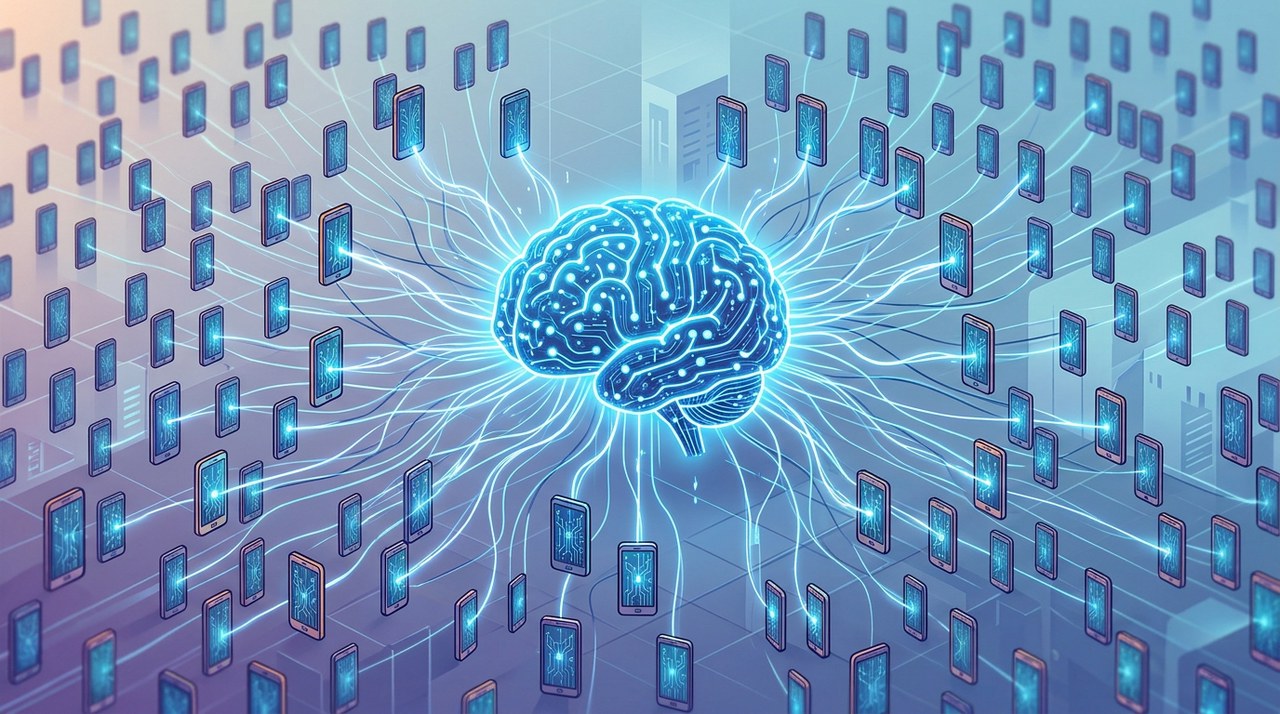
They want to tap into everyday smartphones to build an alternative to centralized server infrastructure.
Instead of relying on massive data centers, these projects hope to pool unused processing power from millions of personal devices.
This vision promises broader computing access and lower costs. However, skeptics wonder if consumer phones can truly handle heavy artificial intelligence workloads.
How Centralized AI Computing Works Today
Today, artificial intelligence models depend on centralized cloud facilities.
Major tech corporations own these server farms. They house thousands of specialized graphics processing units, or GPUs, which require immense power and physical cooling.
Building these computer centers costs billions of dollars. This high financial bar limits who can build advanced AI applications.
The Promise of Distributed Mobile Compute
Decentralized AI projects propose a distributed alternative.
Modern smartphones now feature fast processors and neural chips.
By connecting consumer phones across the world, decentralized protocols hope to aggregate vast amounts of idle computing capacity.
- Connecting global mobile processors into a single network.
- Reducing dependency on big tech server providers.
- Lowering entry barriers for independent AI developers.
Why Skeptics Remain Doubtful
Despite the ambitious goals, industry critics point out major physical limitations.
Smartphones are engineered for battery efficiency and light daily tasks, not continuous heavy calculations.
- Overheating and battery drain: Heavy AI tasks generate significant heat and drain phone batteries quickly.
- Network latency: Unstable mobile internet connections can create severe bottlenecks when syncing data.
- Hardware constraints: Phone chips are efficient, but they lack the raw power of enterprise data center GPUs.
Security and Network Coordination
Security remains another hurdle for mobile compute networks.
Splitting AI tasks across millions of consumer devices requires sending data across untrusted environments.
Developers must prove that devices execute calculations accurately without exposing sensitive user data.
Looking Ahead at Decentralized AI
Developers are continuing to test smaller, lighter AI models tailored for mobile chips.
While turning handheld phones into AI nodes is an innovative concept, practical adoption depends on solving complex technical challenges.
Past performance of digital assets or decentralized protocols is no guarantee of future results. Digital asset activities involve inherent risks, and readers should evaluate technical developments neutrally.
Latest blog posts

Google May Take Stake in TeraWulf $19B AI Deal
A unique clause in a $19 billion data center agreement allows Google to claim a stake in TeraWulf's AI project if Anthropic fails to pay rent.
|
VeChain CEO: Blockchain Provides Perfect Solution for AI Trust
VeChain CEO Sunny Lu highlights how blockchain can provide identity and reputation systems for autonomous AI agents via platforms like VeWorld.ai.


Samsung Wallet Adds Solana USDC for US Galaxy Users
Samsung Wallet now allows eligible U.S. Galaxy users to buy, hold, send, and receive USDC on the Solana network directly inside the app.
|