


France Proposes New Crypto Taxes for 2027 Budget
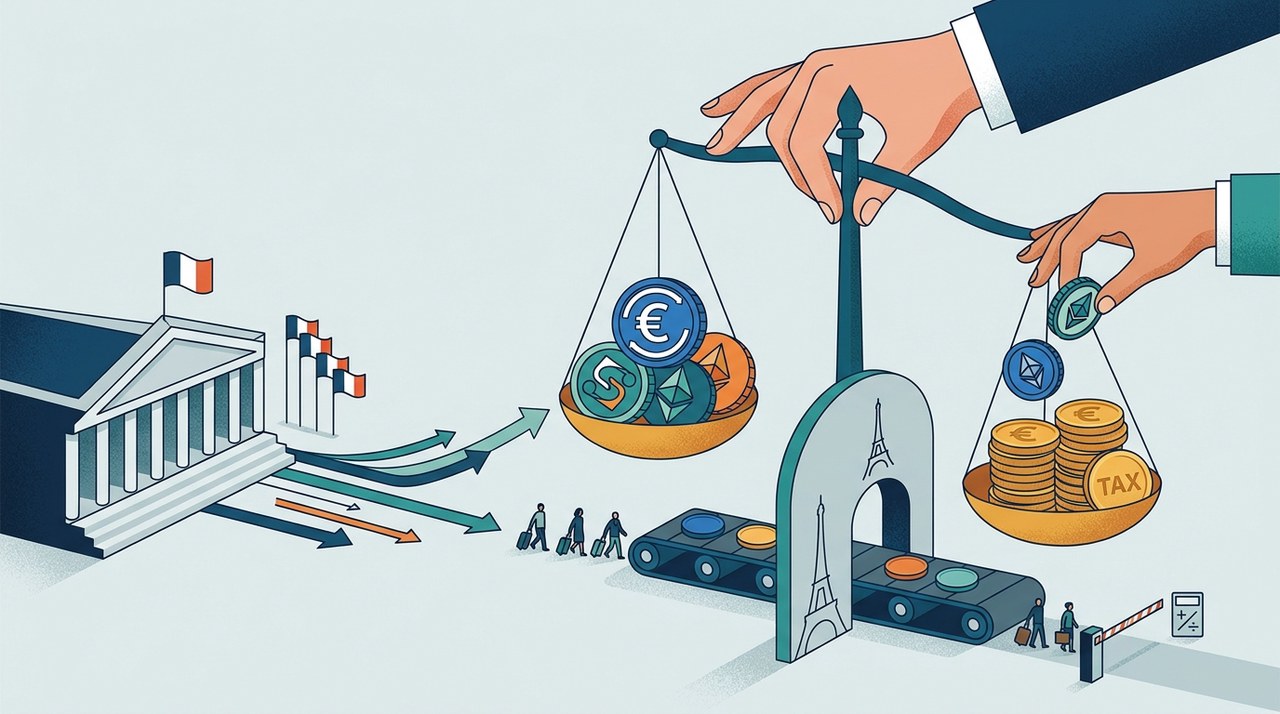
France Eyes Fresh Tax Rules for Crypto Holders
Big changes could be on the horizon for digital asset holders in France. The Finance Committee of the French National Assembly has officially backed new tax proposals targeting crypto users as part of discussions surrounding the country's upcoming budget planning.
The committee supported two key measures. First, it targets stablecoin swaps—a move that could alter how traders manage their digital portfolios. Second, it introduces a strict exit tax on unrealized crypto gains for wealthy households moving out of the country.
While these proposals are part of preliminary legislative debates for future budget cycles, they highlight a growing trend across Europe: governments are looking much closer at digital assets to boost state revenues and close tax gaps.
What Does the Stablecoin Swap Tax Mean?
To understand why this proposal is getting attention, it helps to look at how crypto trading usually works. A stablecoin is a digital token pegged to the value of a traditional currency, like the US dollar or the euro. Examples include TetherUSDT-0.33% and USD Coin (USDCUSDC-0.36%).
In many tax frameworks, cashing out crypto into actual government-issued money (fiat) triggers a taxable event. However, swapping one crypto token for another—such as trading BitcoinBTC-0.28% for a dollar-pegged stablecoin—has often enjoyed tax deferral in several jurisdictions.
Traders frequently use stablecoins as a safe harbour during market swings. By swapping volatile tokens into stablecoins, investors preserve capital without converting funds back into bank accounts. Under the committee's proposed change, exchanging crypto for stablecoins would no longer be exempt or deferred from tax calculations. Swapping into a stablecoin could immediately trigger a capital gains tax.
A Closer Look at the Exit Tax on Crypto Gains
The second proposal specifically focuses on high-net-worth individuals who decide to relocate their primary residence outside of France.
Under this proposal, households holding more than 800,000 euros in wealth would face an exit tax on their unrealized crypto gains if they move abroad.
Unrealized gains—often called paper profits—refer to an increase in asset value before it is sold. For example, if an investor bought a token for 100,000 euros and its current market value is 500,000 euros, they have 400,000 euros in unrealized profit. Ordinarily, tax is due only when the asset is sold. The proposed exit tax would calculate and levy taxes on those paper gains as if the assets were sold right before the resident moved away.
Why Are Lawmakers Pushing for These Measures?
European lawmakers are continually adapting fiscal policies as the digital asset space grows. Advocates argue that these measures help close loopholes and ensure fair taxation across all asset classes.
When high-net-worth individuals relocate to lower-tax regions, governments risk losing out on substantial tax income. The exit tax aims to discourage tax-motivated relocation.
Similarly, taxing stablecoin swaps is intended to create parity between traditional financial trades and crypto activity, ensuring that value stored in digital assets is reported accurately.
Balancing Regulation and Innovation in Europe
France has worked to position itself as a European hub for Web3 innovation, encouraging web3 firms and exchanges to establish registered operations in the country.
Concurrently, the broader European Union is rolling out its Markets in Crypto-Assets (MiCA) framework, providing unified rules for licensing and consumer protection across member states.
Industry experts note that while legal clarity is helpful, increasing tax burdens may influence where businesses and investors choose to settle. Finding a balance between effective oversight and fostering market growth remains a central focus for policymakers.
What Happens Next?
It is important to keep in mind that approval from the Finance Committee is a preliminary step in the legislative process, not a final law.
The proposed tax measures must still undergo full debates, potential revisions, and official parliamentary votes before becoming active law.
For individual crypto users, staying updated on local regulatory developments is essential. As tax guidelines evolve worldwide, understanding local obligations helps ensure compliance while participating in the digital asset market.
Remember that crypto assets can experience significant price volatility, and tax treatments vary by region. Past performance of digital assets is not an indicator of future returns. Always assess market risks carefully before making financial decisions.
Latest blog posts


Empire Market Co-Founder Sentenced to 40 Years
Federal authorities sentenced Empire Market co-creator Raheim Hamilton to 40 years in prison for running a $430 million darknet marketplace.
|
UK Sanctions Three Crypto Exchanges Over Russia Links
The United Kingdom has sanctioned three crypto exchanges and several payment services for allegedly helping Russia evade Western sanctions.

Bitcoin Signal Hints Uptrend Amid 96% Buyer Drop
Bitcoin faces a 96% drop in long-term buyer volume, but technical indicators hint that the broader uptrend remains active.
|