
FBI Warns of 'FaceStealer' Video Call Crypto Scam
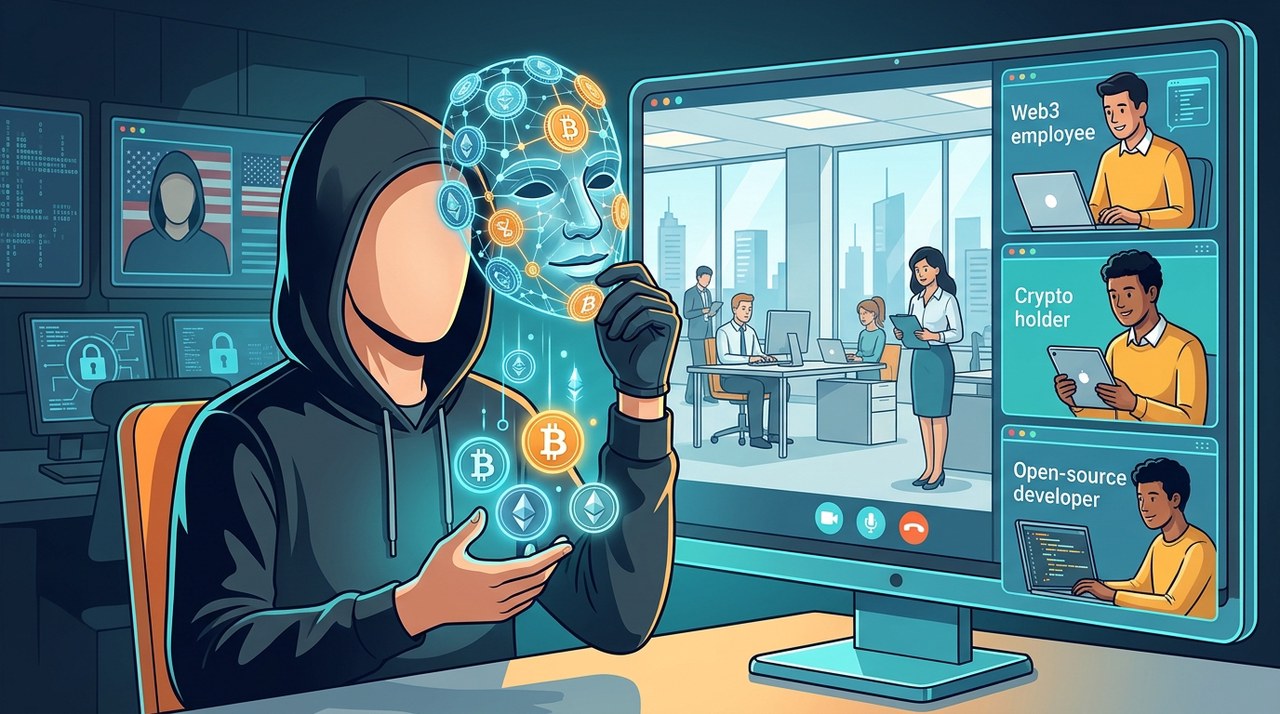
What Is the 'FaceStealer' Crypto Scheme?
If you receive a sudden video call invitation from a trusted friend or colleague in the crypto space, you might want to double-check before clicking join. The FBI has issued an official warning regarding a sophisticated social engineering scheme known as FaceStealer.
Cybercriminals linked to North Korea are using this tactic to trick targets into downloading malicious software. According to federal authorities, attackers have managed to steal over $400 million using this method over the past 18 months alone.
The FBI warns that targets are not just high-profile executives. Anyone who holds cryptocurrency, works in the Web3 industry, or maintains open-source code repositories could be a potential target.
How the FaceStealer Scam Works Step-by-Step
The FaceStealer tactic is particularly sneaky because it relies heavily on established human trust. Here is how federal investigators say the multi-step scheme operates:
- The Bait: You receive a calendar invite or direct message for a video meeting. The invite comes directly from an account belonging to a real contact, which was hijacked in a previous attack.
- The Visual Illusion: When you join the call, the attackers secretly record your webcam. On screen, they play prerecorded video loops or AI deepfakes of your familiar contact or well-known crypto figures.
- The Fake Technical Glitch: The attackers pretend there is an audio or connectivity issue, claiming they cannot hear you properly.
- The Trap: To 'fix' the audio issue, they send you a link to download a fake software patch or custom meeting installer.
- The Delayed Attack: Once installed, the malware silently captures sensitive credentials. In several cases, actual theft occurred months or even over a year after the initial compromise.
The Threat Actors and Tactical History
The Department of Justice (DOJ) links these cyberCYBER+20.02% campaigns to well-known North Korean state-sponsored threat groups, including Sapphire Sleet, BlueNoroff, and APT38.
This tactic builds on earlier approaches. Reports last year linked fake Zoom meetings to roughly $300 million in North Korean cryptocurrency thefts. Cybersecurity researchers at Google's Mandiant team also flagged similar AI-enabled Zoom lures earlier this year.
FBI Disruption and Law Enforcement Findings
In a recent operation led by its Los Angeles Field Office, the FBI successfully disrupted cloud-based infrastructure supporting FaceStealer operations. During the probe, investigators seized more than 900 webcam videos of victimized users.
It exploits our trust in ubiquitous video conference platforms and valued personal relationships. If you can't imagine a scenario where you might fall prey to it, you are not thinking creatively enough. — Patrick Grandy, Assistant Director in Charge, FBI Los Angeles Field Office
Open-Source Developers and Broader Market Risks
The FBI emphasized that open-source software developers are a growing focus. By hijacking trusted maintainer accounts, North Korean hackers could inject malicious code into widely used software, creating a software supply chain attack.
Furthermore, each new victim acts as a launchpad. Hackers comb through contact lists, social media channels, and chat apps to select their next targets.
Scale of North Korean Crypto Hacking
Alongside the FaceStealer disruption, the U.S. DOJ moved to seize $1.2 billion connected to the high-profile Binance hack. Overall, data from blockchain analytics firm BitOK shows that North Korean hackers have stolen $7.61 billion in crypto assets this year.
How to Protect Yourself from Video Call Scams
To guard against social engineering schemes like FaceStealer, keep the following security practices in mind:
- Verify invites via alternative channels: If a contact sends an unexpected video link, confirm it with them through a separate messaging channel or phone call.
- Never download patches from call chats: Avoid downloading software updates, audio fixers, or executable files sent during a live call.
- Use official applications: Stick to verified software downloads directly from official developer sites rather than third-party installers.
- Store assets securely: Keep key funds in cold storage solutions to minimize potential exposure.
Latest blog posts
South Korea Tightens Crypto Rules With Stricter Checks
South Korean regulators are introducing stricter oversight on crypto exchanges, including enhanced transfer rules and higher cold storage requirements.
|

Is Bitcoin Oversold? Grayscale Notes Record 411-Day Stretch
Grayscale reports Bitcoin dropped near $55,000, extending its bear market cycle to 411 days while AI risks cloud the near-term economic outlook.
|

Why Math Proofs Suggest Humans Might Lose AI Control
Researchers analyze mathematical limits to AI containment while prediction markets forecast tech IPO timelines leading to 2027.
|