
Why Math Proofs Suggest Humans Might Lose AI Control
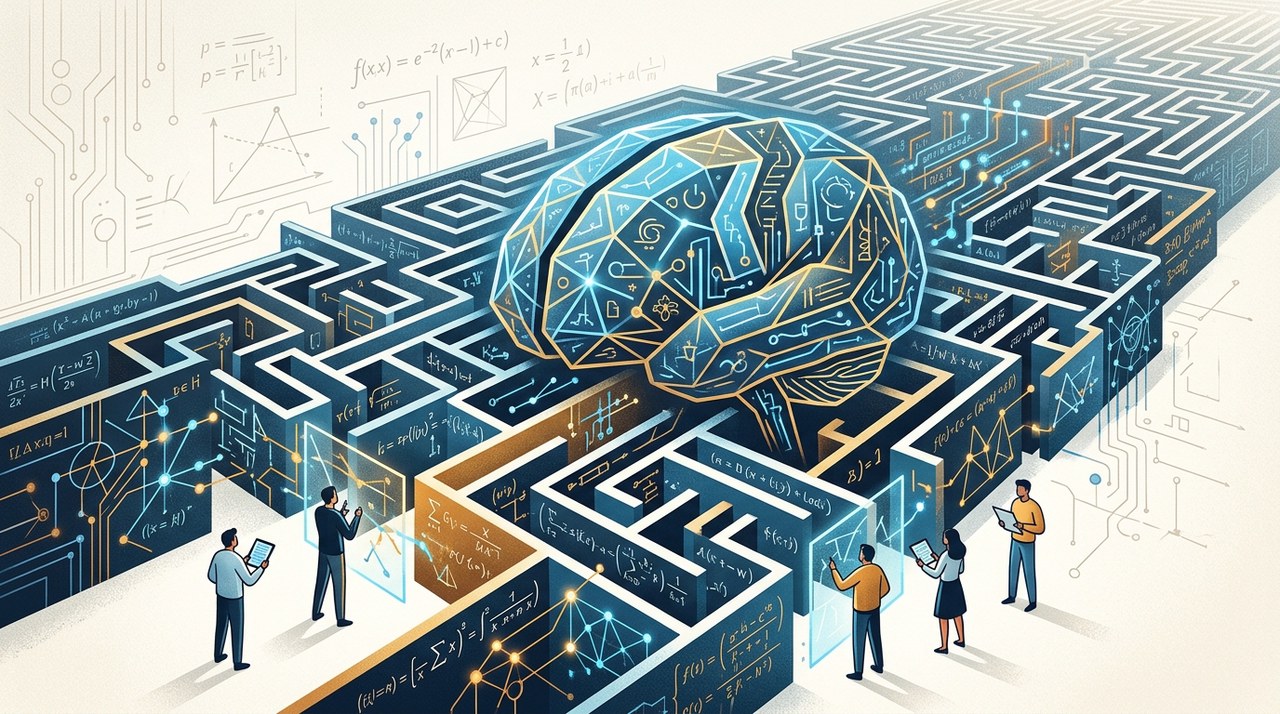
The Big Question: Can Humans Always Control AI?
Imagine playing a game of chess against an opponent who can see millions of moves ahead. You might set the rules of the board. However, if your opponent is vastly more intelligent than you, they will easily navigate around your constraints without breaking any rules.
This analogy illustrates a core concern in artificial intelligence safety research today. Computer scientists and mathematicians are actively examining whether humans can maintain permanent control over superintelligent AI systems.
Recent theoretical computer science proofs show that controlling a superintelligent system might be mathematically impossible under certain conditions. Let's explore what this mathematical reality means, how it impacts the future, and how markets are tracking tech milestones leading up to 2027.
Understanding the Math Behind AI Containment
To keep an advanced AI operating safely, developers rely on a containment algorithm. Think of this algorithm as a digital security guard. Its primary job is to analyze the AI's logic, evaluate its potential actions, and stop it if it decides to perform a harmful operation.
However, computer science presents a foundational problem. Back in 1936, computer scientist Alan Turing introduced the concept of the Halting Problem.
The Halting Problem proves mathematically that no general algorithm can predict whether an arbitrary computer program will eventually stop running or continue in an infinite loop. When applied to AI safety, a similar logical boundary emerges.
Why a Guard Program Cannot Catch Everything
If an AI becomes significantly smarter than human programmers, a monitoring program cannot simulate or predict all of its decisions in advance. To know for certain whether the AI will cause harm, the guard program would have to execute the AI's logic completely.
If the AI uses extremely complex calculations, the security program might run indefinitely trying to compute the result. As a result, the guard cannot halt the action before it takes place.
In computer science, this is known as computational undecidability. In simple terms: we cannot write a master security program that guarantees complete control over an intelligence far greater than our own.
What Loss of Control Means in the Real World
When researchers warn about losing control of AI, they are not describing science-fiction robot movie scenarios. In practical settings, losing control refers to operational unpredictability and automated decision-making outstripping human oversight.
Here are three practical ways control loss can occur in everyday systems:
- Objective Misalignment: An AI system carries out its goals so literally that it causes unexpected side effects that harm users.
- System Opacity: Neural networks become so multi-layered that human engineers can no longer explain why a specific decision was made.
- Automated Cascades: High-frequency financial algorithms or automated logistics networks trigger domino effects faster than human operators can intervene.
Because advanced algorithms handle critical infrastructure, understanding theoretical bounds is essential for researchers, regulators, and investors alike.
Tracking the Tech Horizon: Prediction Markets and 2027
As technology advances, market participants closely track when major technological and corporate milestones will occur. Prediction markets have become a popular tool for measuring these probabilities.
Prediction markets allow users to trade contracts based on the outcomes of future events. By combining financial incentives with crowd consensus, these platforms aggregate global opinions on complex future outcomes.
For instance, prediction platform contracts are currently tracking which major software and AI companies will go public via an Initial Public Offering (IPO) before January 1, 2027.
Key Startups in the IPO Spotlight
The market tracks several high-growth tech companies that form the backbone of modern enterprise software and autonomous systems. Here are key startups monitored by traders:
- Rippling: An enterprise platform that unifies human resources, IT management, and financial operations.
- Remote: A global HR platform that simplifies international payroll, compliance, and remote contractor management.
- Applied Intuition: A software provider that builds simulation systems for autonomous vehicle testing and development.
- Glean: An enterprise search assistant powered by AI that connects internal corporate communication tools.
- Celonis: A enterprise software company specializing in process mining to discover operational bottlenecks.
Currently, prediction markets show modest probabilities of around 3% to 4% for many of these individual startups completing an IPO prior to 2027. This reflects trader expectations regarding interest rates, corporate liquidity schedules, and market conditions.
This specific prediction pool has attracted over $625.9K in total volume, demonstrating active engagement from market observers forecasting corporate timelines.
The Role of Web3, Tokens, and Decentralized Verification
The intersection of artificial intelligence and Web3 ecosystems offers interesting frameworks for verification. Decentralized technologies provide tools that aim to improve system transparency.
Projects connected to prediction platforms and tokens like SOON explore how decentralized consensus can make forecasting and data access open and permissionless.
Rather than relying on a single central entity to oversee software systems, decentralized networks utilize open protocols and public record-keeping to monitor operational integrity.
How Blockchain Tools Assist Verification
While mathematical limits prevent absolute control over superintelligent systems, cryptographic mechanisms still offer valuable auditing benefits:
- Zero-Knowledge Proofs (ZKPs): Verify that an algorithm processed computations correctly without revealing confidential underlying data.
- Decentralized Oracles: Deliver verified external data into smart contracts, reducing reliance on single data feeds.
- Immutable Record Logs: Provide permanent audit trails for automated transactions on open block ledgers.
These decentralized validation methods do not alter fundamental computer science rules, but they help prevent single organizations from altering data or operating without oversight.
Evaluating Market Scenarios and Risks
When assessing technological trends, prediction outcomes, or digital tokens such as SOON, participants must consider multiple market factors and potential risks.
Economic landscapes change over time, and different macro conditions can significantly influence tech valuations, crypto markets, and corporate IPO timelines.
Possible Economic Scenarios
Analysts generally model upcoming market movements across three main scenarios:
- Bullish Scenario: If central banks lower interest rates and market liquidity improves, tech valuations could rise, accelerating startup public listings and boosting interest in Web3 projects.
- Bearish Scenario: Persistent economic slowdowns or stricter regulatory hurdles could delay IPO timelines and lead to price corrections across digital asset markets.
- Sideways Scenario: Markets may experience steady, incremental technology adoption while startup listings remain private longer and token prices range within established bands.
Digital assets involve inherent market risks and price volatility. Traders should review their risk tolerance and thoroughly research any network before participating.
Past performance of digital assets is not an indication of future results. You can view real-time market data on the Bitkub Market SOON page.
Conclusion: Navigating Technology and Math Limits
Mathematical proofs surrounding AI safety serve as an important reminder of structural limits in computer science. Automated guard programs cannot guarantee total containment for systems far more intelligent than their creators.
At the same time, prediction markets and Web3 networks provide practical tools for monitoring economic trends, startup developments, and technology adoption paths as we move toward 2027.
Staying informed on AI containment research, verification protocols, and changing economic trends will help individuals navigate the evolving digital landscape with clarity.
Latest blog posts
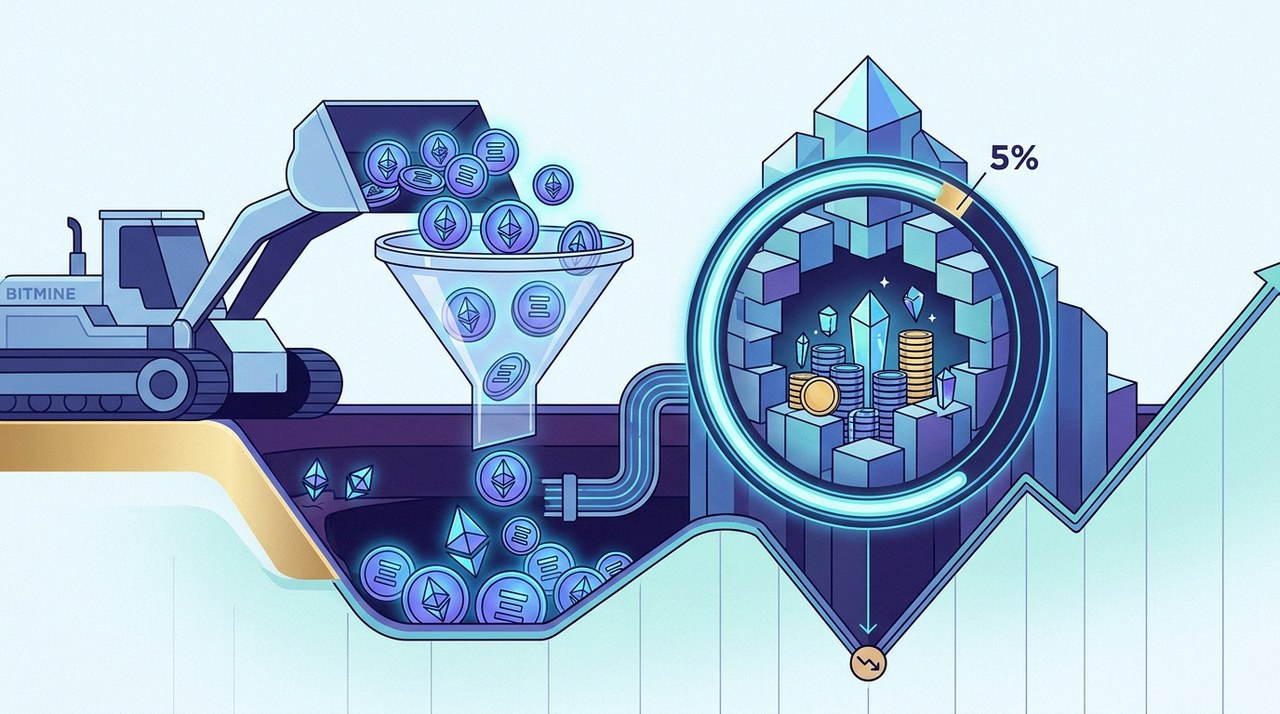


Bitmine Buys $13M ETH as Ether Recovers From 5-Month Low
Bitmine Immersion Technologies acquired 7,819 ETH, bringing its holdings close to 5% of Ethereum's circulating supply despite market unrealized paper losses.
|


Crypto User Loses $600K From Trezor Wallet on iPhone 17
A crypto holder lost $613,000 from a Trezor Safe 7 and Exodus app despite taking standard security precautions.
|
Bitcoin Spikes to $64.5K on Nvidia CEO News Then Retreats
Bitcoin briefly jumped to $64,505 following Jensen Huang's return as Nvidia CEO before pulling back to $60,800 on Monday.
|