
South Korea Tightens Crypto Rules With Stricter Checks
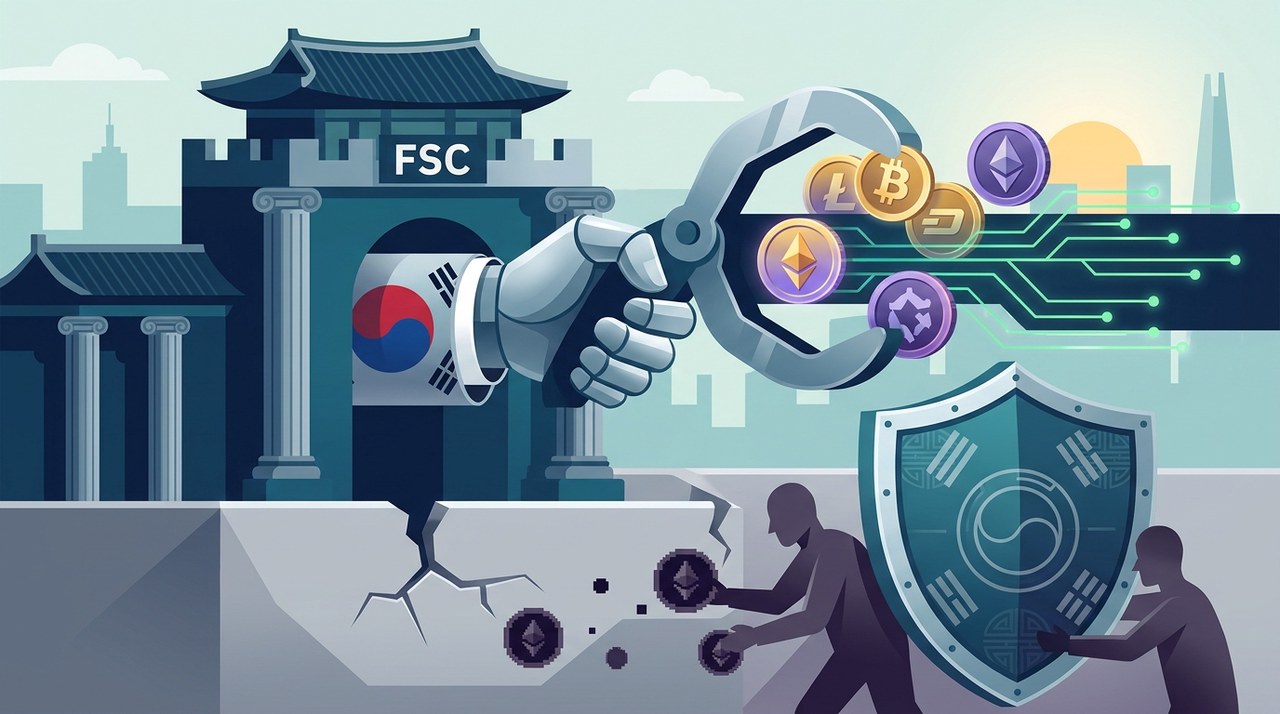
South Korea Takes Action to Tighten Crypto Oversight
South Korea is stepping up its efforts to secure the digital asset space. Government regulators are preparing stricter oversight for crypto exchanges and wallet service providers.
The core goal behind these regulatory changes is clear: authorities want to curb money laundering and restrict the movement of illicit digital funds across borders.
Key Announcements from Anti-Money Laundering Day
The new direction was formally announced by top financial leadership in Seoul. Financial Services Commission (FSC) Chairman Lee Eog-weon outlined the policy measures on November 23.
Speaking at the 20th Anti-Money Laundering Day ceremony, Chairman Lee explained that authorities will strengthen their scrutiny of virtual asset service providers (VASPs).
In addition to closer monitoring, regulators plan to expand their legal powers to freeze accounts suspected of involvement in criminal activity.
Closing Legal Blind Spots with Updated Decrees
These updated measures build on an existing legal foundation. According to a report by Yonhap News Agency, the regulatory expansion follows a revised enforcement decree approved in August.
This update amends the Act on Reporting and Using Specified Financial Transaction Information. Under the revised rules, virtual asset businesses will face much tougher screening during registration.
Deeper Examination of Executives and Owners
Regulators are expanding checks beyond company financials. They will now conduct deep background evaluations on key individuals running crypto businesses:
- Major shareholders will undergo enhanced scrutiny.
- Controlling shareholders must clear stricter qualification background checks.
- Executive officers will face closer examination during the business registration process.
Exchanges will also be required to enhance their Customer Due Diligence (CDD) procedures, particularly for clients and transactions flagged as vulnerable to financial crime.
New Guidelines for Overseas Crypto Transfers
International digital asset transfers will soon face far tighter rules in South Korea.
Under the new framework, domestic crypto exchanges can process transfers involving low-risk foreign platforms under specific predefined conditions. However, transfers involving high-risk counterparties will be heavily restricted or blocked.
Mandatory Reporting for Transfers of 10 Million Won or More
Large cross-border transfers will now come with mandatory reporting requirements.
Any transfer of 10 million Korean won or more sent to overseas virtual asset businesses or wallet service providers must be reported to the Korea Financial Intelligence Unit (KoFIU).
Crucially, this mandatory reporting applies regardless of whether the recipient overseas entity is classified as low-risk or high-risk.
Travel Rule Upgrade: The 1 Million Won Threshold Removed
South Korea is also overhaul how it applies the international Travel Rule within its borders.
The Travel Rule functions similarly to wire transfers in traditional banking. It requires financial institutions to share identifying information about both the sender and the recipient when transferring funds.
Previously, registered domestic platforms in South Korea were only required to share Travel Rule information for transfers exceeding 1 million won.
The government is now completely removing that 1 million won threshold for transfers between registered domestic providers. Moving forward, sender and recipient details must accompany digital asset transfers of any amount.
Authorities believe this zero-threshold system will prevent criminals from splitting illicit transactions into smaller amounts to bypass reporting requirements.
Boosting Asset Safety: Proposal for 99% Cold Storage
In addition to anti-money laundering measures, South Korean officials are reviewing user protection rules following recent international security incidents.
As previously reported by CryptoPotato, this push follows security concerns linked to last month's Binance breach. In response, the FSC held an emergency meeting with major crypto exchanges and custody firms to review user protection policies.
Comparing Current Rules vs Proposed Rules
Currently, the Virtual Asset User Protection Act requires Korean exchanges to keep at least 80% of customer assets in offline cold storage wallets.
The remaining 20% is held in online hot wallets to manage daily user transactions and withdrawals.
Regulators are now considering raising that minimum cold storage mandate from 80% to nearly 99%.
The Trade-Off: Security vs Operational Efficiency
While keeping 99% of funds in offline wallets drastically reduces exposure to online hackers, it brings notable operational challenges for exchanges and users.
- Higher Security: Keeping almost all funds offline isolates user assets from cyberCYBER+20.02% attacks.
- Pressure on Smaller Exchanges: Smaller trading platforms may struggle with the higher technical and administrative costs of managing 99% cold storage.
- Potential Withdrawal Delays: Accessing funds from cold wallets requires additional manual approvals and signatures. With only 1% of assets kept online, user withdrawals could take longer to process during periods of high market activity.
Summary of South Korea's Regulatory Direction
South Korea's combined regulatory changes signal a clear transition toward a more tightly monitored crypto ecosystem.
By strengthening executive checks, removing Travel Rule thresholds, mandating large transfer reports, and considering stricter cold storage rules, authorities aim to increase transparency and bolster investor protection across the market.
Latest blog posts


Is Bitcoin Oversold? Grayscale Notes Record 411-Day Stretch
Grayscale reports Bitcoin dropped near $55,000, extending its bear market cycle to 411 days while AI risks cloud the near-term economic outlook.
|

Why Math Proofs Suggest Humans Might Lose AI Control
Researchers analyze mathematical limits to AI containment while prediction markets forecast tech IPO timelines leading to 2027.
|

Bitmine Buys $13M ETH as Ether Recovers From 5-Month Low
Bitmine Immersion Technologies acquired 7,819 ETH, bringing its holdings close to 5% of Ethereum's circulating supply despite market unrealized paper losses.
|