
Ethereum Devs Target Dec 15 for Glamsterdam Upgrade

EthereumETH+2.73% Core Developers Set Dec. 15 Date for Hoodi Testnet Upgrade
Ethereum core developers have agreed on a concrete timeline for their next technical milestone. The upcoming upgrade, named Glamsterdam, is officially scheduled to go live on the Hoodi testnet on December 15.
This scheduled deployment marks another step in Ethereum's ongoing evolution, allowing developers to test proposed protocol changes in a controlled environment before releasing them to the main blockchain.
What is the Hoodi Testnet and Why Does It Matter?
Think of a testnet like a flight simulator for blockchain software. Before launching major software updates to the main Ethereum network—where real user money is involved—developers test everything on testnets like Hoodi.
Testnets replicate the mechanics of the live Ethereum blockchain using fake, valueless coins. This sandbox environment lets engineers discover software bugs, monitor network performance under stress, and ensure that decentralization remains intact without putting real user assets at risk.
Understanding the Glamsterdam Upgrade
Ethereum upgrades are often given combined portmanteau names created from execution layer updates (named after famous cities) and consensus layer updates (named after star constellations). Glamsterdam combines recent naming conventions to represent the next set of consensus and execution improvements.
By deploying Glamsterdam on the Hoodi testnet on December 15, node operators, client developers, and application creators will get their first hands-on opportunity to run the updated client software in a live test environment.
The Hegotá Debate: Prioritizing Post-Quantum Security
Alongside setting the date for Glamsterdam, core developers engaged in crucial discussions regarding the upgrade slated to follow it, known as Hegotá.
The central topic of debate was whether post-quantum readiness should take priority over other proposed technical features in Hegotá.
Developers discussed whether post-quantum readiness should trump other proposals set for the subsequent Ethereum upgrade, Hegotá.
What is Post-Quantum Readiness?
Quantum computing represents a massive jump in computational power. While supercomputers today use binary bits (0s and 1s), quantum computers use qubits, enabling them to process complex mathematical problems exponentially faster.
This technological advance poses a potential threat to modern public-key cryptography, including the algorithms that secure crypto wallets and sign blockchain transactions. Post-quantum cryptography refers to developing encryption algorithms that advanced quantum computers cannot easily crack.
Why Post-Quantum Research is Moving Front and Center
Although quantum computers capable of breaking current encryption are likely still years away, software upgrades on decentralized networks like Ethereum take years of research, prototyping, and testing.
Developers are considering several strategies to safeguard Ethereum against future quantum threats:
- Quantum-resistant signature schemes: Replacing traditional elliptic curve cryptography (secp256k1) with lattice-based or hash-based signature models.
- Account Abstraction enhancements: Allowing users to upgrade their smart contract wallets to quantum-secure validation methods seamlessly.
- Forward-secrecy protocols: Protecting historical state data and transactional privacy from retroactive decryption.
What Should Ethereum Users and Investors Expect?
For regular token holders and decentralized finance (DeFi) users, the December 15 testnet launch of Glamsterdam requires no immediate action. Your funds on the mainnet remain safe and unchanged.
These updates highlight the continuous engineering efforts required to maintain and harden open-source infrastructure. However, software upgrades carry inherent technical complexity, and prospective participants should stay updated through official development logs.
To keep track of price movements and trading data for ETH, always check reliable exchange feeds. Please note that past digital asset performance or past network milestones do not guarantee future performance or financial returns.
Summary of Next Steps for Ethereum
- December 15: Glamsterdam upgrade launches on the Hoodi testnet.
- Testing Phase: Engineers evaluate stability and client performance over subsequent weeks.
- Hegotá Planning: Core devs continue debating whether post-quantum proposals should take top priority for the next upgrade cycle.
Latest blog posts
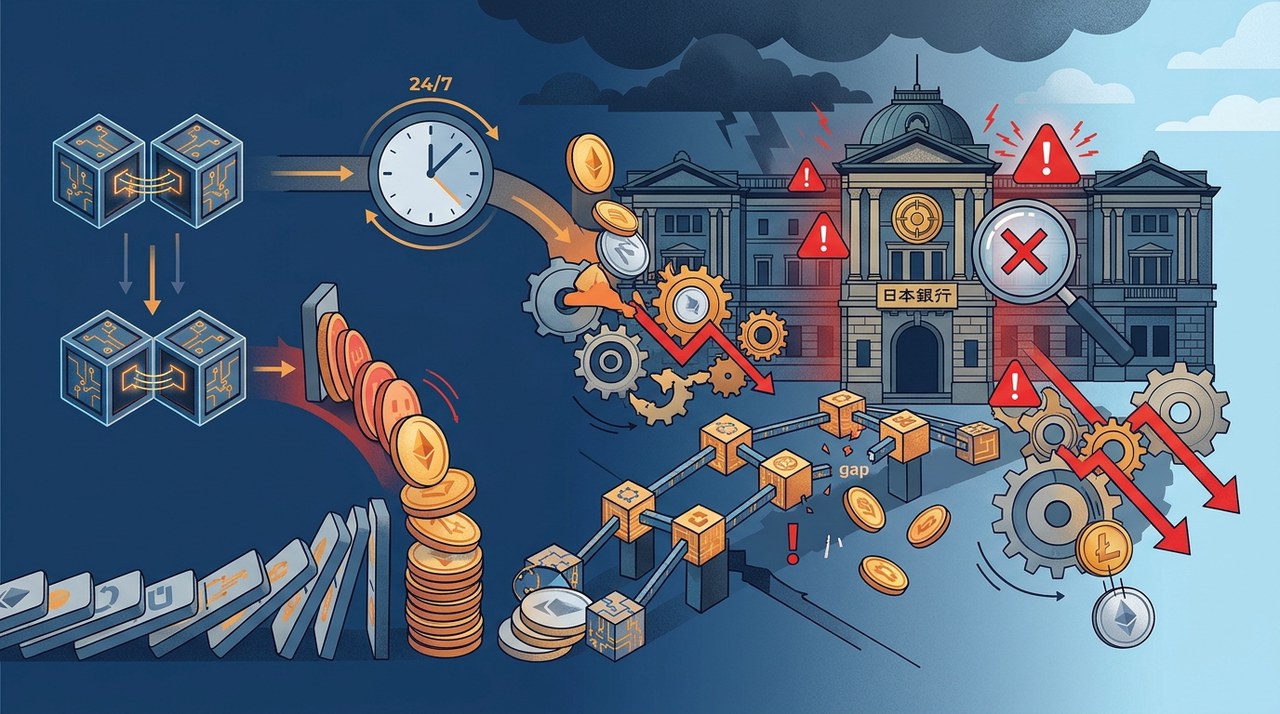
Bank of Japan Warns of Tokenization and Stablecoin Risks
Bank of Japan executive Kazushige Kamiyama warned that smart contracts and stablecoins could create financial stability risks during an IMF seminar.


What Happens When a Bitcoin Block Fills Up?
When Bitcoin transaction demand spikes, space inside blocks gets tight. Here is how miners pick transactions and what happens to the rest.
|

US Wins Forfeiture of $674K in Crypto Tied to Scam
A federal court has authorized the forfeiture of nearly $674,000 in stolen Tether, allowing victims of an online investment scam to seek recovery.
|