

Essential Privacy and Security Tools for Crypto Investors
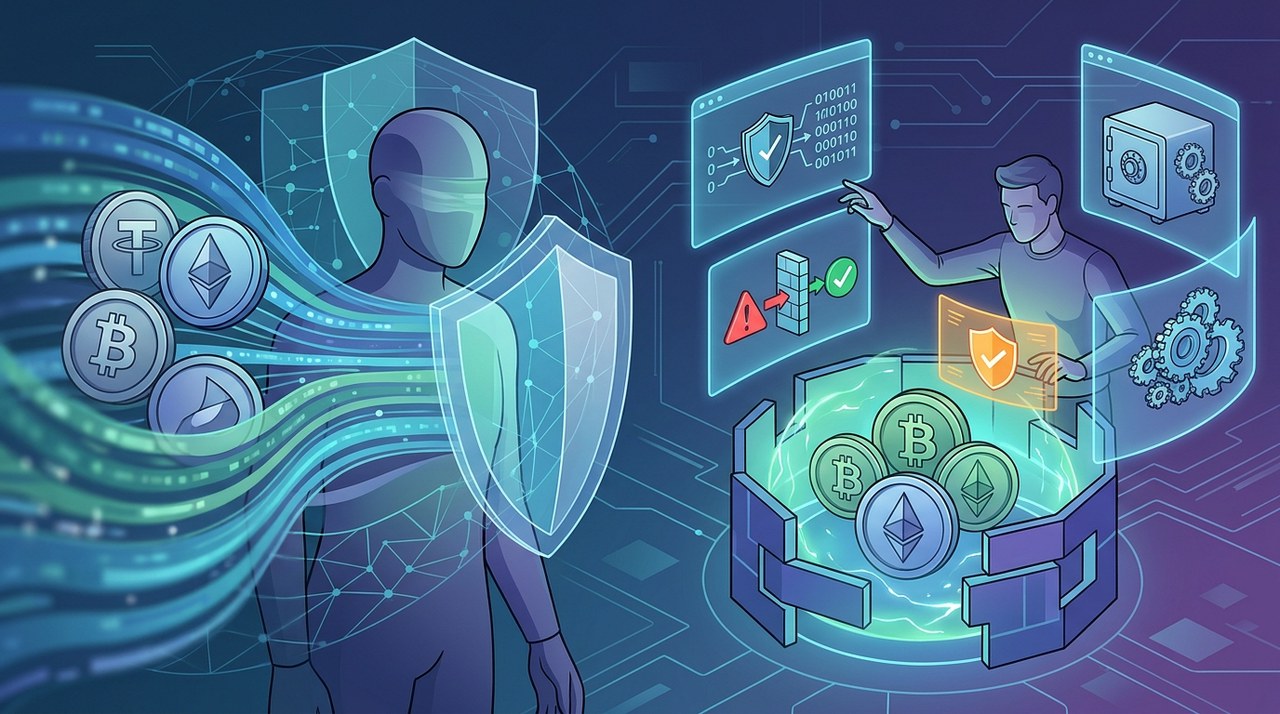
Why Privacy and Security Matter in Crypto
The crypto market offers exciting financial opportunities. However, many individuals and businesses hesitate to participate due to security fears.
In traditional finance, banks can often freeze fraudulent transactions or help recover stolen funds. Crypto works completely differently.
Blockchain transactions are irreversible once confirmed. If you accidentally send funds to a malicious address, no customer support team can reverse it.
The Need for Privacy Tools
Most blockchains act as open, public ledgers. Anyone can view account balances and transaction histories across the entire network.
Malicious actors exploit public ledger data to locate wallets holding large crypto balances. They analyze on-chain trails to launch targeted phishing attacks.
Using privacy tools helps mask your digital identity, on-chain activities, and network metadata. Securing your privacy creates an important first line of defense.
The Role of Security Tools
Even if hackers target your account, specialized security tools provide essential defenses. They analyze smart contract interactions before you execute them.
Transaction simulation tools warn you about potential drainers, honeypots, and malicious permissions. This lets you stop threats before signing a transaction.
Top 6 Privacy and Security Tools for Crypto Investors
Here is a detailed breakdown of six top-tier tools designed to protect your personal identity, transactions, and Web3 activities.
1. Proton Mail
Most crypto exchanges require an email address during account registration. Standard providers like Gmail and Outlook do not use default end-to-end encryption.
Proton Mail solves this issue by offering privacy-focused email services with zero-access encryption. Even Proton cannot read the contents of your inbox.
If servers ever suffer a security breach, attackers cannot read your stored emails. Sensitive verification codes and password reset links remain safe.
Proton Mail also features hide-my-email aliases on paid plans. You can generate unique alias addresses for each individual exchange you sign up for.
If a platform suffers a data leak, your primary address stays hidden. This feature significantly limits your exposure to spam and targeted phishing attempts.
Built-in phishing protection flags suspicious emails and warns you about dangerous links. You can easily transfer contacts from Gmail using their Easy Switch tool.
The free plan includes 1 GB of storage and one email address. The Mail Plus plan adds 15 GB of storage, 10 email addresses, and custom domain support.
For complete digital security, Proton Unlimited bundles Proton Mail with Proton VPN, Proton Drive, and Proton Pass into a single subscription.
- Pros: Easy to use, free tier available, custom domain options, over 100 million global accounts.
- Cons: Advanced alias creation and custom domains require a paid tier.
- Best For: Private communications and defending against email phishing attacks.
2. GoPlus SecurityGPS-2.11%
GoPlus Security acts as an open security layer for Web3 users and AI agents. It detects risks before users sign transactions on-chain.
The platform analyzes decentralized applications (dApps), smart contracts, token addresses, and website links to flag hidden security threats.
It reliably identifies rug pull risks, malicious wallet addresses, and honeypot tokens that block users from selling assets after buying.
For AI applications, GoPlus offers AgentGuard. This tool scans AI agent skills for malicious prompts, unauthorized instructions, and altered code.
GoPlus is accessible via a browser extension and mobile app. Major platforms like OKX Wallet and DEX Screener integrate GoPlus security engines directly.
- Pros: Mobile app, browser extension, over 28 million reported wallet users in 2025, dedicated AI agent security tools.
- Cons: Focuses almost entirely on security rather than user network privacy.
- Best For: Real-time Web3 transaction verification and AI security.
3. Blockaid
Blockaid is a Web3 security suite built to detect and prevent on-chain exploits before users authorize damaging smart contract transactions.
Before you approve a transaction, Blockaid simulates the entire interaction. It alerts you if the execution will drain assets or grant dangerous permissions.
Because many Web3 scams originate on traditional social media, Blockaid scans Web2 sources to intercept threats before they hit the blockchain.
It relies on machine learning and artificial intelligence to spot suspicious operational patterns and catch emerging zero-day vulnerabilities.
Major industry wallets like Coinbase Wallet, MetaMask, and OpenSea integrate Blockaid. The firm reports preventing over $13.1 billion in crypto theft.
- Pros: Strong track record, pre-execution simulation, deep integration across leading Web3 wallets.
- Cons: Primarily functions as an integrated enterprise engine rather than a standalone consumer app.
- Best For: Preventing wallet-draining scams and dangerous Web3 interactions.
4. Web3 Antivirus (W3A)
Web3 Antivirus provides security tools aimed at protecting active retail traders and businesses interacting with smart contracts.
Unlike traditional computer antivirus software that scans localized hard drives, W3A evaluates Web3 wallet requests, token contracts, and online dApps.
Retail investors can install browser extensions for Google Chrome, Microsoft Edge, and Mozilla Firefox. The extension alerts you to phishing sites and honeypots.
W3A also features a security dashboard. Users can easily audit wallet risks, inspect full transaction logs, and revoke high-risk smart contract approvals.
For institutional users, Web3 Antivirus offers robust enterprise APIs. These tools allow platform operators to run compliance audits and evaluate target wallet risks.
- Pros: User-friendly browser extensions, detailed security dashboard, quick token permission revoking tools.
- Cons: Retail features are mostly restricted to desktop browser setups.
- Best For: Identifying browser-based phishing traps and managing active token approvals.
5. The Onion Router (TOR)
The Onion Router is an open-source privacy network designed to hide your IP address, geographic location, and browsing activity from external surveillance.
Tor encrypts your network connections in multiple layers, routing your internet traffic through three separate, randomized network nodes.
The entry node (Guard) sees your IP address but cannot see your destination. The Middle node processes traffic without seeing the sender or destination.
Finally, the Exit node strips off the final encryption layer and delivers traffic to the destination website without revealing your original home IP address.
Tor prevents internet service providers (ISPs) from tracking which sites you visit. However, Tor does not make public blockchain transfers anonymous on-chain.
- Pros: Free, open-source, offers strong network privacy and guards against online tracking.
- Cons: Multi-hop relay routing slows browsing speeds; does not mask public blockchain ledger records.
- Best For: Anonymizing your internet connections and network metadata.
6. CoinJoin
CoinJoin is an advanced privacy mechanism for BitcoinBTC-0.55% designed to obscure wallet transaction histories on the public ledger.
Because Bitcoin operates on a fully transparent network, anyone can follow address balances. CoinJoin combines multiple payments into one large transaction.
Combining multiple senders and receivers makes it difficult for analytical tools to link input addresses directly to output addresses.
Unlike centralized crypto mixers, CoinJoin is non-custodial. You retain complete ownership of your private keys throughout the mixing process.
CoinJoin is accessed via compatible Bitcoin wallets like Wasabi Wallet. Keep in mind that centralized exchanges may flag addresses associated with CoinJoin.
- Pros: Non-custodial operation, significantly reduces Bitcoin transaction traceability.
- Cons: Limited primarily to Bitcoin; some custodial exchanges flag or block mixed funds.
- Best For: Bitcoin holders seeking enhanced transaction privacy on-chain.
Essential Security Best Practices for Every Investor
Using advanced software is helpful, but maintaining good security habits remains your strongest line of defense against online exploits.
Use Encrypted Email Services
Crypto exchanges rely heavily on registered email addresses for password resets and withdrawal confirmations. Standard email accounts are vulnerable to breaches.
Switching to an end-to-end encrypted provider like Proton Mail secures recovery channels. Creating unique email aliases for each platform reduces phishing threats.
Verify Website URLs Manually
Phishing sites mimic exchange interfaces using lookalike Web domains. Unwittingly connecting your wallet to a fake site can lead to stolen private credentials.
Always verify web addresses letter by letter before entering details. Bookmark legitimate sites and avoid clicking unverified links in social media posts.
Upgrade to Authenticator Apps
SMS two-factor authentication (2FA) is vulnerable to SIM-swapping attacks. Hackers can trick mobile carriers into transferring your phone number to their devices.
Use app-based authenticators like Google Authenticator, Authy, or hardware security keys like YubiKey to ensure your account verification codes stay secure.
Enable Anti-Phishing Codes
Scammers send fake emails pretending to be official support reps. Enabling an anti-phishing code adds a secret phrase to genuine notifications from your exchange.
If an email claiming to be from your exchange lacks your unique phrase, you can spot the phishing attempt instantly.
Separate Assets Between Hot and Cold Wallets
Never keep all your crypto holdings in a single location. Divide your funds between online hot wallets and offline cold storage.
Use hot wallets for active trading and smaller daily transactions. Store your long-term wealth in offline hardware cold wallets.
Remember that all digital asset investments involve price volatility and smart contract risks. Past performance of assets or platforms is no guarantee of future results.
Latest blog posts



Moscow Exchange Sets December Launch for Crypto Trading
The Moscow Exchange plans to launch Bitcoin, Ether, and USDT trading on December 1 under Russia's new legal framework with retail spending caps.
|

NEAR Drops 7% as Token Issuance Cut Approved
NEAR Protocol fell 7% following a community vote to cut token issuance by 11.8 million NEAR over two years, a reduction valued at $45 million.
|
Bitcoin Breaks Midterm Election Pattern Set Since 2014
Bitcoin is breaking a historic price pattern linked to U.S. midterm elections that has held true since 2014.
|