

Cysic Hacker Ignores 10% Bounty, Uses Tornado Cash
What Happened in the Cysic Security Incident?
Imagine being able to print money out of nowhere. That is essentially what took place during a recent security breach involving the cross-chain protocol Cysic.
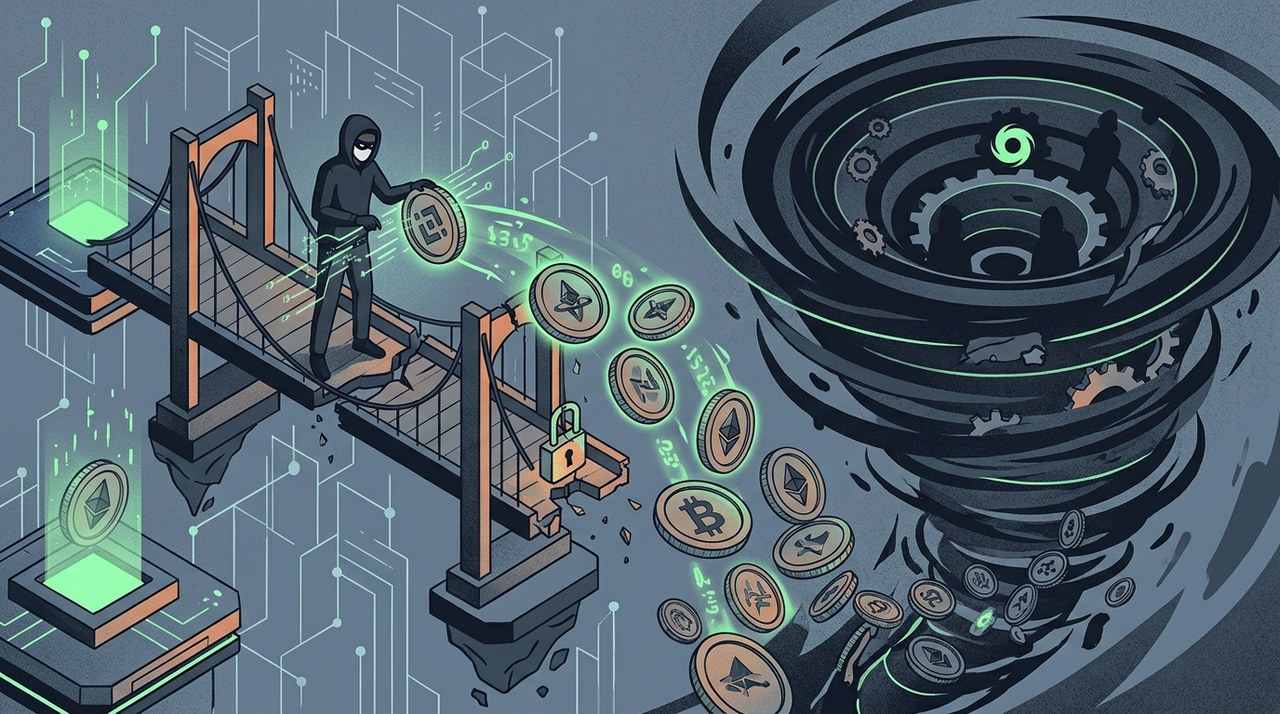
An unknown attacker discovered a critical loophole in Cysic's bridge system. Using this vulnerability, the hacker illegally minted 10 million new tokens directly on the BNBBNB+1.95% Smart Chain (BSC).
Shortly after creating these unauthorized tokens, the attacker converted the loot and transferred approximately $744,000 worth of EthereumETH-0.06% and BNB into Tornado Cash.
Understanding How the Cysic Bridge Was Target
To understand what went wrong, it helps to know how crypto bridges function. A blockchain bridge works like an international border crossing. It allows users to move assets from one network to another, such as shifting assets between Ethereum and BNB Smart Chain.
Under normal conditions, when you send tokens across a bridge, the original assets are locked safely on the home network while equal tokens are created on the destination chain.
However, in this breach, the attacker bypassed the locking mechanism. They tricked the smart contract into minting 10 million tokens without backing them with actual underlying collateral.
The Unanswered 10% White-Hat Bounty Offer
Once the team detected the illegal minting, Cysic tried to open a dialogue with the hacker. The team dangled a 10% bounty offer, hoping to resolve the issue peacefully.
In the Web3 industry, offering a white-hat bounty is a standard recovery tactic. Protocols ask hackers to keep a portion of stolen funds—10% in this instance—as a legal reward if they return the remaining 90% and explain how they broke in.
This arrangement lets projects recover most of their assets while giving the exploiters a legitimate payout. However, the attacker in this case ignored the deal completely.
Why Stolen Funds Were Sent to Tornado Cash
Rather than accepting Cysic's white-hat deal, the hacker funneled the $744,000 in ETH and BNB directly into Tornado Cash.
Tornado Cash is a decentralized privacy protocol that acts like a digital mixer. It pools funds together and breaks the visible connection on public block explorers between the sender and recipient wallet addresses.
By depositing the stolen funds into Tornado Cash, the hacker attempted to wipe the transaction history, making it far more challenging for security researchers and law enforcement to trace where the funds go next.
Why Cross-Chain Bridges Face Frequent Security Risks
Cross-chain protocols remain one of the most targeted areas in decentralized finance (DeFi). Because bridges hold large reserves of tokens and rely on multi-chain smart contracts, they present an attractive target for exploiters.
When smart contracts contain subtle code bugs, attackers can drain funds quickly before developers have a chance to pause the contract.
Key Takeaways for Crypto Users
Incidents like the Cysic bridge exploit highlight the important risk factors involved in using decentralized technology.
While cross-chain tools offer great utility for moving assets, smart contract technology is still evolving and carries operational risks.
Before interacting with any protocol or holding cross-chain assets, always review whether the protocol has undergone comprehensive security audits. Keep in mind that past performance and historical asset stability do not guarantee future safety or financial returns.
Latest blog posts


HSBC Launches Red Coin Stablecoin to Over 3 Million Users
HSBC has introduced its first Hong Kong dollar stablecoin, Red Coin, bringing digital payments to more than 3.3 million Pay Me app users.
|

Altcoin Market Dip: What Technical Signals Show in 2026
Crypto analyst VirtualBacon points to Bitcoin's 50-week moving average as altcoins experience a recent pullback. Here is a look at what the technical chart signals mean for the market.
|
Why Did Moderna Stock Drop 17% After Good Vaccine News?
Moderna stock fell over 17% despite positive Phase 3 cancer vaccine results, driven by high expectations and a classic sell-the-news reaction.