
Cardano Holders Reject $4M Event Budget in Treasury Vote
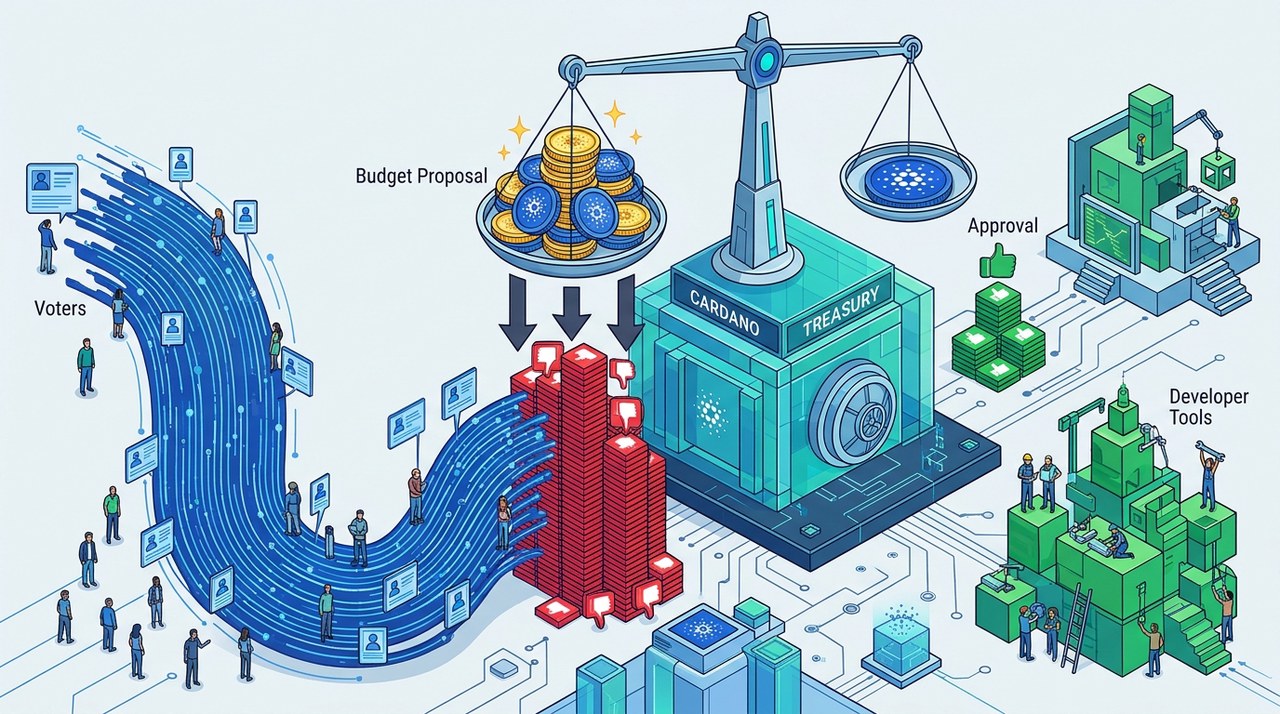
CardanoADA+3.28% Community Votes Down $4 Million Event Proposal
Cardano token holders are making their voices heard in the network's decentralized governance system. A recent treasury voting round shows a major shift in how the community wants to spend shared funds.
Cardano holders are rejecting a $4 million funding request submitted by the Cardano Foundation. The requested funds were meant to organize the ecosystem's flagship conference planned for 2027.
At the same time, community members are showing strong enthusiasm for technical building blocks. A separate request focused on developer tools is receiving almost complete backing from voters.
Breaking Down the Numbers: A 5-to-1 Opposing Majority
The gap between community sentiment and the Foundation's proposal is clear in the voting metrics. Roughly five times as much voting stake has opposed the 2027 event budget compared to the stake supporting it.
In Cardano's governance system, voting power is tied to ADA stake. This means token holders delegate or cast their voting weight based on the amount of ADA they control.
The heavy opposition highlights how carefully community members review large spending requests. Many voters appear hesitant to allocate $4 million for an event several years away when immediate technical needs exist.
Developer Tools Proposal Wins Near-Unanimous Support
While the conference budget faces heavy resistance, a technical proposal filed on November 16 tells a completely different story. This proposal requests funding for essential developer tools.
The developer tools request has met almost no opposition from voting wallets. Community members appear eager to direct treasury reserves toward infrastructure that helps programmers build decentralized applications.
This contrast reveals a growing trend in crypto governance. Communities are increasingly prioritizing hands-on technical utility over expensive marketing events and lavish offline gatherings.
How Cardano Governance and the Treasury Function
To understand why this vote matters, it helps to look at how Cardano manages community funds. The network features an on-chain treasury designed to fund long-term growth and decentralization.
A portion of transaction fees and epoch rewards continually flows into the treasury. Project teams, developers, and organizations can submit funding proposals to request support from these shared reserves.
- The Cardano Foundation: A non-profit body supporting adoption, standards, and ecosystem growth.
- The Treasury: A decentralized pool of ADA capital reserved for development and ecosystem initiatives.
- On-Chain Voting: ADA holders use their stake to approve or reject budget allocations.
- Developer Proposals: Requests submitted by builders to upgrade tools, software libraries, or core network infrastructure.
Why Community Priorities Are Shifting Toward Utility
Large blockchain conferences can build community spirit, but they are expensive. A $4 million budget is a significant draw on community funds, leading voters to evaluate the expected return on investment.
Developer tools directly improve the builder experience on Cardano. Better tools make it easier for software engineers to launch decentralized applications, smart contracts, and financial services.
By prioritizing technical tools, voters signal that network utility, builder retention, and core updates are higher priorities than hosting promotional events.
Decentralized Decision-Making in Practice
This voting outcome demonstrates decentralized governance in real-world conditions. Major leadership entities do not receive automatic funding approvals simply because of their standing.
Instead, proposals are subject to public debate, scrutiny, and formal voting. When token holders disagree with a proposal's scope or cost, they can actively vote to decline it.
Decentralization gives every ADA holder a voice. When five times more voting stake opposes a major budget, it shows token holders actively managing treasury funds.
What Lies Ahead for Cardano's Proposals?
The rejection of the 2027 conference budget does not mean Cardano will never hold major events again. The Foundation may choose to revise its plan, lower the budget, or present clearer deliverables in a future proposal.
Meanwhile, the developer tools proposal filed on November 16 demonstrates how quickly practical technical initiatives can advance when they align with community goals.
Market Risk Disclosures and Compliance Context
While active governance shows strong community engagement, crypto assets like Cardano (ADA) remain volatile investments. Treasury voting outcomes reflect community sentiment but do not guarantee financial returns or market price stability.
Past performance of digital assets is not indicative of future results. Market participants should review technical developments and market risks carefully before making investment decisions.
Latest blog posts


 +2
Hex Trust Exec Explains How wXRP Avoids $600M Bridge Risks
Wrapped XRP is expanding to major blockchains while using institutional custody to keep user assets secure from cross-chain exploits.
|


Flare Helps XRP Holders Borrow Dollars Without Selling Tokens
Flare Network's FXRP supply reached 145 million tokens as holders increasingly use their XRP as collateral to borrow US dollar stablecoins across blockchains.
|
Spot Bitcoin ETFs Shed $1.8 Billion as Outflows Shift
Spot Bitcoin ETFs saw $1.8 billion in weekly outflows as risk-averse investors prepare for potential December interest rate hikes.
|