


Bitcoin's Missing Fuel: USDT Supply Shrinks by $8.1 Billion
Why Stablecoin Supply Matters for BitcoinBTC+1.28%
Every time Bitcoin reached a new record high since 2022, one specific market condition was present.
TetherUSDT-0.26%'s USDT supply was actively growing. Out of 39 record-high closes during this period, zero occurred while USDT supply was shrinking.
Stablecoins act like digital cash inside the crypto market. When traders hold stablecoins, they have ready buying power to purchase assets like Bitcoin.
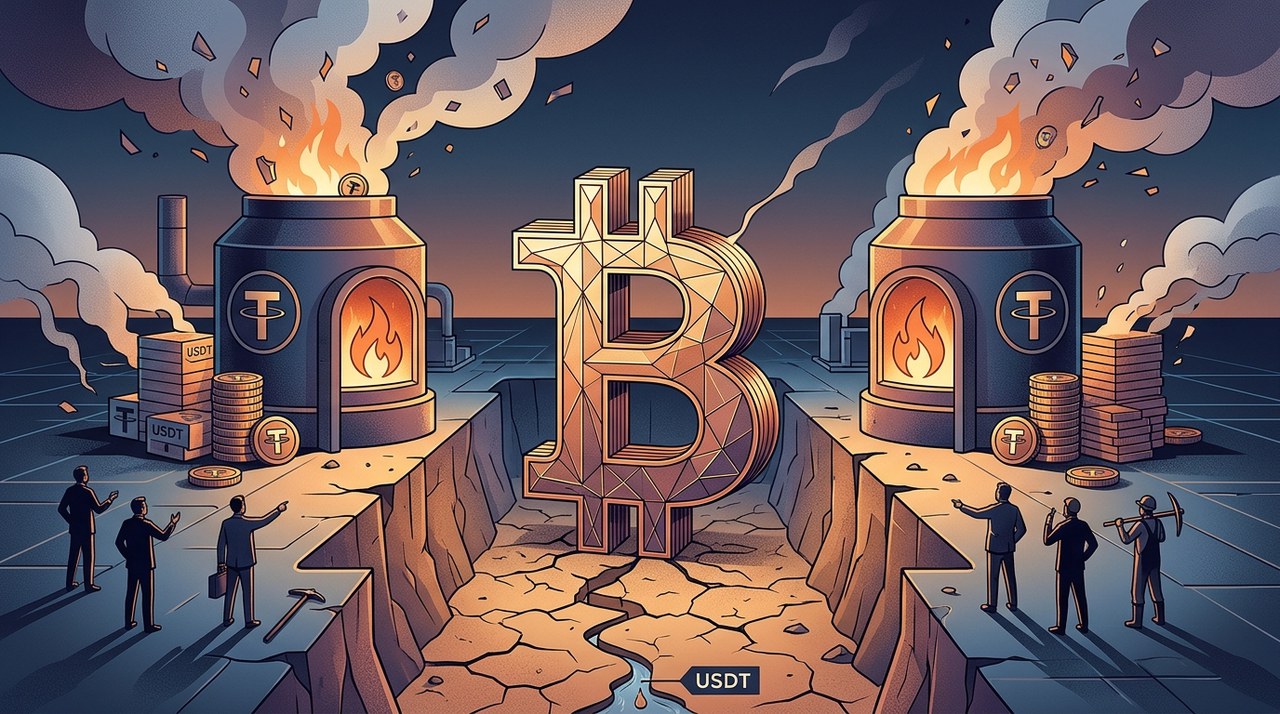
Today, that digital cash pile is getting smaller. USDT supply is contracting at its fastest pace in more than four years.
Breaking Down the $8.1 Billion USDT Contraction
Data from CryptoQuant shows that combined USDT supply on EthereumETH+2.47% and TRONTRX-0.01% fell by $8.1 billion over 60 days.
Nearly all of this decline came from the Ethereum network, while TRON's supply remained relatively flat.
In mid-2026, TRON's growth helped soften an Ethereum drawdown. Today, that cushion is currently missing.
Much of this drop was driven by deliberate token burns by Tether. The issuer permanently removed tokens from circulation in two major actions this month.
- Tether burned $4.0 billion in USDT on November 2.
- Tether burned another $4.0 billion in USDT on November 20.
- This reduced Ethereum USDT supply from $88.3 billion to $80.3 billion.
- Supply on Ethereum reached its lowest level since August 2025.
Historical Price Patterns During Supply Squeezes
Historically, Bitcoin returns tend to align closely with stablecoin supply trends. CryptoQuant tracked Bitcoin through every USDT squeeze since 2022.
When USDT supply shrank, Bitcoin's two-month return averaged a loss of nearly 10%.
Conversely, when USDT supply expanded, Bitcoin's two-month return averaged a gain of about 8%.
Past performance of digital assets does not guarantee future results.
Bitcoin traded at $61,534 on Friday. That price is less than half of its record high set in October 2025.
Short-term price bounces can still occur during liquidity squeezes. However, sustained recoveries have historically coincided with renewed USDT growth.
Market Perspectives: Searching for a Bottom
Analysts view the rapid contraction through different lenses.
CryptoQuant noted a potential silver lining in the speed of the outflow. The last time liquidity left this quickly was in August 2022, which occurred during the late stages of a bear market.
Other analytics firms remain cautious about declaring a market floor.
On-chain analytics firm Santiment suggests a true market bottom requires dip-buyers to be fully exhausted.
Meanwhile, crypto firm Galaxy noted that only two of its 13 historical bottom signals have appeared so far.
Three Key Signals to Watch for Returning Liquidity
Analysts are monitoring three main indicators to see when buying power might return to the market:
- The 60-day change in USDT supply turns positive after two months of decline.
- USDT supply on the Ethereum network stabilizes.
- Tether's treasury sends out more USDT than it receives, signaling net new demand.
Until these conditions are met, any potential recovery may rely on a shrinking pool of internal market liquidity. Investors continue to monitor short-term price movements and market volatility closely.
Latest blog posts


Japan Crypto Group Taps SEAL to Speed Up Hack Response
Japan's crypto security group partnered with the Security Alliance to boost hack response times following a recent customer data breach.
|

Ripple Lending Plan Nears Launch on XRP Ledger
Ripple's proposed native lending protocol moves closer to activation, targeting $800 million in stablecoins once final validator votes are cast.
|
Ripple Valuation Gap Hits 70% Across Two SEC Filings
SEC filings reveal two investment funds value private Ripple shares at vastly different prices—$90 versus $300 per share.
|