
Ripple Lending Plan Nears Launch on XRP Ledger
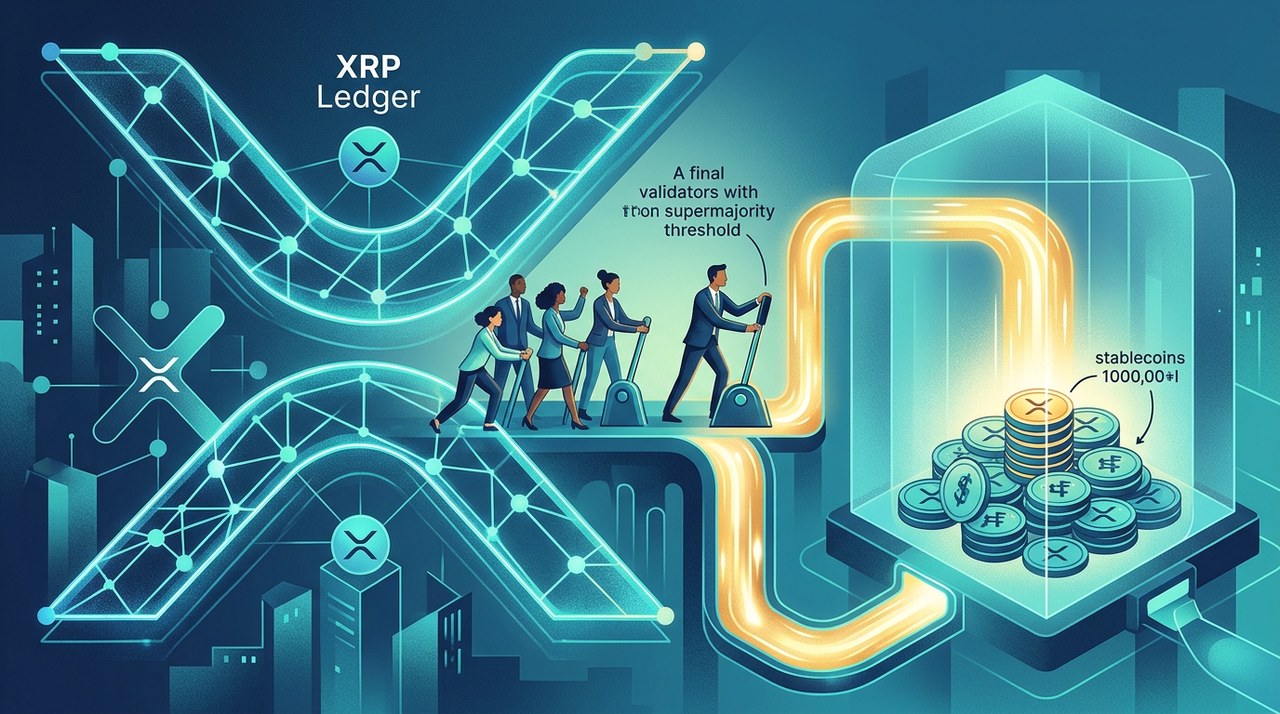
A Major Step Forward for XRPXRP+0.67% Ledger Lending
The XRP Ledger is taking a significant step toward launching its native decentralized lending protocol.
This initiative aims to unlock new financial utilities by tapping into roughly $800 million in stablecoins.
The liquidity vaults designed to hold lender funds are currently on track to switch on December 9.
However, the broader loan system that draws from these vaults still requires one more validator vote.
Once that single vote is secured, it will trigger a mandatory two-week activation countdown.
Understanding Validator Voting on the XRP Ledger
The XRP Ledger operates as a decentralized network governed by independent validator nodes.
Major software upgrades, known as amendments, do not launch automatically.
Instead, they require approval from at least 80% of network validators over a continuous period.
This consensus rule must be maintained uninterrupted for 14 consecutive days.
The loan protocol feature is currently waiting on just one additional validator to reach that supermajority threshold.
Unlocking $800 Million in Stablecoin Liquidity
Stablecoins are digital tokens pegged to traditional fiat currencies, such as the US Dollar.
The XRP Ledger currently hosts about $800 million worth of stablecoins across various issuers.
Historically, these assets were primarily used for payments and basic transfers.
The new lending protocol will allow stablecoin holders to deposit assets directly into secure vaults.
This mechanism creates productive capital efficiency within the XRP ecosystem.
How Liquidity Vaults and Loans Work
The upcoming lending framework introduces a structured two-part mechanism for decentralized finance.
1. Single-Asset Vaults
Lenders can deposit stablecoins or other supported tokens into single-asset vaults.
These vaults aggregate user funds to form pooled liquidity reserves.
This vault infrastructure is the component set to activate on December 9.
2. On-Chain Loan Execution
Borrowers can negotiate terms and borrow directly from the liquidity pools.
Interest rates and loan management functions are executed natively by the blockchain.
This native design eliminates the need for complex, external smart contracts.
Why Native Protocol Lending Matters
Most decentralized finance platforms rely heavily on third-party smart contract code.
While flexible, custom smart contracts can sometimes contain unexpected software bugs.
By embedding lending rules directly into the ledger core, the network enhances security.
Native features also help lower execution costs and reduce overall transaction latency.
Important Risk Factors to Keep in Mind
While protocol upgrades bring new features, digital asset activities carry inherent risks.
Liquidity shortages, potential software bugs, and market shifts can impact decentralized lending markets.
Cryptocurrency prices and market activity can change rapidly based on broader economic conditions.
Past performance of digital assets is not a guarantee of future results.
Investors can monitor market trends and real-time prices via Bitkub Market.
What to Watch Next
The immediate focus is on whether the remaining validator submits an affirmative vote.
If the threshold is reached, the 14-day timer will start immediately.
Meanwhile, the scheduled launch of single-asset vaults on December 9 remains on target.
Latest blog posts


Japan Crypto Group Taps SEAL to Speed Up Hack Response
Japan's crypto security group partnered with the Security Alliance to boost hack response times following a recent customer data breach.
|
Ripple Valuation Gap Hits 70% Across Two SEC Filings
SEC filings reveal two investment funds value private Ripple shares at vastly different prices—$90 versus $300 per share.
|

Ethereum Devs Target Mid-December for Hoodi Rollout
Ethereum developers rescheduled the Hoodi testnet upgrade for mid-December after delaying it in October over smart contract gas pricing concerns.
|