
Bitcoin Drops Below $73K Ahead of Anthropic's Tech IPO

Is History Repeating Itself in the Crypto Market?
Bitcoin (BTCBTC-1.52%) dropped below $73,000 on Tuesday, marking its lowest price point since August 20. This recent price drop occurred roughly a week before artificial intelligence firm Anthropic is expected to begin trading on the Nasdaq stock exchange.
For many crypto traders, this market move feels like deja vu. Back in June, Bitcoin followed a remarkably similar downward trend right before space exploration company SpaceX completed its record-breaking stock market listing.
Some market analysts argue that massive public share sales draw cash out of riskier assets like Bitcoin. During the SpaceX debut, Bitcoin did not bounce back immediately, leaving crypto holders waiting two full months for a sustained price recovery.
A Look Back at the SpaceX IPO Price Correction
To understand the current market behavior, it helps to examine how far Bitcoin fell during the SpaceX debut earlier this year. Between its May high and its June low, Bitcoin lost nearly 29% of its value.
SpaceX officially debuted on June 12 after successfully raising over $85 billion. Just one week prior to that debut, on June 5, Bitcoin fell to approximately $59,000.
The price pressure continued through the summer. Bitcoin set a lower low near $57,700 on July 1 and stayed locked below the $67,000 mark until August 19.
Fast forward to current market conditions: Bitcoin has shed nearly 17% from its September 21 peak, where it traded above $87,000. At press time, Bitcoin was trading at $72,891, representing a 2.7% decline over 24 hours.
Past performance of digital assets is not a guarantee of future results. For real-time price tracking and market data, visit Bitkub Market.
That’s TWO major IPO events coinciding with massive Bitcoin corrections,
noted Crypto Rover, a popular commentator on X.
Why Could an AI Stock Debut Affect Bitcoin Liquidity?
Anthropic, the artificial intelligence company behind the Claude chatbot, set an initial price range of $70 to $78 per share, with trading expected to begin on November 19. On Tuesday, the firm scaled its IPO size to $64.4 billion.
Why would a traditional stock listing impact the cryptocurrency market? BitMEX co-founder Arthur Hayes shared a detailed theory in a November 5 newsletter.
Hayes argued that new AI stock offerings absorb bank credit and capital. In his view, this capital absorption reduces the U.S. dollar liquidity that often fuels crypto rallies.
When Bitcoin was trading near $80,000, BeInCrypto reported on Hayes's warning regarding liquidity dilution from AI share debuts.
However, Hayes also acknowledged a key detail: his theory relied on a single weekly reading of banking data. Similarly, comparing only two major IPO events provides a relatively small sample size for drawing definitive conclusions.
Declining Spot Volume Amplifies Price Movements
Beyond stock listings, Bitcoin's internal market structure reveals another important factor: declining spot trading volumes on exchanges.
Spot volume measures coins bought and sold directly on exchanges. According to Coin Metrics data compiled by Unfolded, average daily spot volume dropped to 126,000 BTC in 2026 (measured through November 9).
This represents the lowest annual spot volume level since 2016. The shift in market activity is clear across recent years:
- Spot volume averaged 126,000 BTC daily in 2026
- Volume is down 72% compared to 453,000 BTC traded daily in 2022
- Volume is down 16% compared to average daily levels in 2025
Where has the trading activity gone? A large portion of Bitcoin supply now sits inside spot Exchange-Traded Funds (ETFs) and long-term cold storage wallets.
With fewer coins moving across exchange order books, overall market depth becomes thinner. In thin markets, large sell orders can push spot prices down much faster.
Macroeconomic Headwinds and US Inflation Signals
Macroeconomic pressure is also playing a significant role in price action. U.S. inflation data released for October showed consumer prices rose by 0.4%, coming in above the 0.3% forecast.
Higher inflation creates uncertainty around future monetary policy. The Federal Reserve raised interest rates in September and is scheduled to meet again in December.
Economist Peter Schiff pointed to multi-year performance trends when discussing ongoing market headwinds.
In its 18-year history, Bitcoin never fall two calendar years in a row. But it fell 6.34% last year, and so far in 2026 it’s down 16.5%.
If central bank interest rates stay elevated or macroeconomic liquidity remains tight, crypto prices could face continued downside pressure. Conversely, if market liquidity improves or interest rate policy eases, price stabilization could follow.
What Lies Ahead for Bitcoin?
As Anthropic's debut trades begin around November 19, market participants will watch closely. The coming weeks will test whether crypto markets repeat the summer SpaceX correction pattern, or whether broader economic factors like inflation will take primary control of Bitcoin's direction.
Latest blog posts

Crypto Firms and CFTC Team Up on Perpetual Futures Rules
Crypto firms and the CFTC have found common ground in court twice, arguing that perpetual futures contracts should not be legally defined as swaps.


US Inflation Surges Beyond Forecasts as Fed Hike Risks Rise
Higher-than-expected October inflation numbers in the US have raised expectations of a half-point Fed rate hike in December, creating potential short-term headwinds for crypto markets.
|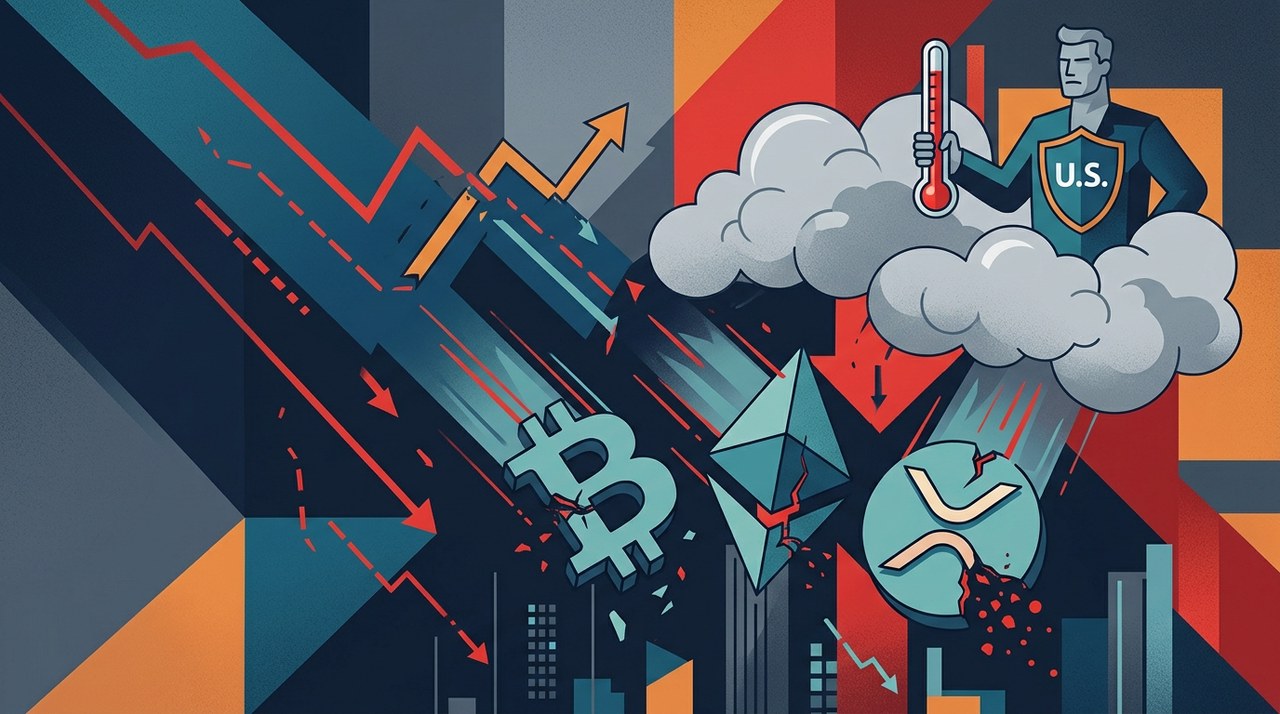

Why Bitcoin, Ethereum, and XRP Are Falling Today
A hotter-than-expected US inflation report sparked fears of Federal Reserve rate hikes, driving Bitcoin below $73,000 and pulling down ETH and XRP.
|