


Bitcoin Dips Below $81,000 as Inflation Worries Spark Rate Fears

BitcoinBTC-2.97% Pulls Back Below $81,000
Bitcoin has felt fresh pressure this week as new economic data from the United States rattled investor confidence across the market.
The world's largest cryptocurrency by market capitalization fell back under the $81,000 threshold early Thursday morning. This movement represents a decline of nearly 1% since midnight UTC.
During Wednesday's session, Bitcoin prices dipped close to the $80,000 mark. The token experienced a brief recovery back up toward $81,500, but those gains quickly reversed during Asian trading hours.
Over the past 24 hours, Bitcoin is down more than 2%. It is important to remember that past digital asset performance or past operating results do not guarantee future performance or results.
If you want to keep an eye on real-time market movements, you can monitor current prices on Bitkub Market.
Understanding the Latest U.S. Inflation Numbers
Why did crypto prices pull back so suddenly? The main driver was Wednesday's release of the U.S. Consumer Price Index (CPI) report.
Think of the CPI as a report card measuring how quickly everyday goods and services are getting more expensive. When inflation comes in higher than expected, central banks often consider raising interest rates to cool the economy.
The latest government data showed consumer prices rose 3.7% year-over-year through September. That is higher than August's 3.4% rate and above what most economists had forecasted.
Core CPI, which strips out volatile items like food and energy, climbed by 2.6%. This marks an acceleration from 2.4% in the previous month.
How Prediction Markets Shifts on Rate Hikes
Following the CPI release, financial markets rapidly adjusted their bets regarding the Federal Reserve's upcoming rate decision.
On the prediction platform Polymarket, the perceived probability of an October rate hike briefly jumped to nearly 50%. However, that probability later settled back down to roughly 30%.
A similar movement occurred on the CME FedWatch tool. Traders initially priced in a 47% chance of a rate hike—up from around 22% before the CPI report—before easing back to 26%.
Despite these short-term shifts in trader expectations, futures markets still price in over a 70% chance that the Fed will leave interest rates unchanged at its next meeting.
How Altcoins and Other Assets Reacted
Bitcoin was not the only token experiencing downward pressure. Major alternative digital assets also experienced pullbacks following the economic news.
- Ether (ETHETH-5.41%) dropped between 3.5% and 4% over the last 24 hours.
- XRPXRP-4.30% experienced a similar decline of 3.5% to 4%.
- SolanaSOL-4.21% fell within the 3.5% to 4% range as well.
On the other hand, PYTHPYTH+4.77% managed to stand out against the broader market pullbacks. It was the only top-100 cryptocurrency to register gains of over 7% during the same window.
Institutional ETF Outflows Reflect Cautious Sentiment
Institutional demand for spot Bitcoin exchange-traded funds (ETFs) in the United States also showed signs of softening.
On October 14, U.S. spot Bitcoin ETFs registered net outflows of $150.5 million. This reversed the previous day's momentum, which had seen $175.7 million in net inflows.
Vikram Subburaj, CEO of exchange platform Giottus, highlighted how macroeconomic data directly influences institutional appetite.
"Stronger U.S. inflation data has renewed concerns that interest rates will stay higher for longer. September inflation rose to 3.7% annually, increasing uncertainty over the Federal Reserve’s next move. Institutional demand also remains fragile."
Macro Pressures and the Road Ahead for Crypto
Market analysts note that broader economic conditions are exerting significant influence over digital asset markets right now.
Anderson, a representative from market-making firm STS Digital, noted how uncertainty around central bank decisions can reduce overall market activity.
"With the next FOMC a coin flip, this uncertainty is damaging liquidity and dampening risk appetite across all asset classes."
Anderson added that digital assets have become increasingly sensitive to macroeconomic conditions, including energy cost shifts, bond market volatility, and changing tech sector valuations.
Because broader economic factors can change quickly, investors should keep in mind that digital assets remain subject to market volatility. Macroeconomic headwinds can lead to price fluctuations in both directions.
Latest blog posts


Bitcoin Price Outlook: Analyst Predicts Path Past $175K
Siebert Financial analyst Brian Vieten believes Bitcoin could cross $175,000 as institutional adoption and stablecoins reshape the crypto market.
|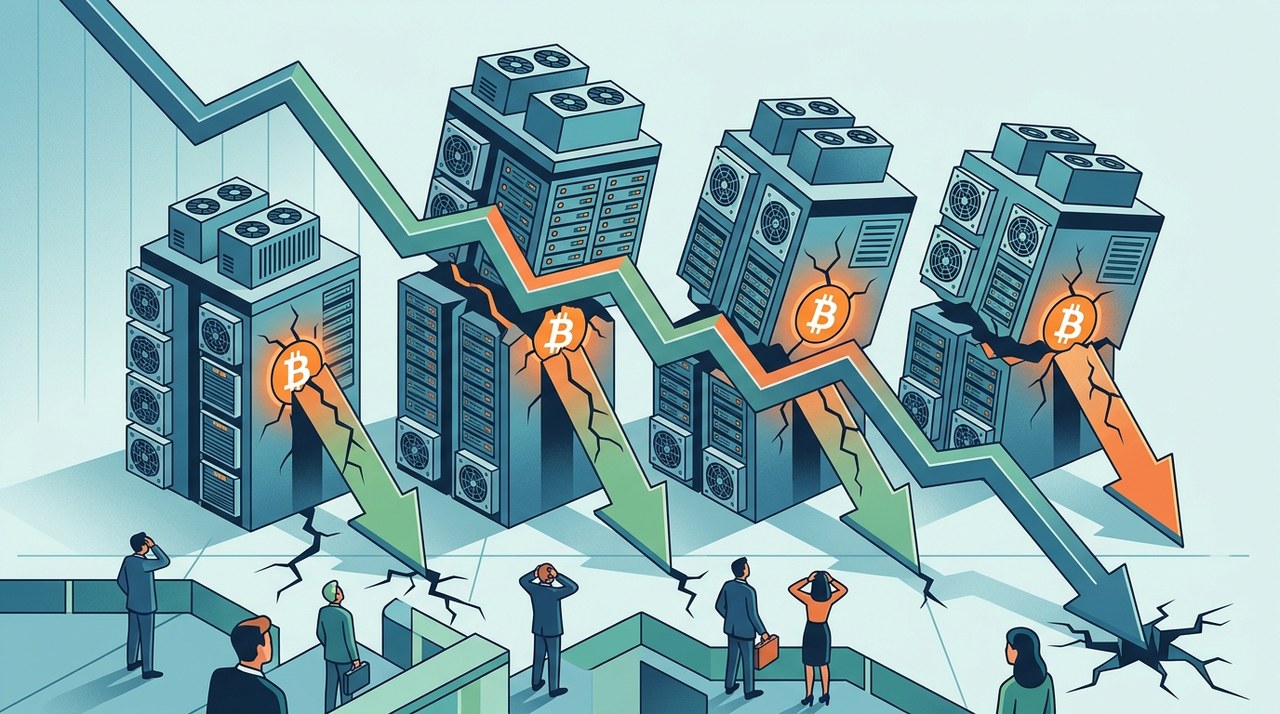
Bitcoin Miners Drop 13% in Heavy Wall Street Selloff
Shares of top Bitcoin miners dropped over 12% after hotter inflation data triggered Wall Street's sharpest market selloff since July.
|
Why Warburg Pincus Sees Public Markets as One Big Bet
Warburg Pincus CEO Jeffrey Perlman explains why heavy stock market concentration is driving global investors toward private assets.